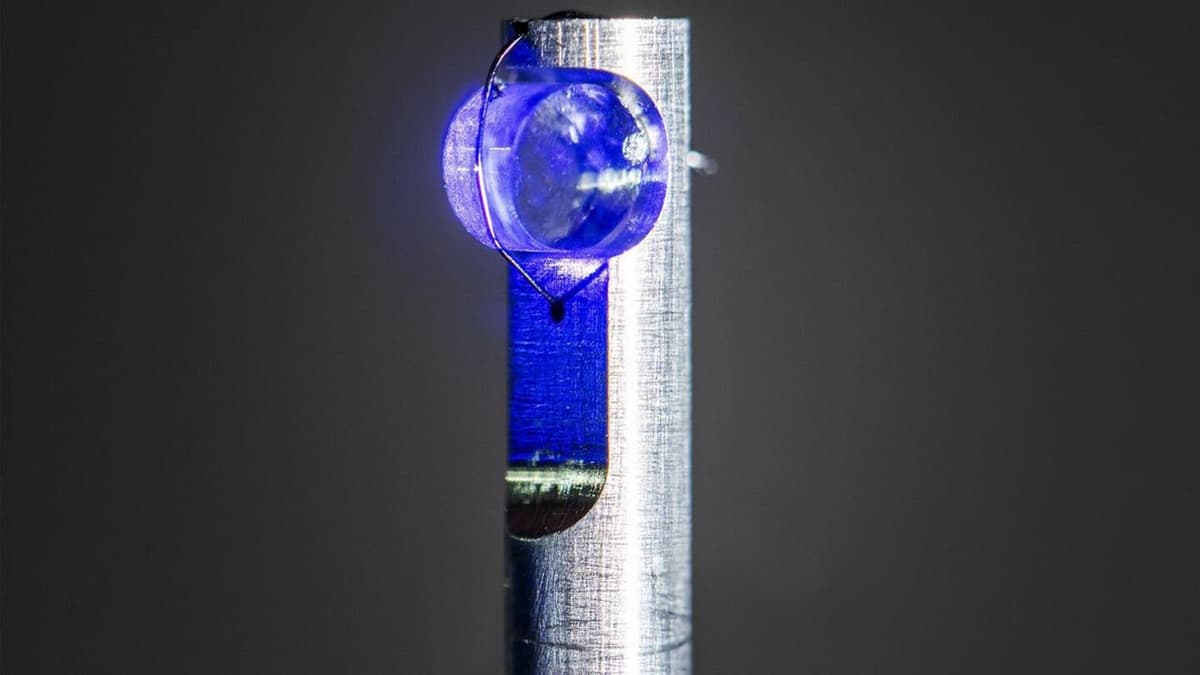
The World's First Nuclear Clock Just Ticked on — and It Could Help Detect a Fifth Fundamental Force of Physics
Why It Matters
The breakthrough could yield ultra‑stable, portable time standards for navigation and telecom while offering a powerful tool to explore physics beyond the Standard Model.
Key Takeaways
- •First functional nuclear clock ran continuously for 24 hours
- •Uses thorium‑229 nuclear transition, 1,000–10,000× less environmental noise
- •Operates at room temperature inside a crystal, enabling compact devices
- •Sensitive to strong and weak forces, it can test a fifth force
- •Early runs already constrained dark‑matter models, promising deeper physics insights
Pulse Analysis
The race to replace electron‑based optical clocks with a nucleus‑driven timekeeper reached a milestone this month when a team led by Thorsten Schumm demonstrated the world’s first working nuclear clock. By exploiting an ultra‑low‑energy transition in the isotope thorium‑229, the researchers locked a laser to a nuclear excitation and kept the device stable for a full 24‑hour period. Because the nucleus sits deep within the atom, the clock’s frequency is intrinsically shielded from electric and magnetic perturbations that limit today’s best atomic clocks.
This intrinsic robustness translates into a quality factor that can be 1,000 to 10,000 times higher than that of conventional optical clocks, opening the door to portable, room‑temperature time standards. Unlike optical clocks that require ultracold atoms in vacuum chambers, the thorium nuclei are embedded in a solid crystal, allowing a compact package that could eventually serve navigation satellites, telecom networks, and high‑frequency trading platforms where sub‑nanosecond synchronization is critical. The continuous‑wave ultraviolet laser that made the breakthrough also simplifies feedback loops, further improving long‑term stability.
Beyond practical timing, the nuclear clock offers a novel probe of fundamental physics. Its frequency depends on a delicate balance between electromagnetic and strong nuclear forces, making it exquisitely sensitive to any tiny shift caused by a hypothesized fifth force or interactions with dark‑matter fields. Preliminary measurements have already placed new limits on several dark‑matter scenarios, and future iterations with improved laser power and temperature control could amplify these constraints. While it will take years before it rivals the best optical clocks, the path forward promises both technological and scientific dividends.
The world's first nuclear clock just ticked on — and it could help detect a fifth fundamental force of physics
Comments
Want to join the conversation?
Loading comments...