Why It Matters
The correction revises the deep‑time history of cephalopods, affecting evolutionary models and fossil calibration. It also highlights how cutting‑edge imaging can overturn long‑standing paleontological assumptions.
Key Takeaways
- •300‑million‑year‑old fossil reidentified as nautiloid, not octopus.
- •Synchrotron X‑ray imaging revealed multiple rows of tiny teeth.
- •Oldest confirmed octopus now dates to about 90 million years.
- •Fossil renamed Paleocadmus pohli, becoming the oldest known nautiloid.
- •Reclassification forces revision of cephalopod family tree.
Pulse Analysis
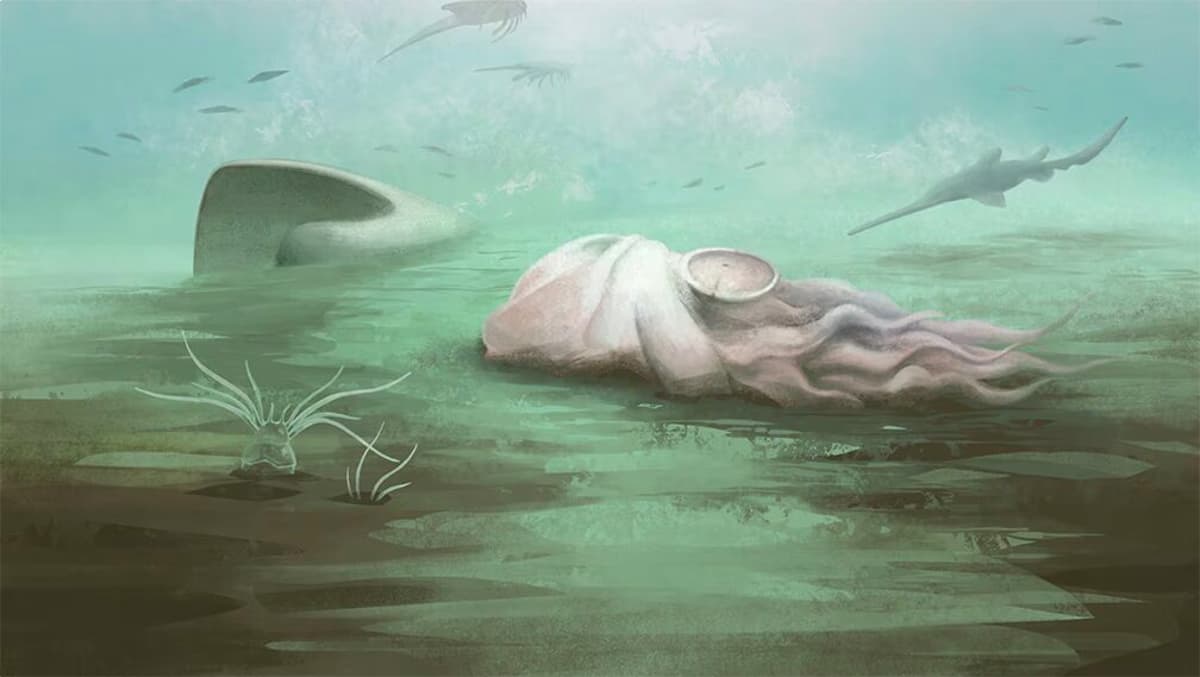
The fossil once celebrated as Pohlsepia mazonensis has been a centerpiece of cephalopod lore for two decades, touted as the earliest octopus and a Guinness World Record holder. Its age—roughly 300 million years—placed it far ahead of the next‑oldest octopus specimens, creating a puzzling gap in the evolutionary record. By revisiting the specimen with modern synchrotron radiation techniques, scientists uncovered hidden anatomical details that contradict its original classification, prompting a taxonomic overhaul.
Synchrotron X‑ray imaging, the world’s most powerful X‑ray method, allowed researchers to peer through the surrounding rock and resolve microscopic structures such as eleven rows of tiny teeth and shell morphology typical of nautiloids. These features are absent in octopuses, which lack hard external shells and possess only eight arms with suckers. The precision of this non‑destructive approach demonstrates how advanced imaging can extract new data from even the most challenging fossils, turning decades‑old assumptions on their head without damaging the specimen.
The reclassification of the specimen to Paleocadmus pohli reshapes the cephalopod family tree, pushing the emergence of true octopuses to about 90 million years ago and establishing the fossil as the oldest known nautiloid. This adjustment has ripple effects for evolutionary biologists, paleontologists, and geochronologists who rely on accurate fossil benchmarks to calibrate molecular clocks and reconstruct ancient ecosystems. Moreover, it underscores the broader scientific lesson that emerging technologies can continually refine our understanding of Earth’s deep past, prompting renewed scrutiny of other iconic fossils.
The World's Oldest Octopus Isn’t an Octopus At All
Comments
Want to join the conversation?
Loading comments...