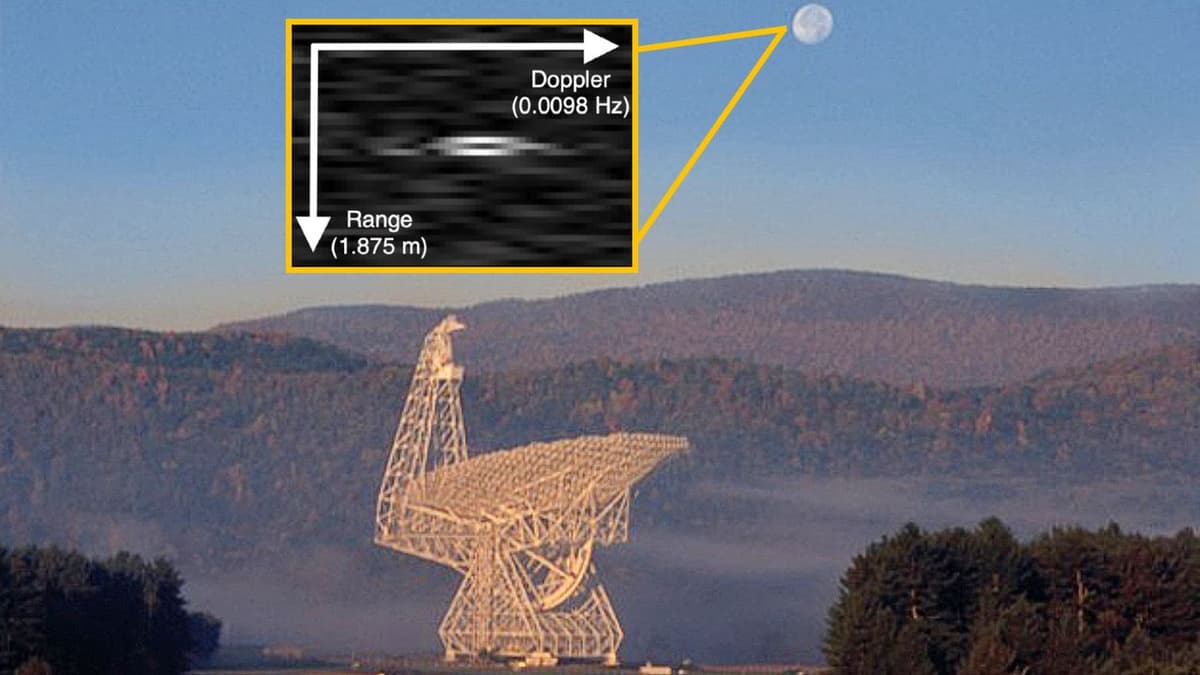
'There Are 4 People in Those Pixels': Earth-Based Telescope Snapped Artemis II Crew Orbiting the Moon
Why It Matters
Ground‑based radio imaging proves Earth observatories can monitor deep‑space crewed missions with unprecedented precision, reducing reliance on costly space‑borne sensors. This capability strengthens NASA’s Artemis roadmap and opens commercial opportunities for high‑accuracy tracking services.
Key Takeaways
- •Green Bank Telescope captured Orion at 213,000 miles using radio signal imaging
- •Image may be longest‑distance human photo taken from Earth
- •Tracking precision within 0.2 mm/s validates ground‑based navigation support
- •Data will aid future Artemis lunar‑base missions and deep‑space tracking
Pulse Analysis
The recent Green Bank Telescope capture marks a technical milestone: a ground‑based array resolved the Orion capsule’s radio emissions from more than 200,000 miles away. By converting the spacecraft’s Doppler shift into a visual pixel map, astronomers turned a faint signal into a recognisable silhouette, demonstrating that Earth’s largest radio dishes can serve as eyes on deep‑space assets. This achievement not only pushes the envelope of interferometric imaging but also provides a low‑cost, reusable method for monitoring crewed vehicles far beyond low‑Earth orbit.
Beyond the novelty of the image, the telescope’s tracking data proved remarkably accurate. NASA’s navigation team compared the GBT’s velocity measurements with onboard telemetry and found a discrepancy of just 0.2 mm per second—roughly the width of a human hair over a kilometer. Such precision offers a valuable cross‑check for autonomous guidance systems and could reduce the need for redundant onboard sensors on future Artemis flights. The ability to monitor spacecraft in real time from the ground also enhances safety protocols, allowing mission control to detect anomalies earlier and coordinate contingency maneuvers with greater confidence.
The broader implication for the aerospace industry is the emergence of a new service niche: high‑resolution, deep‑space tracking as a commercial offering. As private firms accelerate lunar lander development and plan crewed missions to Mars, reliable Earth‑based tracking will become a critical infrastructure component. Partnerships between NASA, national observatories, and commercial satellite operators could spawn a market for subscription‑based telemetry services, driving investment in next‑generation radio arrays and reinforcing the United States’ leadership in space exploration.
'There are 4 people in those pixels': Earth-based telescope snapped Artemis II crew orbiting the moon
Comments
Want to join the conversation?
Loading comments...