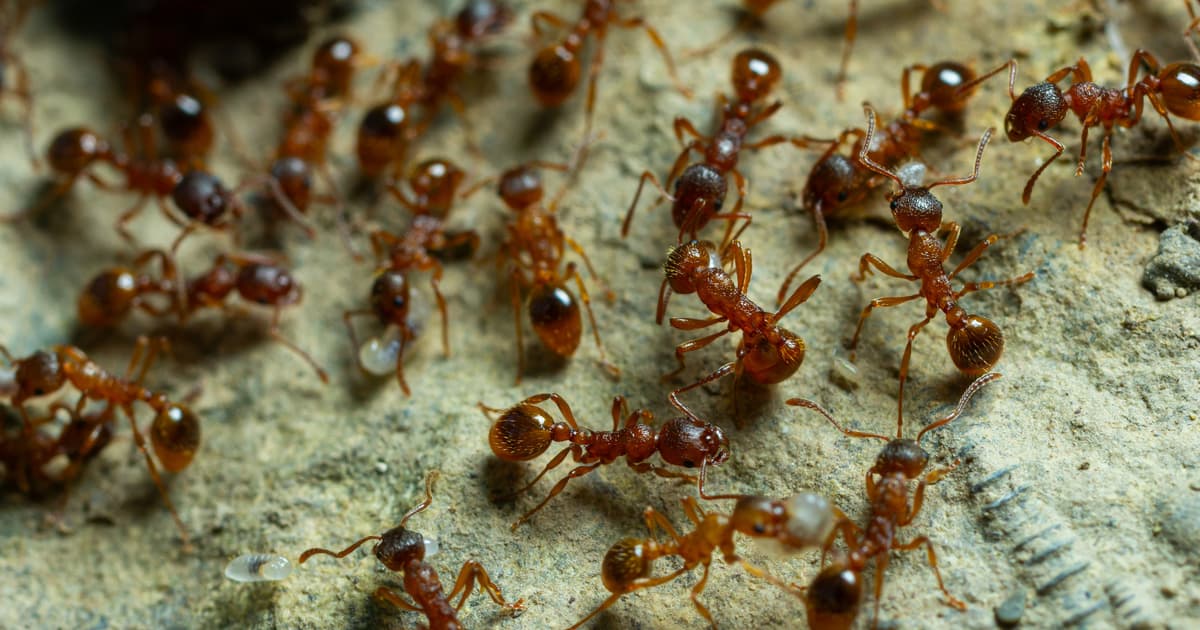
There Are About 20 Quadrillion Ants Alive on Earth at Any Moment — Enough that Their Combined Biomass Outweighs Every Wild Bird and Mammal on the Planet Combined, Even Though the Often-Repeated Claim that Ant Biomass Equals Human Biomass Has Been Overturned by Recent Research
Why It Matters
The baseline enables scientists to track global insect trends and assess ecosystem health, while the revised biomass ratio reshapes our understanding of terrestrial animal dominance.
Key Takeaways
- •Global ant population estimated at ~20 quadrillion individuals.
- •Ant biomass ~12 megatons of carbon, ~24 megatons total mass.
- •Ants outweigh combined wild birds (2 Mt C) and mammals (7 Mt C).
- •Ant biomass is about one‑fifth of total human biomass.
- •Provides baseline for future insect abundance and climate‑biodiversity research.
Pulse Analysis
The 2022 PNAS paper by Patrick Schultheiss, Sabine Nooten and colleagues combines leaf‑litter sampling and pitfall trapping across 489 studies to arrive at a conservative estimate of 20 × 10¹⁵ ants worldwide. By correcting for under‑sampled subterranean and arboreal colonies and extrapolating by biome, the researchers produce a figure that is both statistically robust and globally comprehensive, highlighting tropical moist forests and savannahs as ant hotspots while confirming near‑zero densities in polar regions.
Beyond sheer numbers, the study revises ant biomass to roughly 12 megatonnes of dry carbon—about 24 megatonnes when accounting for non‑carbon components. This places ants above the combined 9 megatonnes of wild birds and mammals, overturning the popular myth that ant mass equals human mass. Earlier estimates of 70‑100 megatonnes were inflated by methodological gaps; the new methodology reduces the figure by a factor of five to eight, positioning ant biomass at roughly one‑fifth of humanity’s total, even before livestock are added.
The real value of the research lies in its baseline for biodiversity monitoring. With insect declines widely reported, having a precise global reference for the most abundant terrestrial insects allows ecologists to detect shifts tied to climate change, land‑use alteration, and pesticide exposure. Ants drive critical ecosystem services—seed dispersal, soil aeration, and rapid organic matter turnover—so changes in their abundance could signal broader ecological disruptions. Policymakers and conservationists can now anchor climate‑impact assessments to a quantifiable metric, improving the rigor of future environmental strategies.
There are about 20 quadrillion ants alive on Earth at any moment — enough that their combined biomass outweighs every wild bird and mammal on the planet combined, even though the often-repeated claim that ant biomass equals human biomass has been overturned by recent research
Comments
Want to join the conversation?
Loading comments...