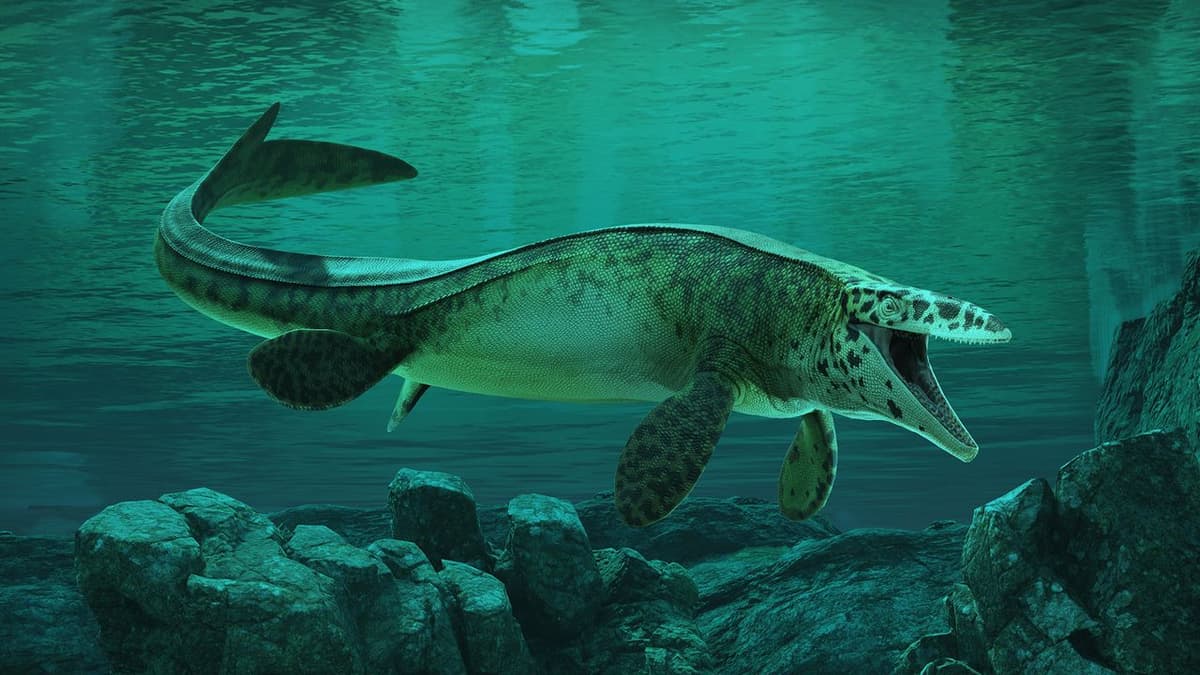
There's a New T. Rex From the Dinosaur Age — and It Ruled the Seas with a Skull-Crushing Bite
Why It Matters
The discovery reshapes our understanding of Cretaceous marine predators and forces a reassessment of mosasaur evolutionary relationships, influencing both academic research and museum narratives.
Key Takeaways
- •New species Tylosaurus rex reaches 43 ft, larger than T. proriger
- •Fossils from Texas date to ~80 million years ago, later than T. proriger
- •Evidence of intraspecific combat found in skull injuries
- •Reclassification affects dozens of museum specimens worldwide
- •Study calls for updated mosasaur phylogenetic analyses
Pulse Analysis
The identification of Tylosaurus rex underscores how museum collections can still yield groundbreaking insights. By revisiting a specimen originally cataloged as T. proriger, paleontologists at the American Museum of Natural History and the Perot Museum uncovered distinct dental serrations, a longer skull, and a later stratigraphic age. This correction not only adds a new marquee name to the mosasaur roster but also prompts curators to audit other mislabeled fossils, ensuring that public displays reflect the most accurate science.
Beyond its impressive 43‑foot length, T. rex exhibits anatomical adaptations that cement its role as an apex marine predator. Its powerful jaw muscles and finely serrated teeth suggest a bite capable of crushing armored prey, while healed fractures on several specimens reveal violent encounters with conspecifics. Such evidence of intraspecific aggression provides a rare glimpse into the social dynamics of Cretaceous seas, hinting at territorial disputes or competition for scarce resources within the Western Interior Seaway.
The broader scientific impact lies in the study’s call for a modernized phylogenetic framework. Decades‑old character matrices have limited the resolution of mosasaur evolutionary trees, and the new data set for T. rex highlights the need for comprehensive re‑analysis using advanced imaging and statistical methods. Updating these models will refine our picture of how marine reptiles diversified and responded to environmental shifts, informing both academic discourse and the storytelling that engages museum audiences worldwide.
There's a new T. rex from the dinosaur age — and it ruled the seas with a skull-crushing bite
Comments
Want to join the conversation?
Loading comments...