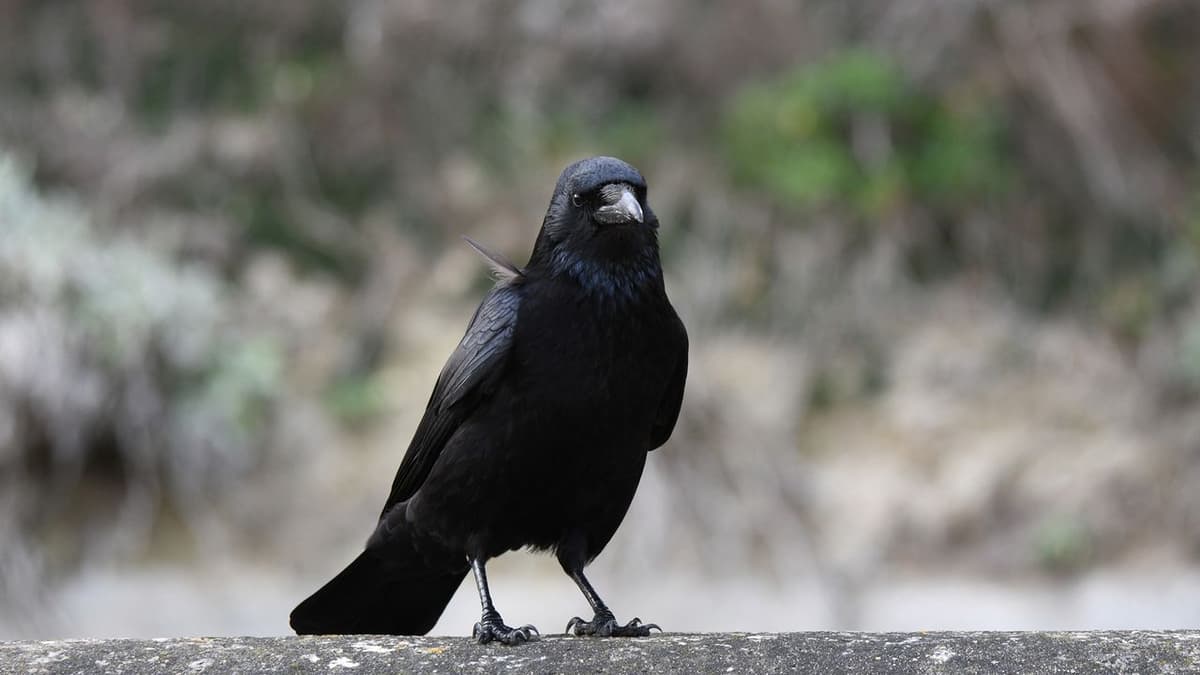
'They Reliably Chose the Statistically More Favorable Option': A Crow Researcher Explains How These Winged Geniuses Process Numbers, and What It Could Reveal About Human Math Smarts
Why It Matters
The research shows that core numerical abilities are evolutionarily ancient, reshaping our understanding of how human mathematics may have built on pre‑human cognitive tools. It also highlights crows as powerful models for studying the neural basis of abstract reasoning.
Key Takeaways
- •Crows treat empty sets as a numeric quantity, similar to zero
- •Neural recordings show crow brain cells selectively fire for “nothing” sets
- •Crows choose higher-probability options, demonstrating basic statistical reasoning
- •Findings align crow behavior with preverbal infants and primates
- •Study suggests mathematical intuition predates humans by hundreds of millions of years
Pulse Analysis
Crows have long been celebrated for their problem‑solving prowess, but recent experiments by Professor Andreas Nieder push the envelope into the realm of abstract cognition. By training carrion crows on a series of visual cues linked to varying reward probabilities, researchers observed that the birds reliably selected the statistically superior option, even when presented with novel pairings. This behavior mirrors the primitive statistical learning seen in human infants, indicating that the neural circuitry for evaluating uncertainty may be a shared evolutionary trait across distant species.
The most striking discovery centers on the birds’ handling of zero. In controlled trials, crows treated an empty set as a legitimate quantity, positioning it before “one” on an internal number line and displaying error patterns consistent with human-like distance effects. Electrophysiological recordings captured neurons that responded specifically to the absence of items, providing concrete evidence that the concept of nothing is encoded in the avian brain. While this is not symbolic zero as used in mathematics, it represents a foundational building block for quantitative reasoning.
These insights have profound implications for the origins of mathematical thought. If both birds and primates—lineages separated by over 300 million years—share similar numerical processing mechanisms, it suggests that the cognitive scaffolding for math predates Homo sapiens by a vast margin. Understanding how such ancient neural systems operate could inform artificial intelligence models that emulate intuitive number sense, and it underscores the value of comparative neuroscience in tracing the evolutionary pathways that culminated in human mathematics.
'They reliably chose the statistically more favorable option': A crow researcher explains how these winged geniuses process numbers, and what it could reveal about human math smarts
Comments
Want to join the conversation?
Loading comments...