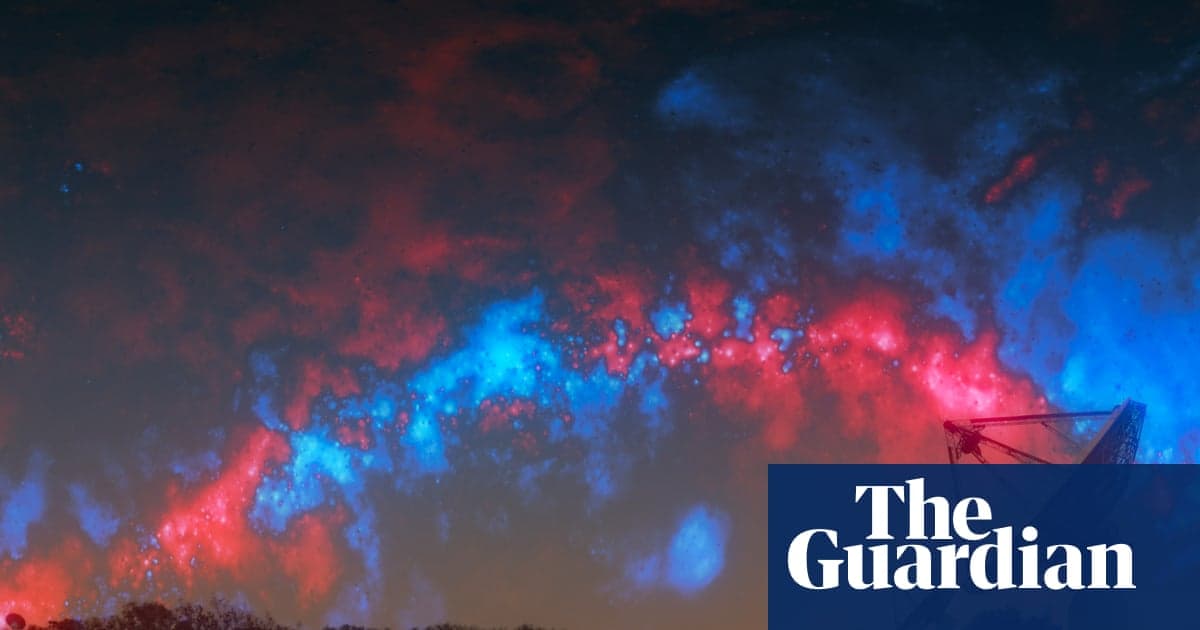
This Cosmic Map of Magnetic Fields Could Help Illuminate One of the Universe’s Most Mysterious Forces
Companies Mentioned

CSIRO
Why It Matters
Understanding cosmic magnetism addresses a fundamental gap in astrophysics and could refine models of galaxy formation, impacting both basic science and future space technologies.
Key Takeaways
- •SPICE_RACS maps magnetic fields from ~4 million galaxies.
- •Dataset five times larger than prior magnetic field surveys.
- •Includes first comprehensive coverage of the southern celestial sky.
- •Open repository enables global researchers to study magnetism.
- •ASKAP radio telescope provides unprecedented polarization sensitivity.
Pulse Analysis
Magnetic fields are the hidden scaffolding of the cosmos, influencing everything from star formation to the large‑scale structure of the universe. For decades, astronomers have struggled with fragmented, northern‑hemisphere‑biased surveys that left large swaths of the sky uncharted. This knowledge gap has limited theoretical models of how magnetism emerged after the Big Bang and how it interacts with gravity over cosmic time. By finally delivering a truly global view, the new map opens a pathway to resolve long‑standing debates about the origin and evolution of cosmic magnetism.
The SPICE_RACS catalogue leverages the Australian Square Kilometre Array Pathfinder’s (ASKAP) exceptional sensitivity to polarized radio emission. Scanning nearly four million extragalactic sources, ASKAP captured subtle twists in light that betray magnetic field directions across billions of light‑years. The resulting dataset is five times larger than any predecessor, offering finer resolution and full southern‑sky coverage. Crucially, CSIRO has released the catalogue as an open repository, inviting scientists worldwide to mine the data for targeted studies of star‑forming regions, galaxy clusters, and intergalactic filaments.
The implications extend beyond pure astronomy. A deeper grasp of intergalactic magnetic fields could improve simulations of galaxy evolution, inform the design of future space‑based observatories, and even inspire novel magnetic technologies on Earth. As researchers begin to overlay SPICE_RACS with other multi‑wavelength surveys, we can expect a surge of discoveries that refine our picture of the electromagnetic universe. This collaborative, data‑rich approach exemplifies how open science accelerates breakthroughs in fundamental physics and its practical off‑shoots.
This cosmic map of magnetic fields could help illuminate one of the universe’s most mysterious forces
Comments
Want to join the conversation?
Loading comments...