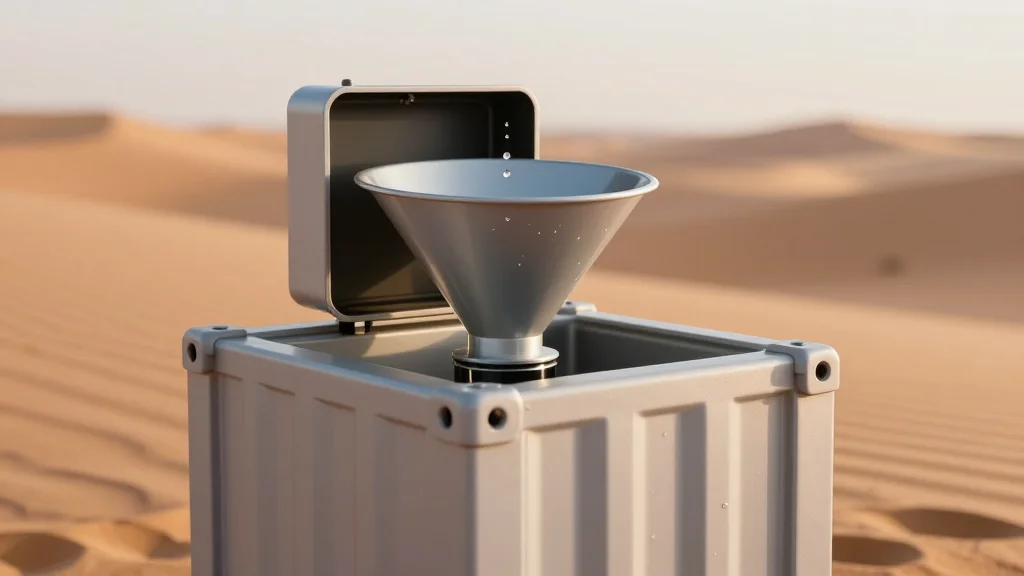
This Nobel Prize–Winning Breakthrough Turns Air Into Drinking Water
Why It Matters
Atmospheric water harvesting could alleviate water scarcity for millions, offering a decentralized supply that bypasses traditional infrastructure. Its rollout marks a potential shift in how arid regions secure safe drinking water, impacting utilities, industry, and humanitarian aid.
Key Takeaways
- •MOFs capture water at 10% humidity
- •Container units produce 1,000 liters daily
- •System supplies 500 people’s drinking water
- •Commercial rollout slated for 2026, targeting data centers
- •Production costs remain high, scaling challenge persists
Pulse Analysis
The breakthrough hinges on metal‑organic frameworks, crystalline sponges that combine metal nodes with organic linkers to create vast internal surface areas. Researchers have shown that a single gram of MOF can rival the surface of a soccer field, enabling it to adsorb water vapor even when the air is exceptionally dry. By cycling temperature—absorbing moisture at night and releasing it by day—the technology delivers near‑distilled water without the need for wells, pipes, or extensive filtration, positioning it as a low‑maintenance solution for remote or infrastructure‑poor locales.
Beyond the science, the commercial implications are significant. Atoco’s container‑scale units can generate roughly 1,000 liters per day, enough for 500 average Americans who each consume about two liters. This capacity aligns with the growing demand from data centers, mining operations, and military outposts that require reliable water sources in water‑stressed regions. Early adopters stand to reduce reliance on municipal supplies and lower operational costs, while the broader market could see a new class of climate‑resilient infrastructure that decouples water access from traditional hydrological cycles.
Scaling remains the primary hurdle. MOF synthesis is currently costly, and mass production will require advances in manufacturing efficiency and supply chain logistics. However, the slated 2026 rollout suggests that investors and governments see strategic value in accelerating deployment. If production costs drop and the technology proves durable, atmospheric water harvesting could become a cornerstone of global water security strategies, complementing other innovations like fog nets and desalination to address the looming "global water bankruptcy" highlighted by the United Nations.
This Nobel Prize–Winning Breakthrough Turns Air Into Drinking Water
Comments
Want to join the conversation?
Loading comments...