This Outrageously Pretty Purple Tile Is Actually Made Out of Sea Urchins
Why It Matters
Urchinite simultaneously tackles invasive species control and supplies the construction market with a sustainable, high‑performance material, illustrating a scalable circular‑economy model for environmental remediation.
Key Takeaways
- •Purple urchin overgrowth harms Northern California kelp forests
- •Primitives Biodesign creates biomarble from harvested urchin shells
- •Each 50 biomarble units clear about 1.1 acres of urchins
- •Tiles are more durable than natural marble and limestone
- •Project partners with Nature Conservancy and marine scientists
Pulse Analysis
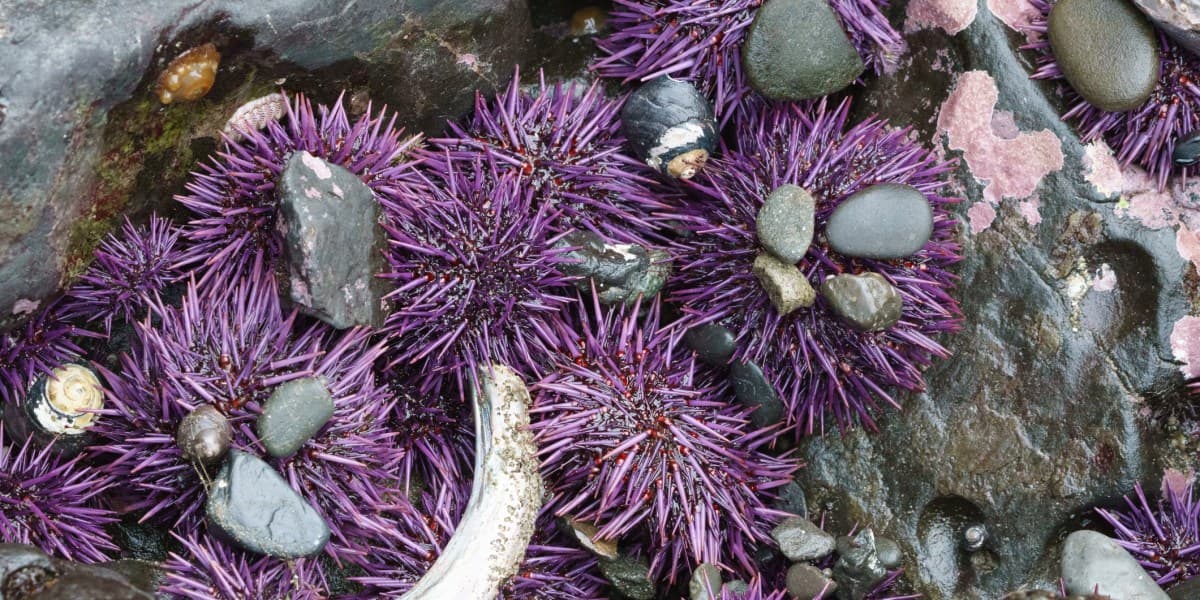
The rapid expansion of the purple sea urchin (*Strongylocentrotus purpuratus*) has become a textbook case of an invasive marine species disrupting ecosystem balance. By grazing on kelp holdfasts, these urchins create barren “urchin barrens,” which diminish habitat for fish, invertebrates, and seabirds. Traditional removal methods are labor‑intensive and costly, prompting researchers and conservation groups to seek innovative, large‑scale solutions that can restore kelp forests while minimizing ecological footprints.
Enter Primitives Biodesign, a Berkeley start‑up that has engineered a closed‑loop process to transform harvested urchin shells into Urchinite, a biomarble composed of mineralized biocalcites and a bio‑based binder. The collaboration with the Nature Conservancy and marine scientists ensures that urchin collection occurs only at targeted restoration sites, turning a pest into a resource. Their metric—clearing roughly 1.1 acres of urchins per 50 tile units—demonstrates tangible habitat recovery potential, while the resulting material boasts superior hardness and weather resistance compared with conventional marble and limestone.
For the architecture and interior‑design sectors, Urchinite offers a compelling narrative of sustainability without sacrificing aesthetics. The tiles’ natural lavender‑gray palette, derived entirely from marine shells, appeals to designers seeking unique, eco‑conscious finishes for countertops, flooring, and wall cladding. Moreover, the product aligns with growing consumer demand for circular‑economy building materials, positioning Primitives Biodesign to capture premium market share as green certification standards tighten. If the model scales, it could inspire similar biogenic material ventures, turning other ecological challenges into commercial opportunities while reinforcing coastal resilience.
This Outrageously Pretty Purple Tile Is Actually Made out of Sea Urchins
Comments
Want to join the conversation?
Loading comments...