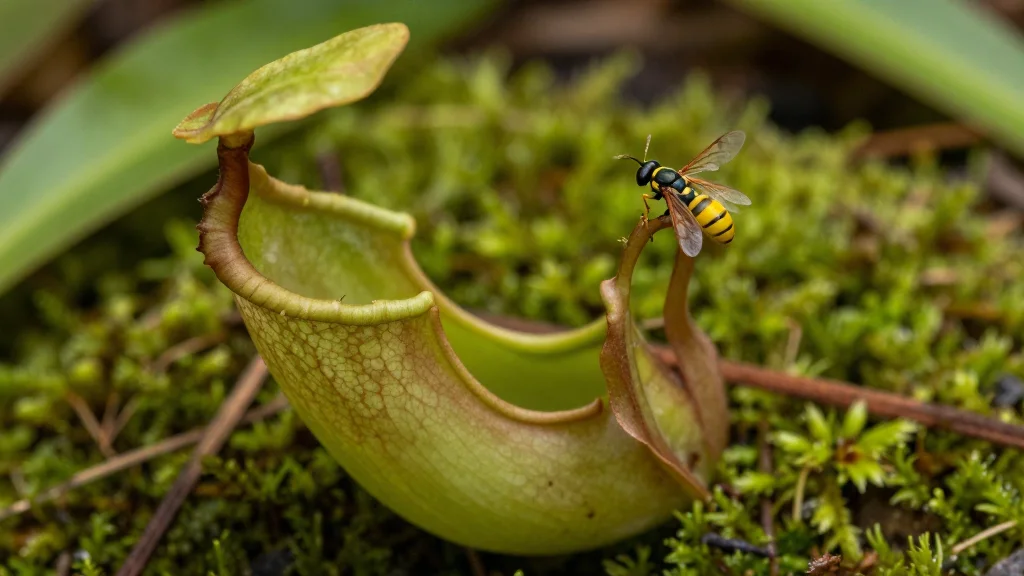
This Plant Could Be the Smartest Carnivore on the Planet
Why It Matters
The discovery rewrites the textbook view of carnivorous plants, showing they can sustain local food webs and influence conservation priorities for fragile, nitrogen‑limited ecosystems.
Key Takeaways
- •Darlingtonia californica releases 98% of attracted wasps unharmed
- •Wasps near pitchers show higher nitrogen‑15, confirming nutrient exchange
- •Plant adjusts trap door turgidity, balancing capture and feeding
- •Pitcher plants may serve as foundation species in dry mountain ecosystems
Pulse Analysis
Carnivorous plants have long been portrayed as ruthless insect hunters, a narrative reinforced by textbook examples of Venus flytraps and sundews. The new OIST study, however, spotlights Darlingtonia californica, a pitcher plant that appears to prioritize partnership over predation. By offering nitrogen‑rich nectar that attracts vespid wasps, the plant creates a low‑risk feeding station, releasing nearly all visitors while retaining the option to snap shut on occasional prey. This nuanced behavior challenges the binary predator‑prey framework that has dominated plant‑insect ecology for decades.
The researchers employed mass‑spectrometry to compare nitrogen isotopic signatures in wasps captured near the pitchers with those collected farther away. Elevated levels of nitrogen‑15 in the former group confirmed that the insects were assimilating the plant’s enriched nectar, effectively turning the pitcher into a nutrient conduit rather than a one‑way trap. Simultaneously, the plant’s ability to modulate trap‑door turgidity suggests a sophisticated control mechanism, allowing it to capture a few insects for supplemental nutrition while maintaining a largely mutualistic relationship. This biochemical insight underscores how subtle shifts in nutrient flow can reshape ecological interactions.
Beyond academic intrigue, the findings have practical implications for ecosystem management. In the arid California mountain ranges where Darlingtonia thrives, the plant may function as a foundation species, supporting a web of insects, microbes, and higher‑order predators much like coral reefs do in marine environments. Recognizing such plants as keystone contributors could reshape conservation strategies, prompting land managers to protect not just the plants themselves but the broader nutrient networks they sustain. Future research will likely explore whether similar mutualisms exist among other carnivorous taxa, potentially redefining the role of these enigmatic species in global biodiversity.
This plant could be the smartest carnivore on the planet
Comments
Want to join the conversation?
Loading comments...