Why It Matters
Understanding TOT reveals how memory retrieval works, enabling better learning techniques and smoother professional communication, which directly impacts productivity and decision‑making.
Key Takeaways
- •TOT occurs when retrieval cues mismatch target word.
- •Aging increases frequency of lethologica episodes.
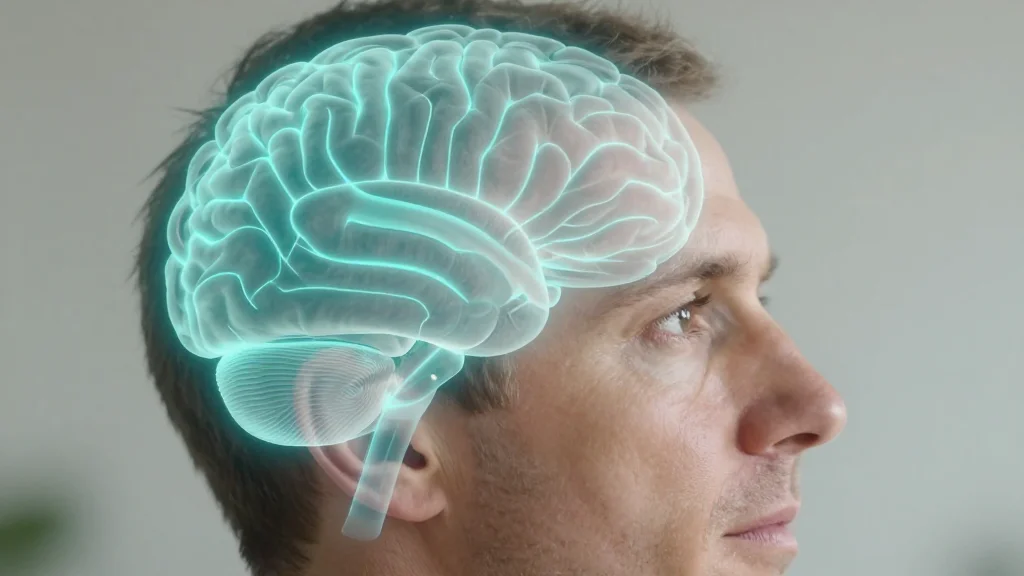
- •Brain scans show frontal and temporal activation during TOT.
- •Mnemonic strategies reduce tip‑of‑the‑tongue incidents.
- •Insights inform AI language retrieval and education tools.
Pulse Analysis
The tip‑of‑the‑tongue (TOT) state, technically called lethologica, is a classic retrieval failure that reveals how the brain stores lexical information. Neuroimaging studies consistently light up the left inferior frontal gyrus and the temporal‑parietal junction, suggesting that the brain is actively searching for phonological and semantic cues while the target word remains inaccessible. Psycholinguists describe this as a partial activation of the word’s network, where enough features are retrieved to signal familiarity but not enough to reconstruct the full lexical item. This split‑second clash between activation and inhibition explains the characteristic feeling of imminent recall.
For professionals, recognizing the mechanics of TOT can translate into more efficient learning and smoother communication. Research shows that spaced repetition, multimodal encoding, and deliberate retrieval practice lower the incidence of TOT episodes, especially among older adults whose retrieval pathways naturally degrade. In high‑stakes environments—sales pitches, board meetings, or client negotiations—quickly resolving a TOT moment prevents loss of credibility and keeps conversations flowing. Simple techniques such as pausing, visualizing the word’s context, or substituting a synonym can re‑engage the dormant neural circuit and restore fluency.
The insights from TOT research are now feeding the next generation of artificial intelligence and educational technology. Language models that mimic human retrieval processes can be trained to flag likely TOT moments, offering real‑time suggestions or prompting users with cue words. Likewise, adaptive learning platforms can schedule review sessions when a learner’s recall strength wanes, pre‑empting the frustration of missing words. As cognitive science continues to map the fine‑grained dynamics of lexical access, businesses stand to benefit from tools that enhance memory retention, reduce communication hiccups, and ultimately boost productivity.
Tip-of-the-tongue syndrome
Comments
Want to join the conversation?
Loading comments...