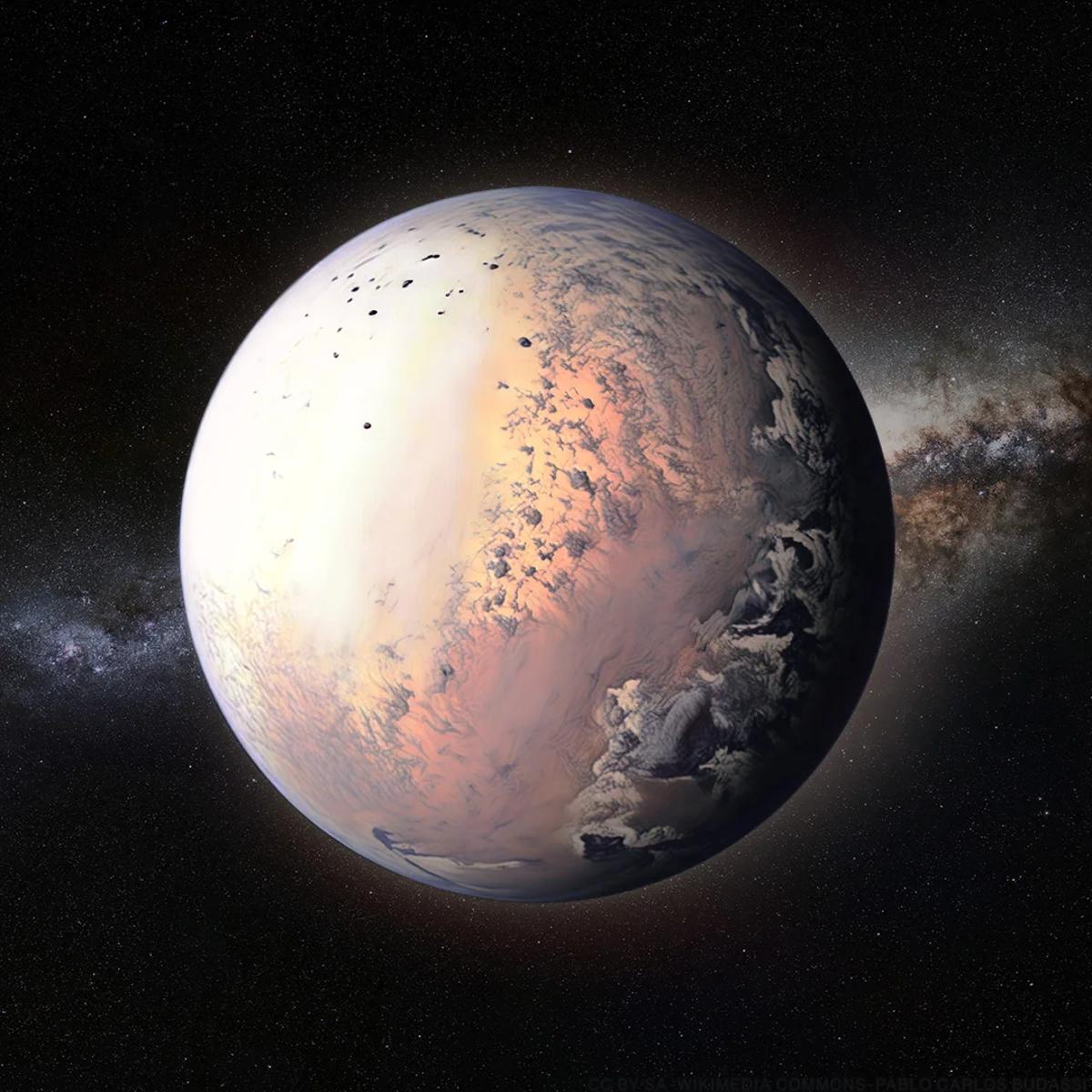
TOI-6255 B: A Planet on the Edge of Destruction
•March 10, 2026
0
Why It Matters
TOI‑6255 b provides a real‑time laboratory for studying tidal destruction and the formation of ultra‑short‑period planets, informing models of planetary system evolution and guiding future exoplanet surveys.
Key Takeaways
- •TOI-6255 b orbits its star every 5.7 hours.
- •Planet lies just outside its star’s Roche limit.
- •TESS and KPF data jointly measured its mass and radius.
- •Study predicts orbital decay within few hundred million years.
- •USPs remain rare, offering clues to planet formation.
Pulse Analysis
Ultra‑short‑period planets (USPs) like TOI‑6255 b occupy a niche at the extreme edge of planetary dynamics. Their sub‑day orbits place them within a few stellar radii, exposing them to intense tidal forces that can reshape, erode, or ultimately destroy the world. By orbiting just outside the Roche limit, TOI‑6255 b is already being elongated, offering a snapshot of the tidal deformation process that most exoplanets never experience. Understanding how such bodies survive—or fail—helps refine theories of planet migration, interior structure, and the statistical rarity of USPs in the galaxy.
The breakthrough stems from a coordinated approach that leverages TESS’s high‑precision transit photometry with the Keck Planet Finder’s radial‑velocity sensitivity. TESS pinpoints the planet’s size and orbital period, while KPF measures the star’s wobble to infer planetary mass, enabling a direct density calculation. This synergy not only reduces observation time and cost but also sets a new standard for characterizing faint, fast‑orbiting worlds. As more instruments adopt this dual‑method workflow, the exoplanet community can expect a surge in robust mass‑radius datasets, sharpening our view of planetary composition across diverse environments.
Beyond methodological advances, TOI‑6255 b’s impending demise offers a rare chance to observe tidal decay in action. Monitoring its orbital period over decades could validate decay models and quantify energy dissipation mechanisms that remain poorly constrained. Such empirical data will feed into broader models of planetary system lifecycles, including how close‑in planets influence stellar rotation and magnetic activity. In the long term, insights from TOI‑6255 b may guide the search for survivable habitats around low‑mass stars, where tidal forces are a dominant factor in habitability assessments.
TOI-6255 b: a planet on the edge of destruction
0
Comments
Want to join the conversation?
Loading comments...