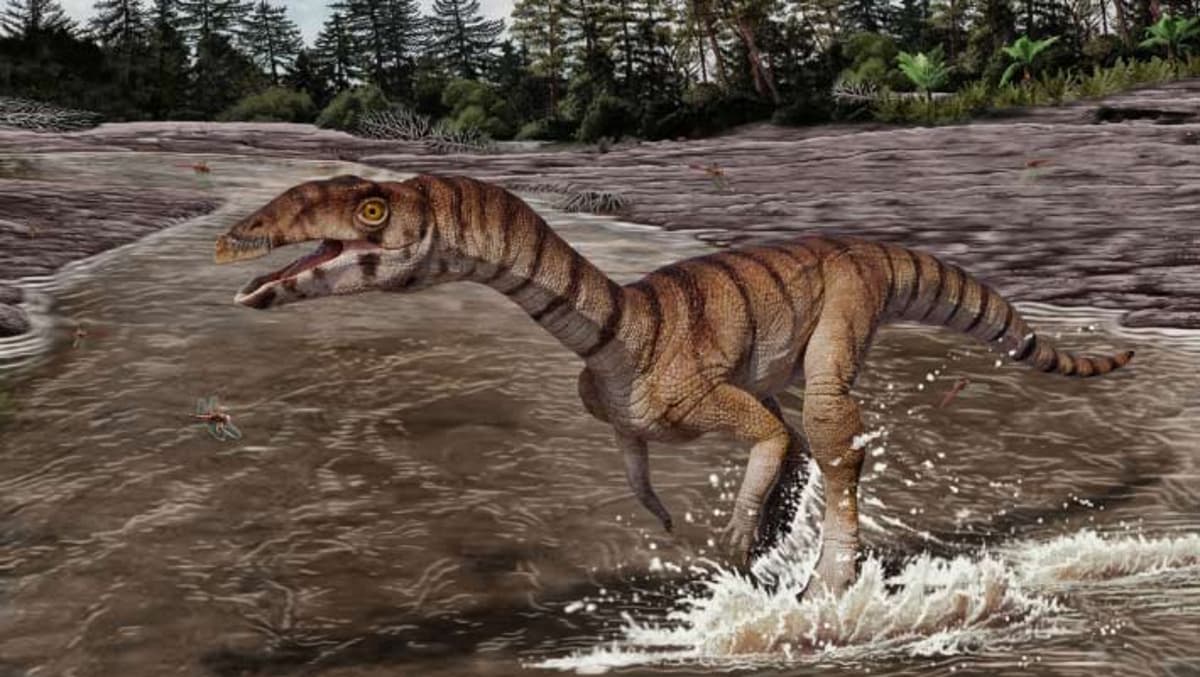
Toothless, Bipedal Crocodile Relative Lived in New Mexico 212 Million Years Ago
Why It Matters
The species sharpens our picture of archosaur diversification during the Triassic and illustrates how convergent body plans evolved long before true dinosaurs, informing both evolutionary biology and regional paleobiogeography.
Key Takeaways
- •Labrujasuchus expectatus adds a fourth North American shuvosaurid.
- •Fossil dates to ~212 million years ago in Chinle Formation.
- •Species shows minimal skeletal change over ten million years.
- •Confirms endemic, bipedal, toothless archosaurs in the Southwest.
- •Illustrates convergent evolution with later ornithomimid dinosaurs.
Pulse Analysis
The discovery of Labrujasuchus expectatus adds a new chapter to the story of Triassic archosaurs, a group that includes the ancestors of both crocodiles and dinosaurs. Shuvosaurids, long recognized for their bird‑like, bipedal stance and beaked mouths, have now been documented in four distinct North American species. By situating Labrujasuchus within the Norian‑age Hayden Quarry, researchers provide a clearer timeline that bridges the 10‑million‑year gap between earlier and later members of the family, sharpening the stratigraphic framework for Late Triassic ecosystems.
Beyond chronology, the fossil highlights an extraordinary case of morphological conservatism. Despite spanning millions of years, the skeletal blueprint of shuvosaurids changed little, suggesting stable ecological niches and limited selective pressure for major anatomical innovation. Phylogenetic analyses place Labrujasuchus firmly alongside its Texan and New Mexican cousins, reinforcing the notion of a geographically restricted clade that thrived in the arid floodplains of the ancient Southwest. This endemic pattern contrasts with other Triassic reptiles that dispersed widely, offering clues about regional climate, vegetation, and predator‑prey dynamics.
Finally, Labrujasuchus underscores the deep roots of convergent evolution. Its tooth‑less beak and lightweight, bipedal build echo the later ornithomimid theropods of the Cretaceous, despite a 150‑million‑year separation. Such parallels reveal how similar functional demands—speed, foraging efficiency, and predator avoidance—can sculpt comparable morphologies across unrelated lineages. As paleontologists continue to unearth Triassic sites, Labrujasuchus will serve as a benchmark for interpreting the evolutionary experiments that set the stage for the rise of true dinosaurs.
Toothless, Bipedal Crocodile Relative Lived in New Mexico 212 Million Years Ago
Comments
Want to join the conversation?
Loading comments...