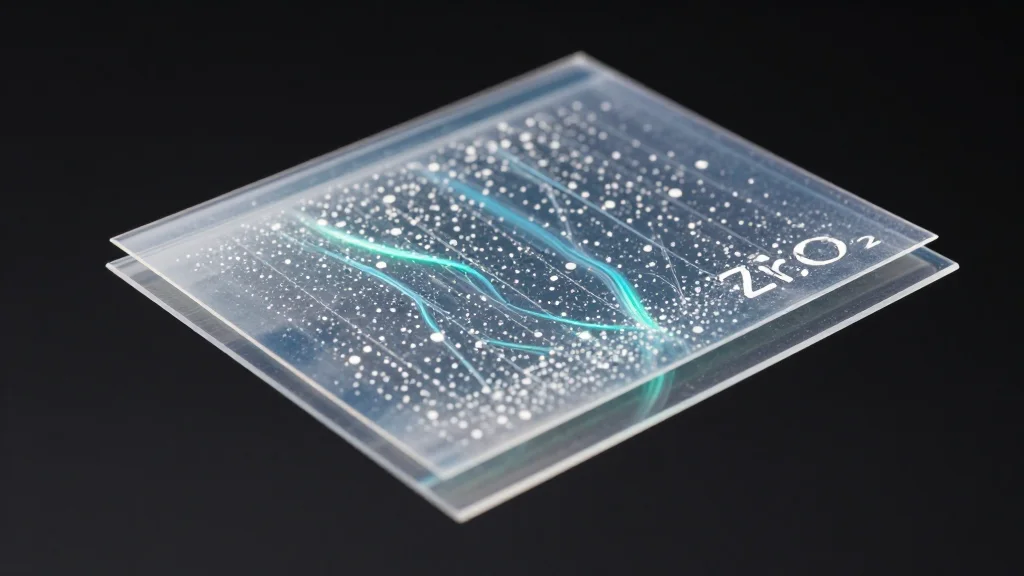
Topological Engineering of Filler Distributions in Dielectric Composites to Boost High‐Temperature Capacitive Energy Storage Performance
Why It Matters
Cutting leakage dramatically improves the reliability of thin‑film capacitors at elevated temperatures, unlocking higher energy density for power‑electronics and electric‑vehicle applications.
Key Takeaways
- •Layered PMMA/ZrO2 films cut leakage current 100‑fold
- •Built‑in electric field opposes external field, repelling electrons
- •Optimal Type ∇ filler pattern yields 14 J cm⁻³ at 150 °C
- •Energy density remains above 5 J cm⁻³ at 200 °C, 90% efficiency
- •Topological engineering offers scalable route for high‑temp capacitors
Pulse Analysis
Polymer dielectrics are the workhorse of thin‑film capacitors, but their performance collapses when temperatures rise above 100 °C due to sharply increasing leakage currents. Traditional strategies—adding high‑permittivity fillers or increasing film thickness—often trade off flexibility, breakdown strength, or manufacturability. The industry therefore seeks a method that can simultaneously suppress charge transport and preserve the intrinsic high‑field resilience of the polymer matrix.
In the recent study, scientists introduced a novel topological engineering concept by arranging ZrO2 nanoparticles in a five‑layer Type ∇ gradient across a PMIA matrix. The non‑uniform filler concentration creates a built‑in electric field that counteracts the external bias near the electrodes, generating a repulsive force that hinders electron injection. This dual‑mechanism—intrinsic electron trapping by ZrO2 and external field opposition—slashed leakage currents by 100×. The resulting composite achieved a record 14.01 J cm⁻³ energy density at 150 °C and retained 12.75 J cm⁻³ at 200 °C, with 90% charge‑discharge efficiency, surpassing most conventional polymer dielectrics.
The implications extend beyond academic interest. High‑temperature, high‑energy density capacitors are critical for electric‑vehicle power‑train inverters, renewable‑energy grid stabilizers, and aerospace electronics, where thermal margins are tight. By leveraging filler topology rather than sheer filler loading, manufacturers can maintain thin‑film form factors and mechanical flexibility while boosting thermal robustness. Future work will likely explore other high‑affinity fillers, scalable roll‑to‑roll deposition, and integration with existing capacitor architectures, positioning topological engineering as a promising pathway for next‑generation energy‑storage devices.
Topological Engineering of Filler Distributions in Dielectric Composites to Boost High‐Temperature Capacitive Energy Storage Performance
Comments
Want to join the conversation?
Loading comments...