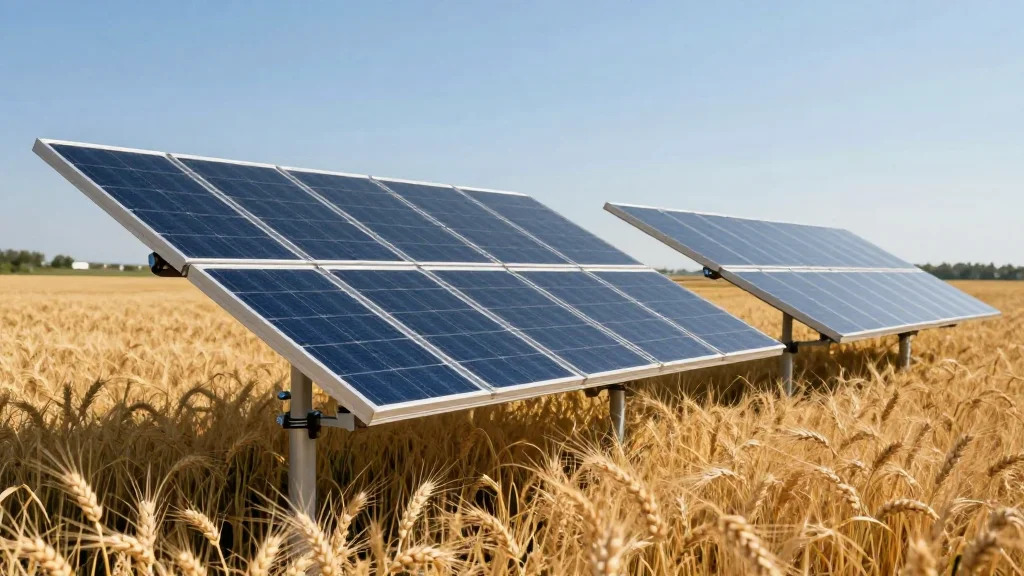
Tracker-Based Agrivoltaics Turn Fields Into Wind-Safe Zones
Why It Matters
The ability to dynamically manage wind exposure enhances crop resilience while preserving solar energy output, accelerating the commercial viability of agrivoltaic systems worldwide.
Key Takeaways
- •Tracking panels cut shelter-zone wind speeds up to 70%.
- •Lowered-first-row design reaches 86% wind reduction.
- •CFD simulations compare panels to single-row tree windbreaks.
- •Adjustable tilt enables airflow control for crop health.
- •Real‑time panel control could optimize protection and energy.
Pulse Analysis
Agrivoltaic installations are gaining traction as a dual‑purpose solution that combines renewable electricity generation with food production. However, wind turbulence can jeopardize crop yields, prompting growers to rely on traditional tree windbreaks that often sacrifice land efficiency. By integrating solar panels that track the sun, farms can create adaptable wind barriers that protect crops without compromising the solar footprint. This approach aligns with sustainable agriculture goals and addresses a key barrier to broader agrivoltaic adoption.
The Cornell study leveraged high‑fidelity computational fluid dynamics to quantify airflow under various panel configurations. Results revealed three distinct wind zones: an acceleration zone ahead of the leading rows, a shelter zone with significant speed reduction, and a recovery zone downstream. Compared with a single‑row tree barrier, horizontally single‑axis tracking panels lowered wind speeds by up to 70% in the shelter zone, while the newly proposed lowered‑first‑row design achieved an 86% reduction under extreme gusts. The ability to tilt panels between 0° and 90° offers granular control, allowing operators to modulate protection based on real‑time weather data.
These insights have immediate commercial implications. Farmers can now consider dynamic panel positioning as a cost‑effective alternative to planting trees, freeing valuable acreage for additional crops. Moreover, the research points toward automated control systems that adjust tilt in response to wind forecasts, optimizing both agronomic outcomes and solar yield. As policy incentives increasingly favor low‑carbon farming practices, the integration of wind‑smart agrivoltaics could become a differentiator for producers seeking resilience and profitability in a changing climate.
Tracker-based agrivoltaics turn fields into wind-safe zones
Comments
Want to join the conversation?
Loading comments...