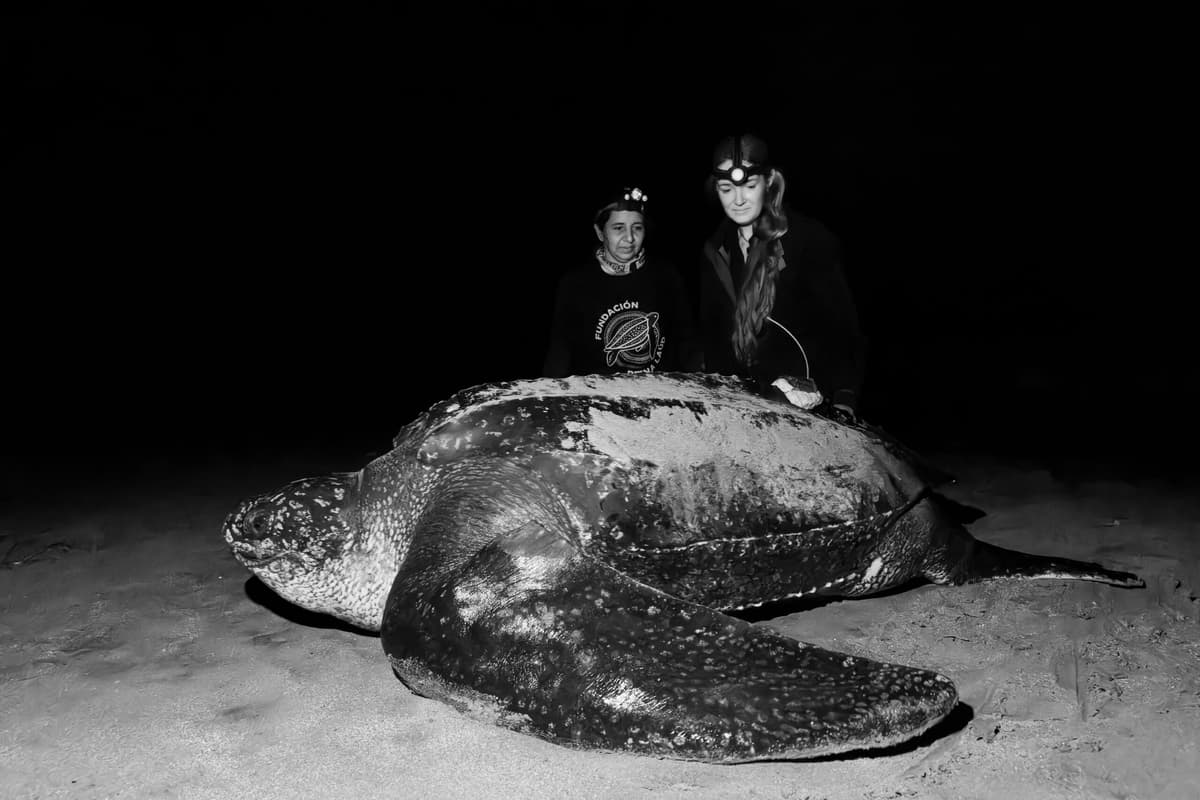
Tracking Lucero: Scientists Follow a Rare Eastern Pacific Leatherback Sea Turtle
Why It Matters
Understanding Lucero's movements will help align fisheries management with turtle habitats, protecting a critically endangered population while supporting sustainable fish stocks.
Key Takeaways
- •First leatherback nesting tag in Ecuador, southern range limit
- •Eastern Pacific subpopulation down ~98% in recent decades
- •Satellite data will guide fishers to reduce bycatch
- •Healthy turtles help control jellyfish, supporting fish stocks
- •Tracker may stay attached 1‑2 years, revealing migration to Peru
Pulse Analysis
The Eastern Pacific leatherback population teeters on the brink, with estimates under 1,000 nesting females and a 98% decline over the past few decades. This dramatic contraction reflects intense pressures from bycatch, habitat loss, and climate impacts, positioning the subpopulation as one of the most vulnerable marine vertebrate groups worldwide. Conservationists have long sought granular movement data to design effective marine protected areas, but the scarcity of tagged individuals has limited insight into critical feeding and migratory corridors.
Enter Lucero, a 25‑40‑year‑old female whose nesting event on a remote Ecuadorian beach provided a rare tagging opportunity. Researchers from Fundacion Reina Laud and the U.S.-based Leatherback Project affixed a satellite transmitter to her carapace while she was in a nesting trance, allowing the device to ping each surfacing event. Early signals already show a southward migration toward Peru’s coastal waters, suggesting that Lucero utilizes a trans‑Andean corridor previously undocumented for this subpopulation. The tag, designed to remain functional for one to two years, will capture dive profiles, travel speed, and habitat preferences, filling a critical data gap.
The implications extend beyond academic curiosity. By overlaying Lucero's tracked routes with commercial fishing effort maps, managers can pinpoint high‑risk zones where turtle and gear interactions are most likely, enabling dynamic spatial closures or gear modifications that reduce bycatch. Moreover, a thriving leatherback community can suppress jellyfish blooms, which compete with juvenile fish for plankton, thereby bolstering fishery yields. As policymakers grapple with balancing ocean use and biodiversity, Lucero’s journey offers a tangible blueprint for science‑driven, ecosystem‑based management in the Eastern Pacific.
Tracking Lucero: Scientists follow a rare Eastern Pacific leatherback sea turtle
Comments
Want to join the conversation?
Loading comments...