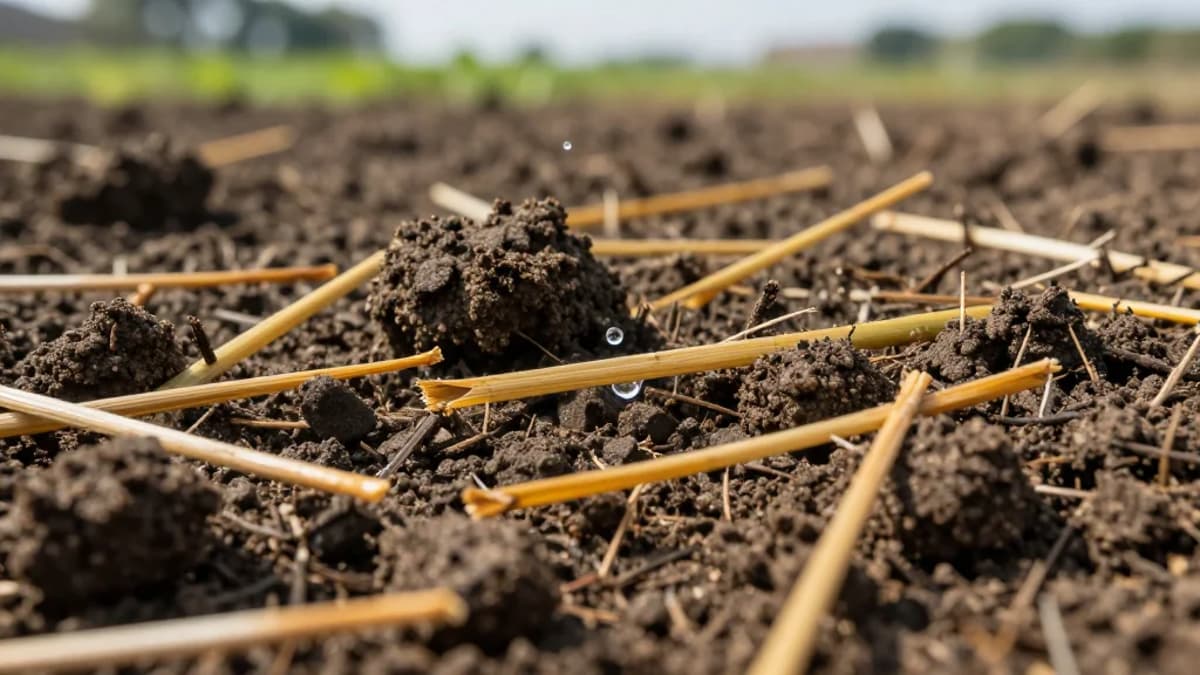
Trade-Offs and Synergies of Conservation Agriculture: Soil Properties and Crop Performance After Five Years of Minimum Tillage and Residue Retention
•March 12, 2026
0
Why It Matters
Demonstrating that low‑tillage and residue management can boost soil health and profitability, the findings support wider adoption of sustainable farming practices.
Key Takeaways
- •Minimum tillage increased soil organic carbon by 12%.
- •Residue retention improved water infiltration rates.
- •Crop yields rose 8% under conservation practices.
- •Soil bulk density decreased, enhancing root growth.
- •Economic analysis shows net profit gain after year three.
Pulse Analysis
Conservation agriculture has moved from niche practice to a cornerstone of climate‑smart farming, yet growers often wrestle with perceived yield penalties and equipment costs. Minimum tillage reduces soil disturbance, preserving structure and microbial habitats, while retaining crop residues shields the surface from erosion and moderates temperature fluctuations. Together, these practices address long‑standing concerns about soil degradation, offering a pathway to restore fertility without expanding cultivated land.
A five‑year field trial spanning diverse agro‑ecological zones quantified the agronomic and economic outcomes of this approach. Soil analyses revealed a 12% rise in organic carbon and a measurable drop in bulk density, translating into better water infiltration and root penetration. Crop performance followed suit, with an average 8% yield uplift compared to conventional tillage, and the financial model showed a net profit advantage emerging in the third year as input savings outweighed the modest equipment investment. These data underscore that the synergy between reduced tillage and residue retention can offset traditional trade‑offs.
Policymakers and agribusiness leaders can leverage these insights to shape incentive programs that lower barriers to adoption, such as subsidized equipment retrofits or carbon credit schemes. Further research should explore long‑term carbon sequestration potential and scalability across different cropping systems. As the industry seeks resilient, low‑emission solutions, the demonstrated soil health gains and profitability of conservation agriculture position it as a viable strategy for both environmental stewardship and bottom‑line growth.
Trade-offs and synergies of conservation agriculture: Soil properties and crop performance after five years of minimum tillage and residue retention
0
Comments
Want to join the conversation?
Loading comments...