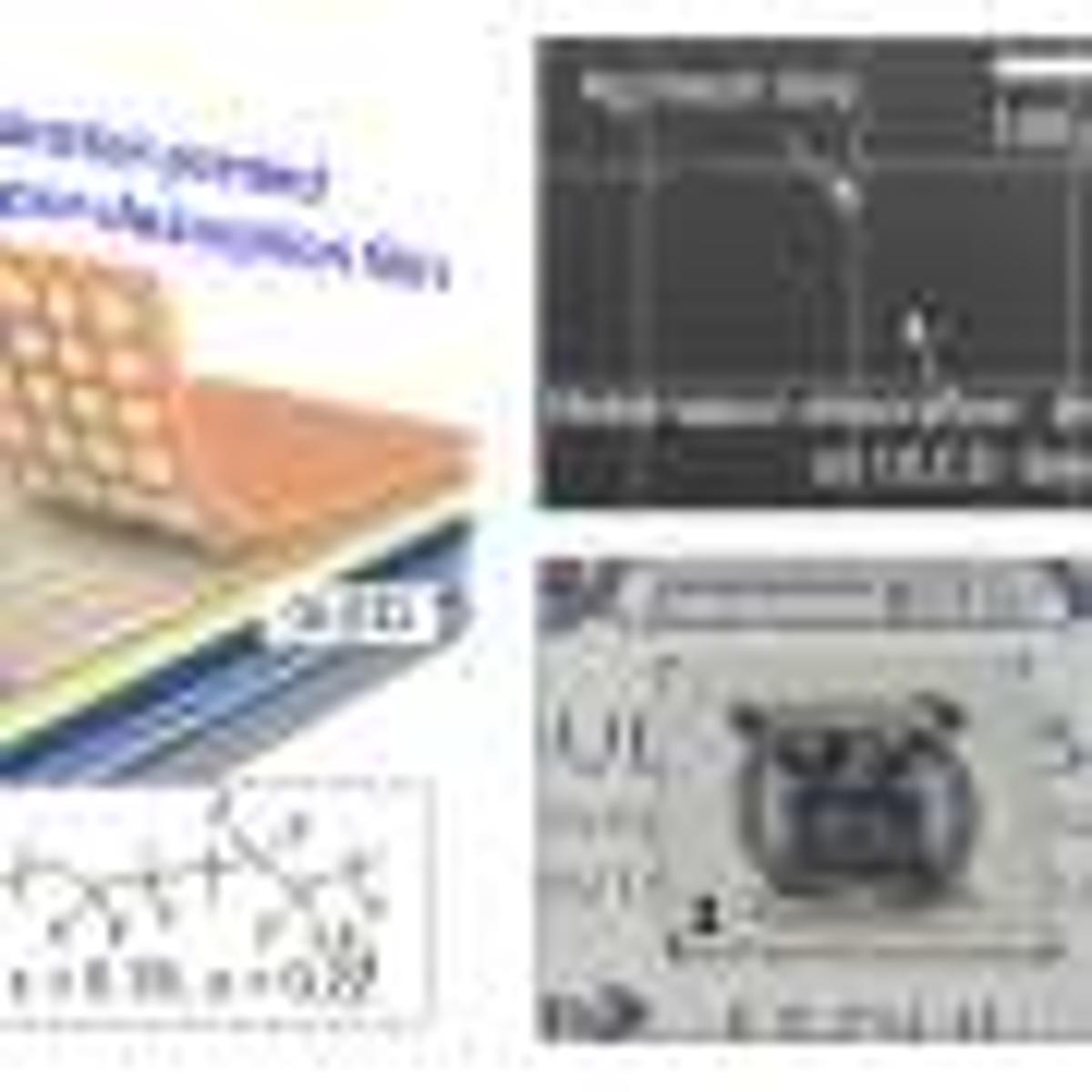
Transparent OLED Advance Could Improve AR Displays and Smart Windows
Why It Matters
The breakthrough removes a key manufacturing bottleneck, enabling scalable, high‑quality transparent displays that can accelerate AR adoption and energy‑saving smart‑window solutions.
Key Takeaways
- •Metal‑mesh electrodes reach 93‑99% transparency with 1.1‑4 Ω/sq resistance.
- •Figure‑of‑merit exceeds 10,000, a record for sub‑micron transparent electrodes.
- •Transfer‑printing avoids chemicals, protecting organic OLED layers during fabrication.
- •Direct vacuum evaporation enables scalable, high‑resolution patterning for displays.
- •Boosts brightness and efficiency of AR panels and smart‑window systems.
Pulse Analysis
The new transparent OLED platform hinges on a metal‑vapor‑desorption layer that produces ultra‑fine metal‑mesh patterns without the harsh chemicals typical of conventional electrode fabrication. By achieving 93‑99% transparency and sheet resistances as low as 1.1 Ω/sq, the electrodes outperform indium‑tin‑oxide (ITO) in both optical clarity and electrical conductivity, while the figure‑of‑merit surpasses 10,000—a benchmark rarely seen in sub‑micron transparent conductors. This combination of high optical transmission and low resistance is critical for maintaining image brightness and power efficiency in thin‑film displays.
For augmented‑reality headsets and automotive HUDs, the ability to integrate a transparent top electrode directly onto the organic stack simplifies the manufacturing workflow and reduces yield loss. The process eliminates lift‑off and wet‑etch steps that can damage delicate organic layers, ensuring consistent electroluminescent performance across large panels. Moreover, the scalable vacuum‑thermal evaporation technique aligns with existing OLED production lines, lowering capital expenditures for manufacturers seeking to add transparent display capabilities to their product portfolios.
Industry analysts anticipate that transparent OLEDs will become a cornerstone of smart‑window technology, where bidirectional light emission can regulate indoor lighting while generating visual information. As AR adoption accelerates in enterprise and consumer markets, the demand for high‑resolution, see‑through displays will drive rapid commercialization of this metal‑mesh electrode approach. Companies that secure early licensing or partnership rights stand to gain a competitive edge in the emerging market for transparent optoelectronics, potentially reshaping supply chains for both display and building‑integrated photovoltaic sectors.
Transparent OLED advance could improve AR displays and smart windows
Comments
Want to join the conversation?
Loading comments...