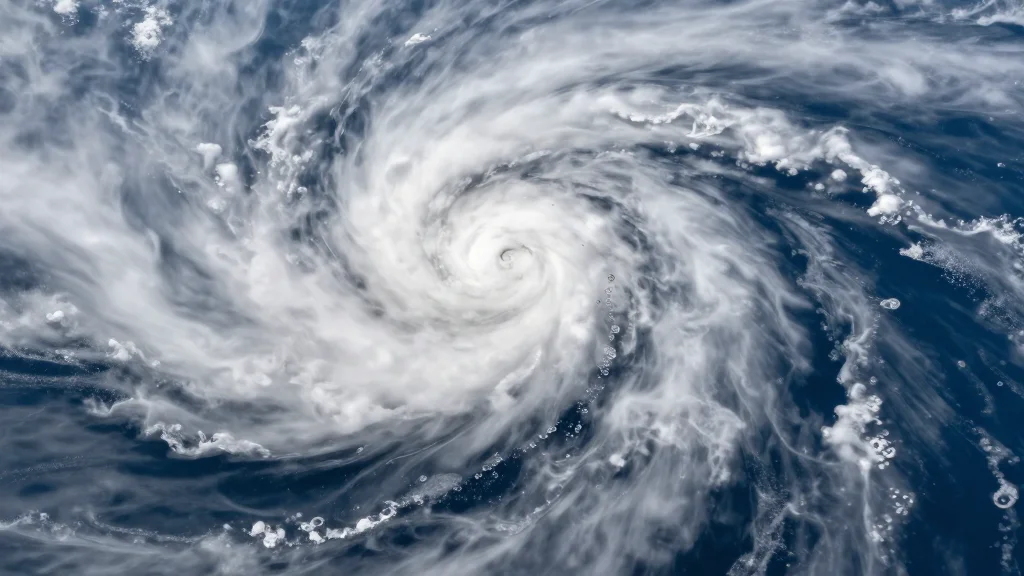
Tropical Cyclones Emit Up to 23% of Ocean Carbon, May Switch to Sink by Mid‑Century

Why It Matters
Understanding how tropical cyclones influence ocean carbon fluxes reshapes the global carbon budget, a cornerstone of climate policy. If storms shift from releasing to absorbing CO₂, they could provide a modest natural counterbalance to anthropogenic emissions, but only under specific warming trajectories. The research also links extreme weather to ocean acidification, suggesting that mitigation strategies must consider both atmospheric and marine chemistry to protect biodiversity and fisheries. Moreover, the study introduces a new variable for climate models that have traditionally treated the ocean as a static sink. Incorporating storm‑driven fluxes could improve the accuracy of sea‑level rise forecasts, carbon‑budget accounting, and the assessment of mitigation pathways outlined in the Paris Agreement.
Key Takeaways
- •Tropical cyclones accounted for 9%‑23% of ocean carbon outgassing since 1993.
- •Their contribution fell by more than 50% in the 2010s.
- •Increasing ocean stratification intensifies post‑storm surface cooling, boosting CO₂ uptake.
- •If high CO₂ emissions persist, cyclones could become net carbon sinks by the 2030s‑2040s.
- •Rapid emission cuts would delay the sink transition until the 2040s, extending outgassing effects.
Pulse Analysis
The new cyclone‑carbon flux dataset fills a critical gap in Earth system science, offering a quantifiable link between extreme weather and the oceanic carbon sink. Historically, climate models have treated the ocean as a relatively uniform absorber, but this work shows that storm dynamics can swing the balance dramatically. The projected mid‑century flip hinges on two intertwined trends: continued greenhouse‑gas emissions and the thermodynamic response of the upper ocean. In a high‑emission world, stronger surface cooling after storms could enhance uptake, providing a modest, albeit uncertain, negative feedback. However, this benefit is contingent on the storms maintaining their current intensity; any future weakening due to climate change could blunt the cooling effect and keep cyclones as net sources.
From a policy perspective, the findings reinforce the urgency of emission reductions. While a natural shift toward uptake sounds appealing, it is neither reliable nor sufficient to meet climate targets. The study also raises questions about regional equity: basins that experience more frequent or intense cyclones may see larger flux changes, potentially altering local carbon budgets and marine ecosystem health. Integrating these dynamics into national climate assessments could refine mitigation commitments and adaptation planning.
Looking ahead, the annual updates to the flux dataset and the incorporation of higher‑resolution satellite observations will be pivotal. As the climate system evolves, continuous monitoring will determine whether the projected sink transition materializes or if unforeseen feedbacks emerge. For scientists, policymakers, and coastal communities, the message is clear: extreme weather is not just a symptom of climate change—it is an active player in the carbon cycle, and its role must be accounted for in any comprehensive climate strategy.
Tropical Cyclones Emit Up to 23% of Ocean Carbon, May Switch to Sink by Mid‑Century
Comments
Want to join the conversation?
Loading comments...