Trump Seeks to Jump-Start Long-Planned Antarctic Research Icebreaker
Why It Matters
The ARV would restore U.S. scientific and strategic presence in the Southern Ocean as China expands its icebreaker fleet, but funding gaps and NSF cuts could leave the ship under‑utilized.
Key Takeaways
- •Trump requests $900 M for ARV, below $2 B estimated cost.
- •Funding classified as mandatory, but experts say it stays discretionary.
- •NSF budget faces 71 % cut to polar research, threatening ship use.
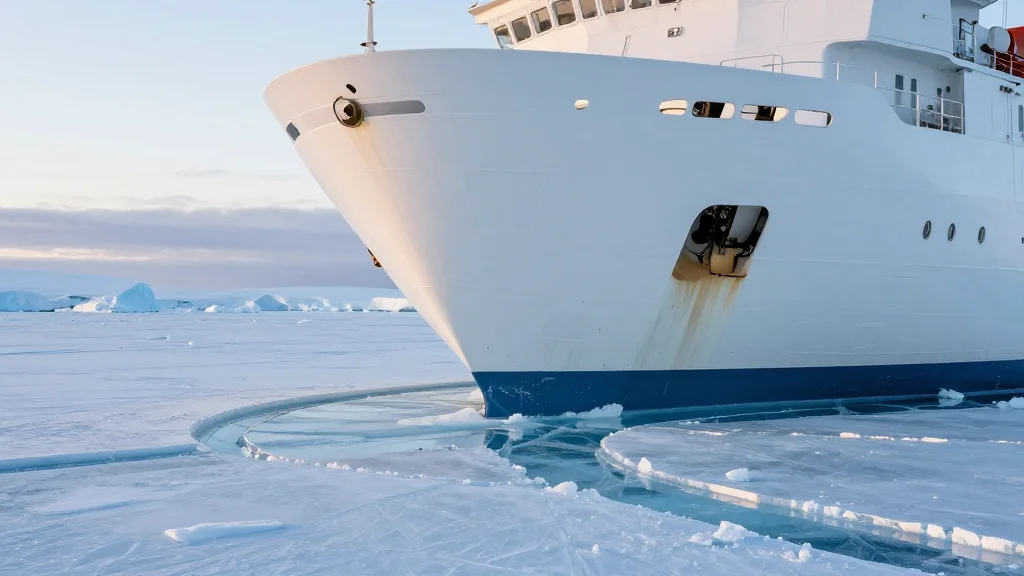
- •ARV could break 1.4 m ice at 3 knots, enhancing U.S. presence.
- •Chinese icebreaker expansion heightens strategic importance of U.S. Antarctic capability.
Pulse Analysis
The Antarctic Research Vessel (ARV) has been a long‑standing ambition of the U.S. scientific community, intended to replace the aging RV Nathaniel B. Palmer and to support multi‑disciplinary research in the Southern Ocean. By inserting a $900 million line item into his FY 2027 budget, President Trump signals a renewed political appetite for maritime dominance, even though the figure covers less than half of the $2 billion‑plus construction estimate. This modest infusion could unlock the next design‑build contract, a $2.2 billion award that was paused last year, and keep the project on a trajectory toward a 2032 delivery date.
The administration’s decision to label the funding as mandatory is a tactical move to shield the ARV from the discretionary caps that dominate Republican fiscal policy. However, former budget officials caution that without a dedicated statutory entitlement, the money will still flow through the annual appropriations process, where it must compete with border security and defense priorities. At the same time, the National Science Foundation’s own budget is slated for a 71 % reduction in polar research funding, raising doubts about the agency’s ability to finance scientific missions once the vessel is operational.
Strategically, the ARV carries weight beyond pure science. As China commissions a growing fleet of polar‑class icebreakers, the United States risks ceding influence over critical sea‑lane monitoring, climate data collection, and potential resource exploration. A state‑of‑the‑art icebreaker would enable U.S. researchers to conduct high‑resolution satellite calibration, deep‑sea sampling, and even assess emerging mining prospects, thereby reinforcing national security interests. The coming months will test whether Congress can reconcile competing budget demands and deliver the necessary appropriations to turn the ARV from a blueprint into a functional platform for the next generation of polar scientists.
Trump seeks to jump-start long-planned Antarctic research icebreaker
Comments
Want to join the conversation?
Loading comments...