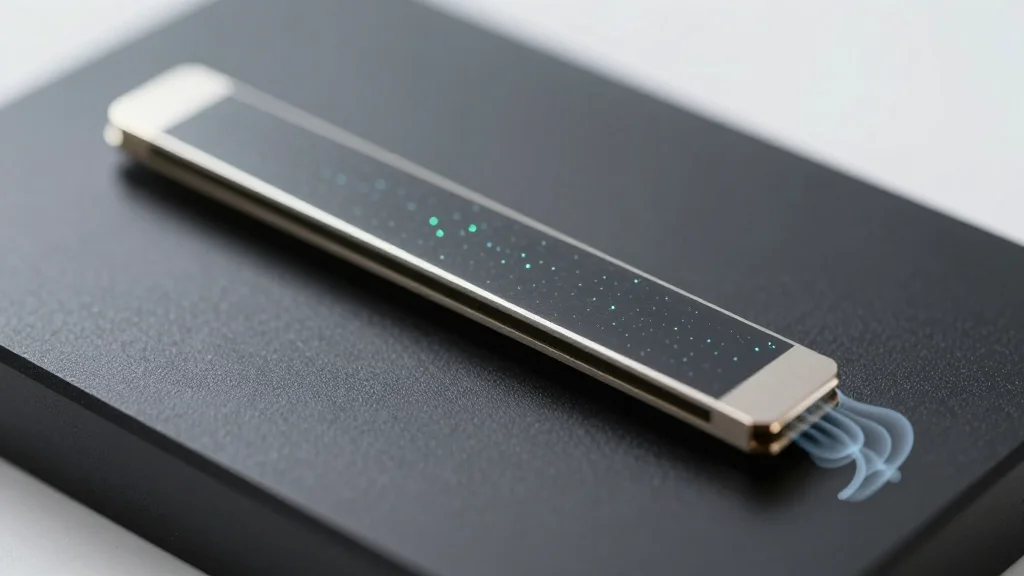
Tuning Into Quantum Sounds: Acoustic Devices Simplify Quantum Sensors
Why It Matters
By simplifying the hardware stack, the technology could accelerate deployment of quantum sensors and pave the way for scalable, low‑footprint quantum processors.
Key Takeaways
- •Intrinsic NEMS nonlinearity eliminates need for external superconducting qubits
- •Two‑level system defects become functional, not detrimental, for phonon control
- •Single‑phonon sensitivity enables molecular-level measurements and quantum sensing
- •Quantum acoustics offers a new platform competing with quantum optics
- •Future designs may engineer defects for reproducible quantum devices
Pulse Analysis
Quantum acoustics, the study of single phonons, has long lagged behind quantum optics because mechanical resonators typically required a superconducting qubit to read out their quantum states. The Caltech‑Stanford team flipped this paradigm by exploiting the inevitable two‑level system defects that reside in piezoelectric lithium‑niobate films. By cooling the NEMS devices to millikelvin temperatures and applying precise electromagnetic drives, they induced a nonlinear energy ladder directly within the resonator, turning what was once a source of decoherence into a functional quantum resource.
The practical upshot is a dramatically simpler quantum sensor architecture. Without an ancillary qubit, the NEMS chip can be fabricated on a standard silicon platform, wire‑bonded to a PCB, and inserted into a dilution refrigerator for single‑phonon operation. This intrinsic nonlinearity not only reduces system complexity and cost but also improves stability, as the device’s own material defects provide a repeatable tuning knob. Researchers anticipate that engineered defects—deliberately introduced during fabrication—could further standardize performance, making mass‑production of quantum acoustic components feasible.
Industry implications are far‑reaching. Compact quantum acoustic sensors could monitor biochemical reactions in real time, detect single‑molecule binding events, or serve as qubits in hybrid quantum computers that blend photonic and phononic processing. Their low footprint and compatibility with existing semiconductor manufacturing give them an edge over bulkier superconducting platforms, potentially accelerating adoption in sectors ranging from pharmaceutical R&D to secure communications. As the field matures, quantum acoustics may emerge as a parallel pathway to quantum advantage, complementing—rather than replacing—photon‑based technologies.
Tuning into quantum sounds: Acoustic devices simplify quantum sensors
Comments
Want to join the conversation?
Loading comments...