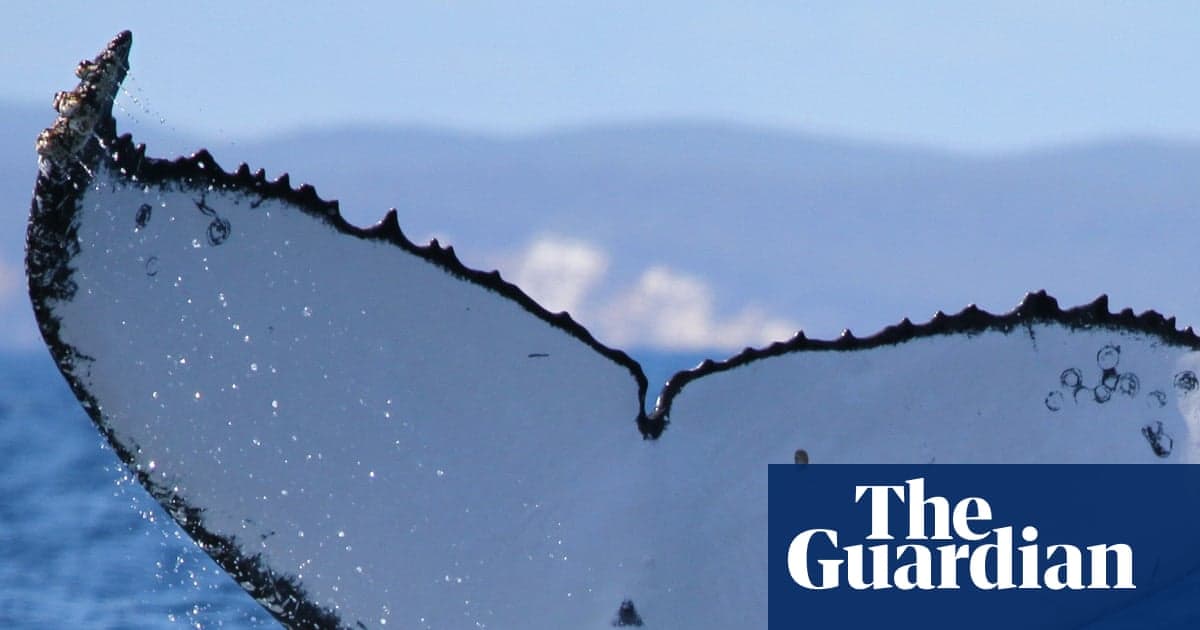
Twenty-Two Years and 15,000km Later: Fluke Discovery Sets New Record for Humpback Whale Journey
Why It Matters
The unprecedented migration underscores the need for trans‑national marine conservation and highlights how crowd‑sourced data can reveal rare wildlife behaviors that inform climate‑impact assessments.
Key Takeaways
- •Whale traveled ~15,100 km from Brazil to Australia over 22 years
- •Happywhale AI matched fluke photos, enabling rare long‑distance sightings
- •Only 0.01% of 19,283 identified whales showed such migration
- •Two whales represent first recorded exchange between Brazilian and Australian populations
- •Climate change may alter humpback routes as Antarctic krill declines
Pulse Analysis
The 15,100‑kilometer trek of a single humpback whale reshapes our understanding of cetacean migration limits. While typical Australian humpbacks complete a 10,000‑kilometer loop between Antarctic feeding grounds and the Great Barrier Reef, this outlier demonstrates that individuals can cross entire ocean basins, linking distant breeding stocks. Such extreme movements were only possible to confirm because of the Happywhale platform, which aggregates citizen‑science photographs and applies facial‑recognition‑style AI to match unique fluke patterns, turning scattered snapshots into a longitudinal dataset.
Beyond the novelty of a record‑breaking journey, the discovery carries weight for marine policy. The two whales constitute merely 0.01% of the 19,283 fluke images analyzed, highlighting how rare these cross‑population exchanges are. Yet their existence signals that humpback populations are not isolated; genetic flow and disease transmission can occur across national jurisdictions. This reality pushes governments and NGOs toward coordinated protection measures that span Brazil, Australia, and the intervening high seas, ensuring that feeding and breeding habitats remain viable.
Looking ahead, climate change looms as a catalyst for altered migration routes. Diminishing Antarctic krill stocks threaten the primary food source for many humpbacks, potentially forcing longer or alternative paths that intersect new ecological zones. Researchers caution that as ocean temperatures shift, the frequency of such long‑distance migrations could rise, making platforms like Happywhale indispensable for real‑time monitoring. By leveraging crowd‑sourced data and AI, scientists gain a scalable tool to track these changes, informing adaptive management strategies that safeguard both the whales and the broader marine ecosystem.
Twenty-two years and 15,000km later: fluke discovery sets new record for humpback whale journey
Comments
Want to join the conversation?
Loading comments...