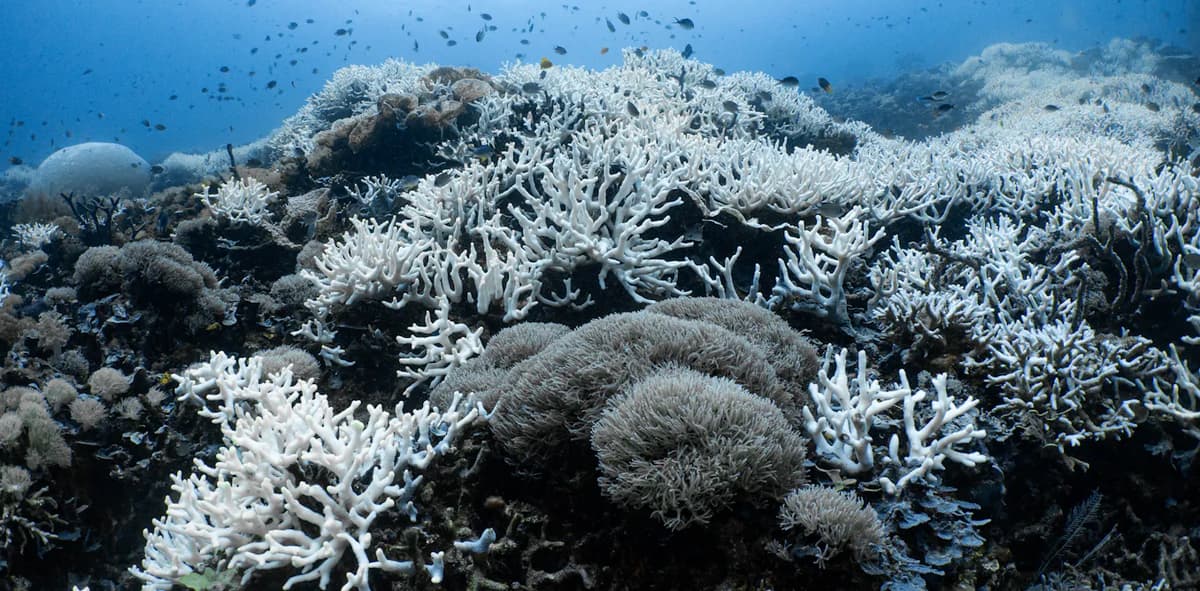
Two Decades of Research Show Indonesia’s Coral Reefs Are Heat-Tolerant — but only up to a Point
Why It Matters
The findings reveal a narrow heat‑tolerance window for Indonesia’s reefs, highlighting urgent need for climate mitigation and stronger local management to prevent widespread bleaching and loss of biodiversity.
Key Takeaways
- •26 of 32 sites showed stable hard coral cover (2004‑2023).
- •Coral loss spikes after thermal stress exceeds ~12 degree‑heating weeks.
- •Marine protected areas aid recovery but cannot prevent bleaching.
- •Eastern Indonesia recorded the fastest sea‑surface warming since 1985.
- •Monitoring must expand beyond cover to track bleaching, mortality, recruitment.
Pulse Analysis
Indonesia hosts the world’s most extensive and biodiverse coral reef system, stretching over 32,000 square kilometres. A recent ten‑year analysis compiled data from 394 permanent sites, revealing that most reefs have maintained hard‑coral cover even as sea‑surface temperatures have risen steadily since the mid‑1980s. This apparent stability, however, masks a critical vulnerability: once cumulative heat stress—measured in degree‑heating weeks—exceeds about 12, reefs begin to lose coral at an accelerated rate. The metric captures both the intensity and duration of warming, providing a clear threshold for future bleaching risk.
The study also highlights that resilience is uneven across the archipelago. Eastern Indonesia experienced the fastest warming, yet several protected areas demonstrated rapid post‑bleaching recovery, suggesting that reduced local stressors can bolster natural rebound. Conversely, reefs subjected to chronic pollution, sedimentation, and destructive fishing—such as those around Lombok—showed limited recovery despite protection status. These patterns illustrate that while marine protected areas cannot stop heat stress, they can improve the odds of survival by mitigating anthropogenic pressures that otherwise erode recovery capacity.
Policymakers and conservationists must translate these insights into coordinated action. Expanding monitoring beyond simple coral cover to include bleaching severity, mortality rates, juvenile recruitment, and community composition will provide early warning of tipping points. Integrating climate‑adaptation strategies with stricter enforcement of local protections can give reefs a fighting chance as ocean temperatures continue to climb. The study serves as a call to align national monitoring frameworks with global climate goals, ensuring Indonesia’s reefs remain a cornerstone of marine biodiversity and a vital resource for coastal economies.
Two decades of research show Indonesia’s coral reefs are heat-tolerant — but only up to a point
Comments
Want to join the conversation?
Loading comments...