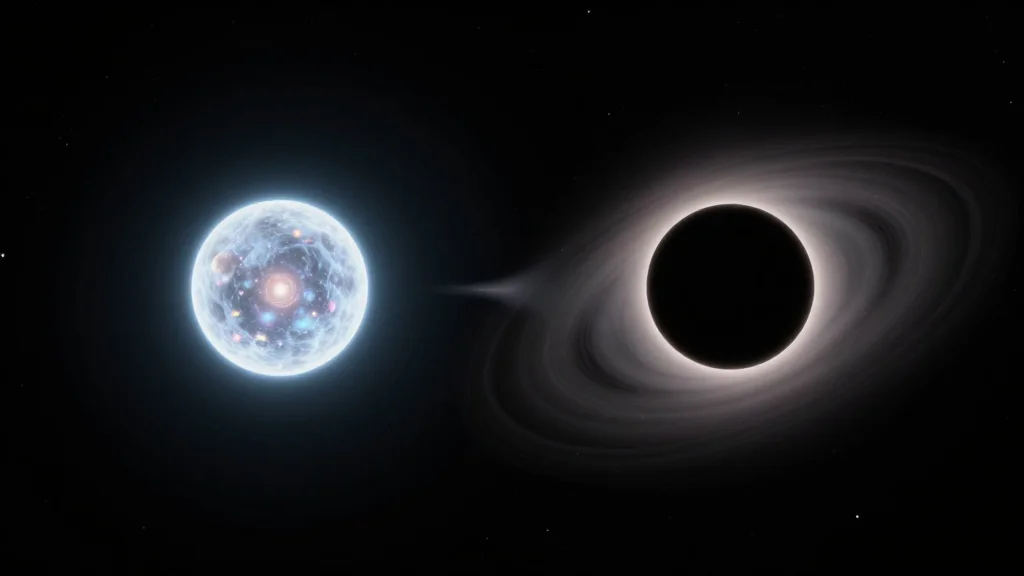
Two’s Company: New Class of Star Remnants
Why It Matters
The new class reshapes theories of stellar evolution and expands the catalog of sources for gravitational‑wave observatories, directly influencing future detection strategies and astrophysical modeling.
Key Takeaways
- •Binary mergers create previously unknown compact remnants
- •Mass range bridges neutron stars and black holes
- •Unique X‑ray and gravitational‑wave signatures identified
- •May explain certain unexplained gamma‑ray bursts
- •Stellar evolution models need revision
Pulse Analysis
The astrophysics community has long grappled with a missing link between neutron stars and black holes, and the recent identification of "dual remnants" provides that missing piece. Leveraging simultaneous observations from LIGO‑Virgo and space‑based X‑ray telescopes, scientists mapped the mass and spin characteristics of these objects, revealing a distinct population that does not fit traditional categories. This breakthrough not only enriches the taxonomy of compact objects but also validates multi‑messenger astronomy as a powerful tool for uncovering hidden phenomena.
From a gravitational‑wave perspective, dual remnants open a new parameter space for signal templates. Their intermediate masses produce waveforms that differ subtly from binary black‑hole or binary neutron‑star mergers, prompting a revision of detection pipelines to avoid missed events. Moreover, the associated X‑ray flares and occasional gamma‑ray bursts suggest these remnants could be the engines behind some short‑duration high‑energy transients that have puzzled astronomers for years. Incorporating these signatures into models will sharpen predictions for upcoming observing runs and enhance the scientific return of next‑generation detectors like the Einstein Telescope.
Beyond pure science, the discovery carries broader implications for technology and industry. Improved understanding of extreme gravity environments informs high‑energy physics experiments and could inspire novel materials designed to withstand intense radiation. Investment in multi‑messenger infrastructure is likely to increase as agencies recognize the commercial and strategic value of early detection capabilities. As research on dual remnants progresses, collaborations across academia, government labs, and private aerospace firms will accelerate, driving innovation in data analytics, sensor technology, and space‑based observation platforms.
Two’s Company: New Class of Star Remnants
Comments
Want to join the conversation?
Loading comments...