Ultra‑Powerful Neutrino Linked to Black‑Hole‑Fueled Blazar Accelerator

Why It Matters
Linking a record‑breaking neutrino to a black‑hole‑driven blazar provides the first concrete evidence that these distant engines can accelerate particles to energies unattainable on Earth. This insight bridges the gap between cosmic‑ray physics and high‑energy astrophysics, offering a natural laboratory for studying fundamental particle interactions under extreme conditions. Moreover, confirming blazars as neutrino factories would validate multi‑messenger strategies that combine neutrino, gamma‑ray, and gravitational‑wave data to map the most energetic processes in the cosmos. Beyond scientific curiosity, the findings have practical implications for particle physics. By observing particles that surpass the LHC’s energy ceiling, researchers can test theoretical models of beyond‑Standard‑Model physics without building larger accelerators. The result could guide future experimental designs and inform the search for new particles or forces that only manifest at ultra‑high energies.
Key Takeaways
- •Neutrino detected on Feb. 13, 2023, carried 220 million billion eV – 30× previous record.
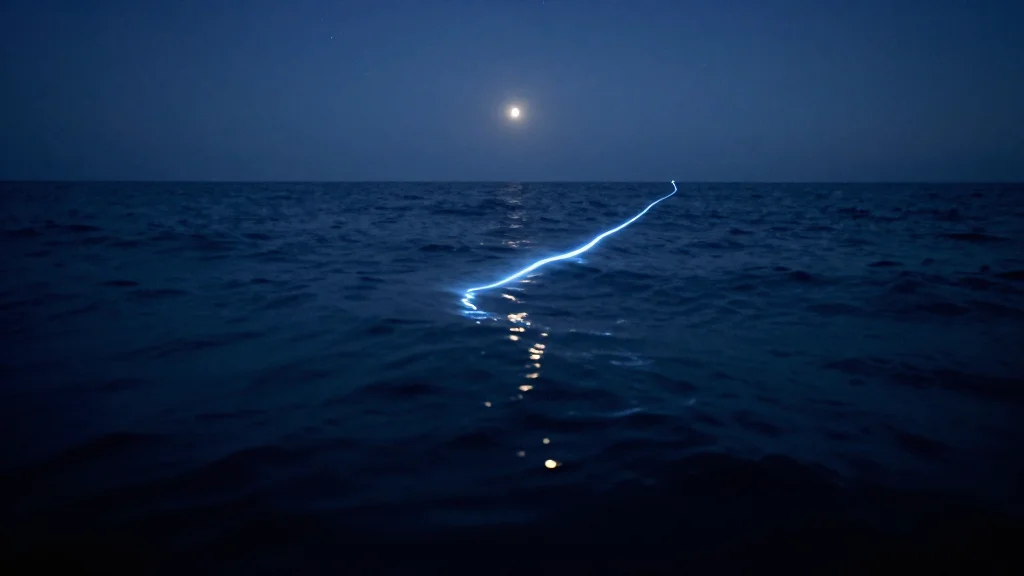
- •KM3NeT identified the particle via a single muon track 3,450 m underwater.
- •No coincident electromagnetic emission was observed, favoring a steady jet source.
- •Researchers attribute the neutrino to blazar jets powered by supermassive black holes.
- •Implications include a potential solution to the origin of ultra‑high‑energy cosmic rays.
Pulse Analysis
The attribution of the most energetic neutrino to a blazar jet marks a turning point for high‑energy astrophysics. For decades, the community has debated whether active galactic nuclei, gamma‑ray bursts, or exotic new physics drive the ultra‑high‑energy cosmic‑ray spectrum. This study tilts the balance toward black‑hole‑driven jets, which combine intense magnetic fields with relativistic shock fronts capable of boosting particles to extreme energies. Historically, neutrino astronomy has suffered from low event rates and poor angular resolution; the KM3NeT detection, paired with rigorous source vetting, demonstrates that the field is maturing into a precision science.
From a competitive standpoint, the result underscores the strategic advantage of Mediterranean‑based detectors. While IceCube in Antarctica has dominated neutrino discoveries, KM3NeT’s northern latitude offers complementary sky coverage, especially toward the Galactic Center and many known blazars. As both facilities upgrade, a global network of neutrino telescopes will likely produce overlapping detections, enabling triangulation and rapid follow‑up with optical and gamma‑ray observatories. This collaborative infrastructure could finally resolve the long‑standing mystery of where the universe’s most energetic particles originate.
Looking ahead, the key question is whether blazars can account for the bulk of the diffuse ultra‑high‑energy neutrino flux or if they represent just the tip of an iceberg. Upcoming campaigns that synchronize neutrino alerts with space‑based gamma‑ray monitors (e.g., Fermi‑LAT) and next‑generation radio arrays will test the prevalence of jet‑driven acceleration. If the blazar hypothesis holds, it will reshape theoretical models of particle acceleration, inform the design of future ground‑based observatories, and cement multi‑messenger astronomy as the primary tool for probing the extreme universe.
Ultra‑Powerful Neutrino Linked to Black‑Hole‑Fueled Blazar Accelerator
Comments
Want to join the conversation?
Loading comments...