Ultrasound as a New Wireless Power Transfer Technology
Why It Matters
Ultrasonic wireless power offers a safer, more efficient alternative to electromagnetic charging for devices that operate inside the body or underwater, expanding design possibilities and reducing reliance on batteries. This could accelerate commercialization of next‑generation medical implants and marine sensors.
Key Takeaways
- •Ultrasonic receiver delivers 20 mW at 3 cm underwater
- •Biocompatible design stays functional when bent or stretched
- •Efficiency surpasses prior ultrasonic chargers using advanced piezoelectric material
- •Enables continuous power for pacemakers, neurostimulators, and wearables
- •Potential to power underwater drones and marine sensors long‑term
Pulse Analysis
Traditional wireless charging methods—inductive coils and radio‑frequency links—struggle with tissue absorption, limited range, and electromagnetic interference, especially for devices that must sit beneath skin or in water. Ultrasound, by contrast, propagates efficiently through soft tissue and liquid media, offering deeper penetration with minimal heating. Researchers have long eyed acoustic energy as a power conduit, but early prototypes suffered from low conversion efficiency and rigid form factors that made implantation impractical. Recent advances in piezoelectric ceramics and acoustic matching layers have revived interest, positioning ultrasound as a viable complement to existing wireless power ecosystems.
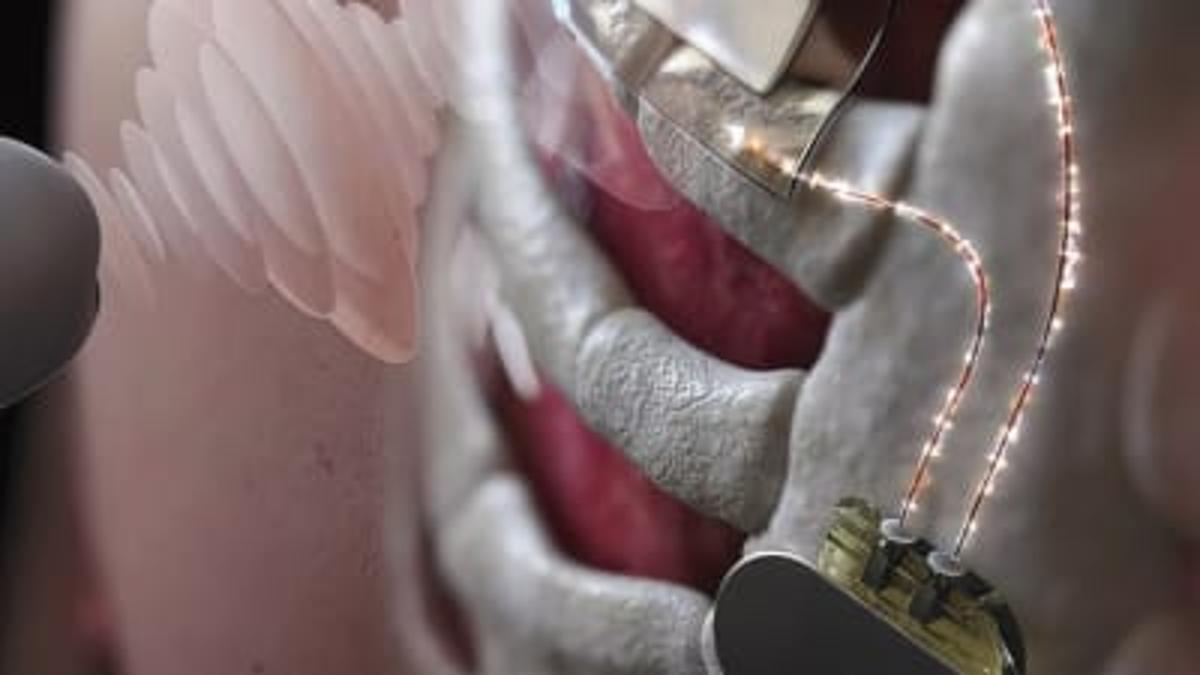
The KIST‑Korea University collaboration addresses those historic hurdles with a stretchable, biocompatible receiver that maintains power output even when deformed. By integrating high‑efficiency piezoelectric materials into a serpentine layout, the team achieved a conversion efficiency that supports 20 mW at a 3‑centimeter underwater gap and 7 mW through skin—sufficient for continuous operation of low‑power implants such as pacemakers, neurostimulators, and sensor‑rich wearables. The device’s thin, flexible substrate conforms to body contours, reducing mechanical stress and improving patient comfort. Demonstrations of real‑time battery charging underscore the technology’s readiness for pilot studies and eventual regulatory pathways.
If commercialized, ultrasonic power transfer could reshape the medical device market by eliminating the need for periodic battery replacements, thereby extending device lifespans and lowering surgical risk. Beyond healthcare, the same principle applies to autonomous underwater vehicles and long‑duration marine monitoring stations, where wired power is infeasible. Investors are likely to watch this space closely as the technology matures, given its potential to unlock new product categories and reduce reliance on conventional energy storage. Continued miniaturization, cost reduction, and safety validation will be critical to achieving widespread adoption.
Ultrasound as a New Wireless Power Transfer Technology
Comments
Want to join the conversation?
Loading comments...