‘Unbelievably Beautiful’ Evidence Extends Nobel Prize-Winning Model of Vision
Why It Matters
The findings validate mice as a reliable model for visual neuroscience and reshape experimental approaches by showing calcium imaging cannot capture thalamic inputs, prompting methodological shifts.
Key Takeaways
- •Thalamic inputs to V1 lack orientation selectivity, cortical inputs are tuned
- •Glutamate imaging, not calcium imaging, reveals thalamocortical activity
- •Orientation‑selective cortical synapses cluster on dendrites
- •Hubel‑Wiesel orientation model holds true in mice
Pulse Analysis
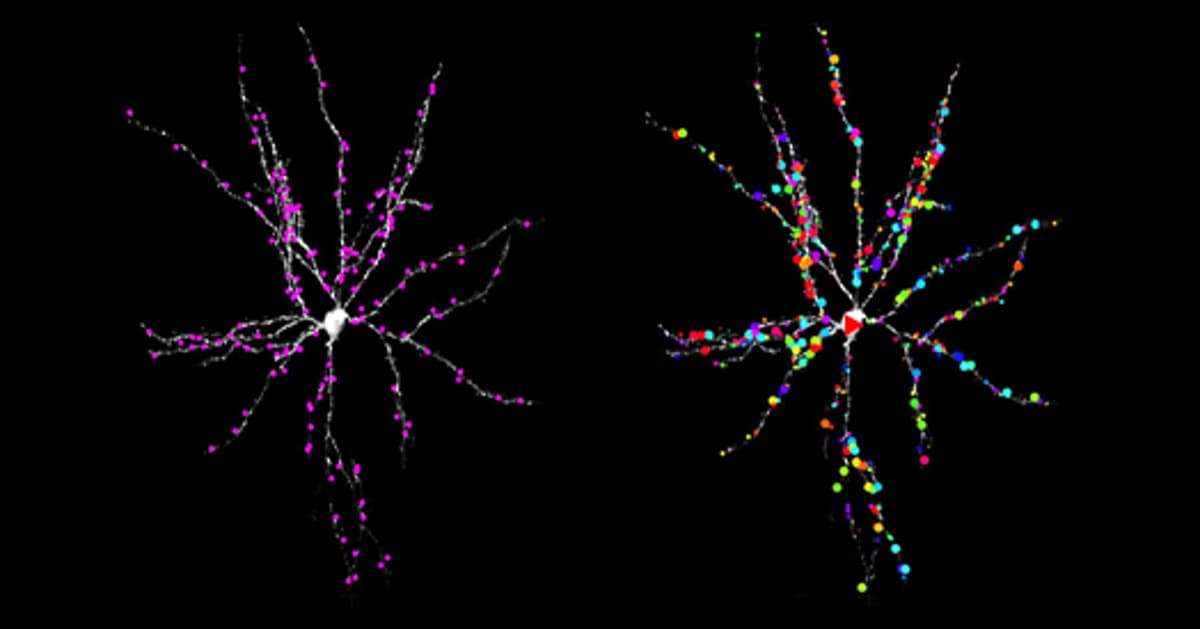
The discovery that thalamic neurons in mice convey untuned visual signals while orientation selectivity emerges within the cortex resolves a long‑standing debate about how visual information is processed across species. By imaging thousands of individual dendritic spines and distinguishing thalamic from cortical inputs, the researchers demonstrated that the classic Hubel‑Wiesel model—originally described in cats—extends to rodents. This evolutionary conservation suggests that fundamental mechanisms of edge detection and orientation coding are hard‑wired, making the mouse an attractive platform for probing visual circuitry and disease models.
A methodological breakthrough underpins the study: glutamate imaging captured synaptic activity that calcium imaging missed. Thalamocortical synapses showed no calcium transients during visual stimulation, leading earlier work to underestimate their role. The new approach reveals that thalamic inputs respond uniformly to all stimulus orientations and are evenly distributed along dendrites, whereas cortical inputs with specific orientation preferences form clustered micro‑domains. This insight forces a reevaluation of past calcium‑based studies and encourages researchers to adopt glutamate sensors for accurate mapping of thalamic contributions.
Beyond technical implications, the work opens avenues for investigating learning and plasticity in the visual system. Since thalamic synapses may activate primarily AMPA receptors without calcium influx, they could represent stable conduits that do not undergo conventional synaptic remodeling. Understanding this distinction could inform strategies for visual rehabilitation and the design of artificial vision systems that mimic biological processing. Overall, confirming the Hubel‑Wiesel framework in mice strengthens cross‑species translational research and underscores the need for precise imaging tools in neuroscience.
‘Unbelievably beautiful’ evidence extends Nobel Prize-winning model of vision
Comments
Want to join the conversation?
Loading comments...