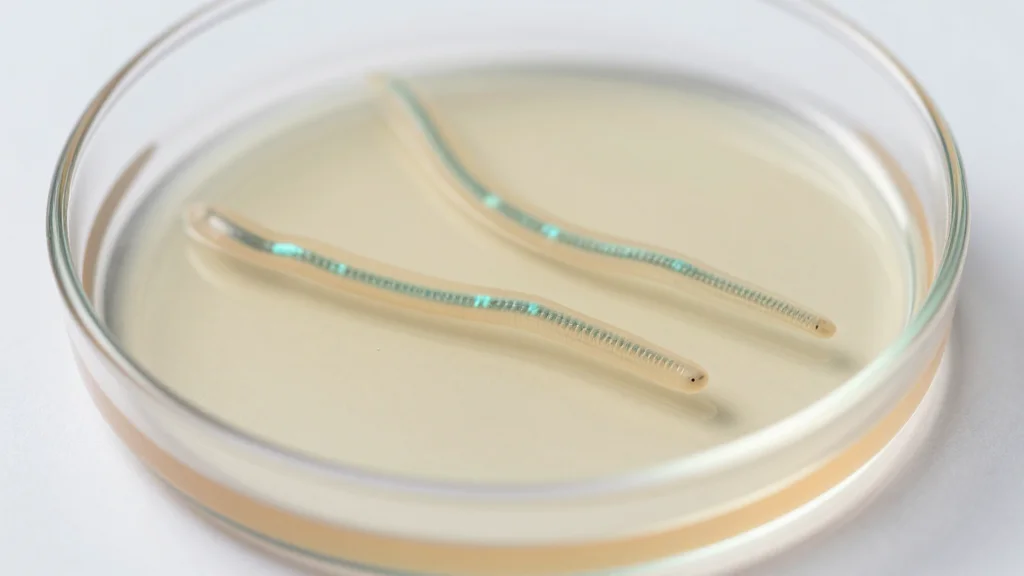
Uncovering C. Elegans Immunity via Genetic Screens
Why It Matters
The work demonstrates that immunity can emerge from coordinated signaling across disparate tissues, offering new targets for modulating host defense and neuroprotection in higher organisms. It also highlights evolutionary conserved mechanisms that bridge nematode and mammalian immune regulation.
Key Takeaways
- •OLRN‑1 in sensory neurons represses intestinal PMK‑1 signaling
- •NPR‑15 in ASJ neurons controls immune genes via ELT‑2 and HLH‑30
- •TIR‑1 cascade boosts serotonin, enhancing pathogen resistance
- •USP‑14 deubiquitinase activates intestinal Wnt signaling for immunity
- •Germline mutants (mes‑1, glp‑1) protect neurons during infection
Pulse Analysis
The latest wave of unbiased genetic screens has turned Caenorhabditis elegans into a living map of inter‑tissue immune communication. By using reporters such as irg‑4p::GFP, researchers pinpointed OLRN‑1 in AWC chemosensory neurons as a brake on the gut’s p38 MAPK pathway, while NPR‑15 in ASJ neurons was shown to orchestrate ELT‑2/GATA and HLH‑30/TFEB transcriptional programs. These findings cement the gut‑brain axis as a central hub where neuronal perception directly calibrates mucosal defenses, redefining immunity as a systemic, rather than cell‑autonomous, process.
Beyond neuronal inputs, the screens uncovered a layer of post‑translational control that mirrors mammalian immune regulation. The deubiquitinase USP‑14 and the E3 ligase WWP‑1 modulate Wnt and TFEB signaling, respectively, ensuring robust expression of antimicrobial peptides like clec‑60 and ilys‑2. Notably, the RFX‑family transcription factor DAF‑19 partners with the bZIP factor ATF‑7, echoing the RFX‑CREB partnership that drives MHC class II gene expression in humans. This evolutionary echo underscores deep‑rooted regulatory motifs that span from nematodes to mammals.
These insights have far‑reaching implications for human health. The germline‑to‑neuron axis uncovered in C. elegans suggests that reproductive tissues may emit systemic signals influencing neural resilience during infection, a concept gaining traction in neurodegenerative research. As CRISPR‑based screens and single‑cell transcriptomics become routine, the worm model will continue to illuminate hidden communication pathways, guiding the discovery of novel therapeutic targets for inflammatory and neurodegenerative diseases. The emerging picture is clear: immunity is a collaborative enterprise of the whole organism, and dissecting its circuitry in simple models can unlock strategies to rewire human immune and neural networks.
Uncovering C. elegans Immunity via Genetic Screens
Comments
Want to join the conversation?
Loading comments...