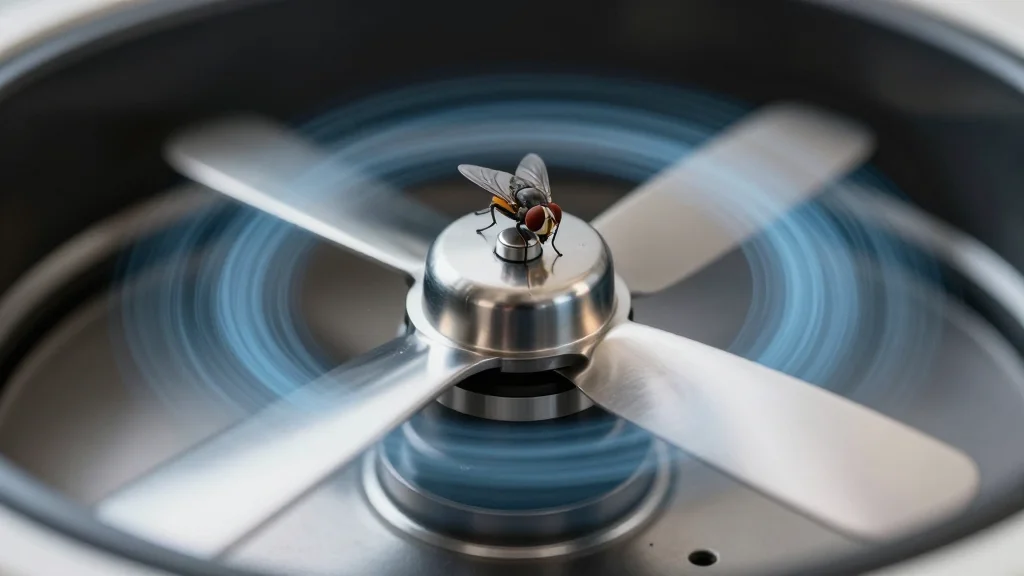
Under Crushing Hypergravity, Fruit Flies Adapt—And Recover
Why It Matters
These results reveal that complex organisms can physiologically adapt to extreme gravity, informing aerospace medicine and the design of countermeasures for astronauts facing high‑G phases during launch, re‑entry, or planetary missions.
Key Takeaways
- •Flies survived 4–13 G exposure, maintaining reproduction
- •4 G induced hyper‑activity for ~7 weeks; higher G reduced activity
- •Fat stores rose post‑exposure, then fell as activity increased
- •Ten generations lived, mated, and reproduced under elevated gravity
Pulse Analysis
While most space‑biology studies focus on microgravity, the opposite extreme—hypergravity—has received far less attention despite its relevance to high‑G phases of flight and planetary re‑entry. By placing Drosophila melanogaster in a purpose‑built centrifuge that simulated forces from 4 G to 13 G, UC Riverside scientists created a scalable model to probe how gravity itself drives neural and metabolic regulation. The fruit fly’s compact nervous system and well‑characterized genetics make it an ideal proxy for uncovering conserved pathways that could translate to larger organisms, including humans.
The experiment uncovered a striking biphasic behavioral response. At a modest 4 G, flies entered a hyper‑active state that persisted for roughly seven weeks—most of their adult lifespan—before returning to baseline. In contrast, exposure to 7 G, 10 G, and 13 G suppressed locomotion and climbing ability, yet these deficits also resolved over time. Metabolically, flies accumulated fat shortly after exposure, then mobilized those reserves as activity surged, suggesting the brain reallocates energy budgets in direct response to gravitational load. Crucially, the team extended the protocol across ten generations, showing that continuous hypergravity does not extinguish reproductive capacity or lineage viability.
For aerospace medicine, the findings challenge the assumption that high‑G environments inevitably cause irreversible damage. Demonstrating that an organism can recalibrate its energy‑use strategy and recover after prolonged stress offers a biological template for developing pharmacological or training‑based countermeasures for pilots and astronauts. As NASA’s Artemis program and commercial lunar ventures increase the frequency of high‑G exposure during launch, docking, and re‑entry, integrating hypergravity insights could improve crew health monitoring and habitat design. Future work will likely explore the molecular signaling cascades behind these adaptations, paving the way for cross‑species applications that safeguard human performance in the next era of spaceflight.
Under crushing hypergravity, fruit flies adapt—and recover
Comments
Want to join the conversation?
Loading comments...