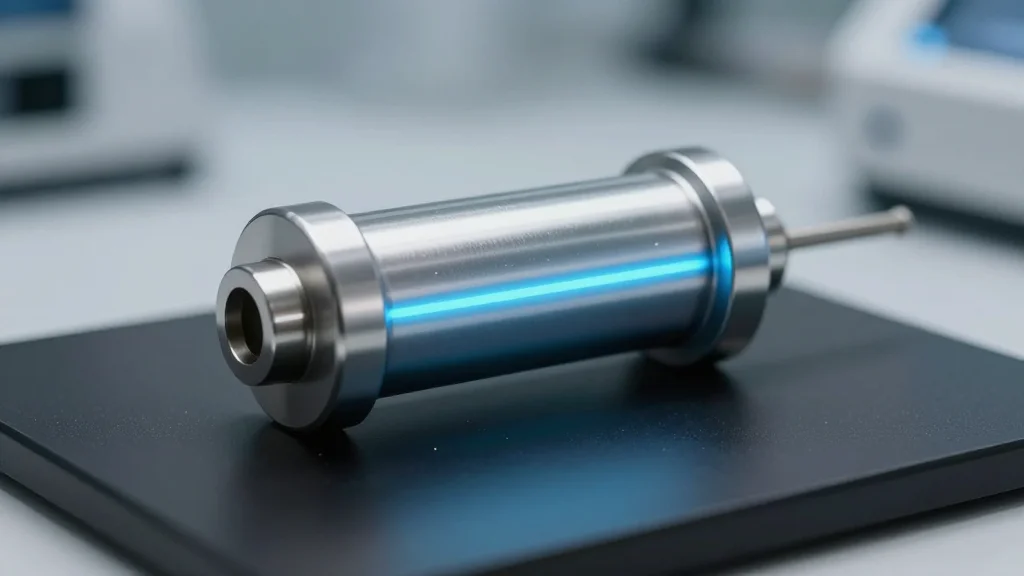
Undergrad Team Sets New Axion Limits with Low‑Cost “Cosmic Radio” Detector

Why It Matters
Axions remain one of the most compelling dark‑matter candidates, but their elusive nature requires probing an enormous range of masses and couplings. By delivering new exclusion limits, the Hamburg undergraduates have removed a portion of the viable parameter space, sharpening the focus for future searches. Their work also proves that meaningful contributions can arise from modest, well‑engineered experiments, encouraging a more inclusive research ecosystem where universities and even individual labs can play a direct role in solving fundamental cosmological puzzles. Beyond the scientific payoff, the project serves as a powerful training ground. Students who design, build, and operate a detector gain practical expertise that bridges theory and instrumentation, preparing the next generation of physicists to lead larger collaborations. The model of leveraging existing infrastructure with targeted funding could be replicated worldwide, potentially multiplying the number of independent dark‑matter probes and accelerating the overall discovery timeline.
Key Takeaways
- •Undergraduate team at University of Hamburg built a resonant‑cavity detector (“cosmic radio”) for axion searches.
- •Published new exclusion limits on axion‑photon coupling in a narrow mass range, shrinking the viable parameter space.
- •Project funded by a university student‑research grant and supported by the Quantum Universe Cluster of Excellence.
- •Students leveraged existing MADMAX facilities, demonstrating that small‑scale setups can produce publishable results.
- •Planned upgrades aim to broaden frequency coverage and improve sensitivity for a longer 2026 data‑taking run.
Pulse Analysis
The Hamburg experiment illustrates a strategic shift in dark‑matter research toward modular, low‑cost instruments that can be deployed rapidly across many sites. Historically, the field has been dominated by multi‑billion‑dollar facilities, but the diminishing returns of ever‑larger detectors have prompted a re‑evaluation of how best to cover the vast axion landscape. By distilling the essential physics into a compact cavity, the students have shown that a distributed network of similar devices could collectively achieve coverage comparable to a single, massive experiment, while also providing redundancy and cross‑validation.
From a funding perspective, the success of this student‑led project may influence grant agencies to allocate a larger share of their portfolios to exploratory, high‑risk, low‑budget initiatives. Such a portfolio diversification mirrors trends in other high‑tech sectors where agile, small‑team innovation often outpaces large‑scale bureaucratic efforts. If universities worldwide adopt this model, the cumulative data volume could increase dramatically, tightening constraints on axion models faster than any single collaboration could achieve alone.
Looking forward, the key challenge will be scaling the approach without sacrificing the simplicity that made it viable. Enhancements such as higher‑Q cavities, cryogenic operation, and advanced quantum‑limited amplifiers could boost sensitivity, but they also risk re‑introducing complexity and cost. The community will need to balance these trade‑offs, perhaps by establishing shared core facilities that provide high‑performance components to multiple student teams. In doing so, the field can maintain a vibrant pipeline of fresh ideas while steadily chipping away at the dark‑matter mystery.
Undergrad Team Sets New Axion Limits with Low‑Cost “Cosmic Radio” Detector
Comments
Want to join the conversation?
Loading comments...