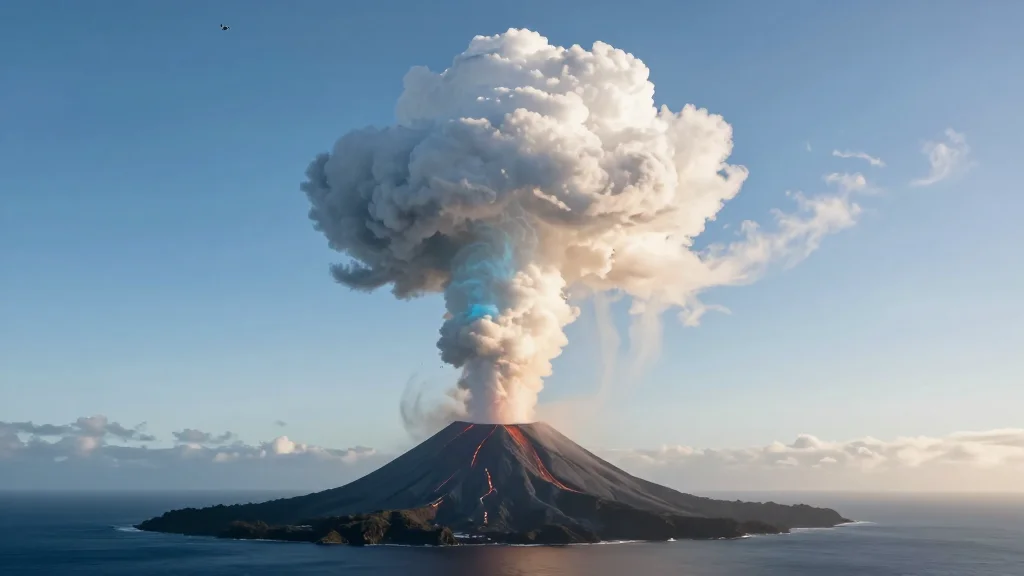
Underwater Volcano Plume Found to Destroy Atmospheric Methane

Why It Matters
The ability of a natural event to remove methane from the atmosphere reshapes our understanding of Earth’s self‑regulating mechanisms. Climate models that omit such episodic sinks may overestimate future methane concentrations, leading to skewed policy recommendations. Moreover, the chemical pathway identified—chlorine‑driven methane oxidation in the stratosphere—offers a tangible target for engineered solutions, potentially informing future geoengineering research. Beyond modeling, the discovery underscores the importance of high‑resolution satellite monitoring for uncovering hidden atmospheric processes. As satellite capabilities improve, scientists may identify additional natural sinks, refining the balance between emissions and removal that underpins climate projections.
Key Takeaways
- •The 2022 Tonga eruption generated a stratospheric plume that destroyed methane, detected via formaldehyde signatures
- •Sentinel‑5P’s TROPOMI instrument captured record‑high formaldehyde concentrations over a ten‑day period
- •Researchers linked the chemistry to chlorine atoms released from ash‑salt aerosols under UV light
- •The finding forces climate models to incorporate episodic natural methane sinks
- •Future work will model the plume’s dynamics and explore artificial replication of the process
Pulse Analysis
The Tonga plume discovery arrives at a moment when the climate community is grappling with the uncertainty surrounding methane’s future trajectory. Historically, methane has been treated as a short‑lived gas whose atmospheric concentration is driven primarily by anthropogenic sources and slow oxidation by hydroxyl radicals. By revealing a rapid, chlorine‑mediated destruction pathway, the study injects a new variable into that equation. If similar processes are more common than currently recognized, they could partially offset projected methane growth, especially in a warming world where stratospheric chemistry may become more reactive.
From a strategic perspective, the research highlights the dual role of satellite data: not only as a monitoring tool for emissions but also as a discovery engine for unforeseen atmospheric chemistry. The need to manually recalibrate TROPOMI underscores a broader challenge—existing instruments were not built with extreme volcanic plumes in mind, suggesting that future satellite designs should incorporate broader dynamic ranges to capture such events.
Looking forward, the real test will be translating this natural phenomenon into a controllable climate‑mitigation technology. Replicating the chlorine‑release mechanism without triggering ozone depletion or other side effects will require nuanced engineering. Nonetheless, the Tonga case provides a proof‑of‑concept that nature can, under the right conditions, act as a rapid methane scrubber—a concept that could inspire a new class of stratospheric interventions.
Underwater Volcano Plume Found to Destroy Atmospheric Methane
Comments
Want to join the conversation?
Loading comments...