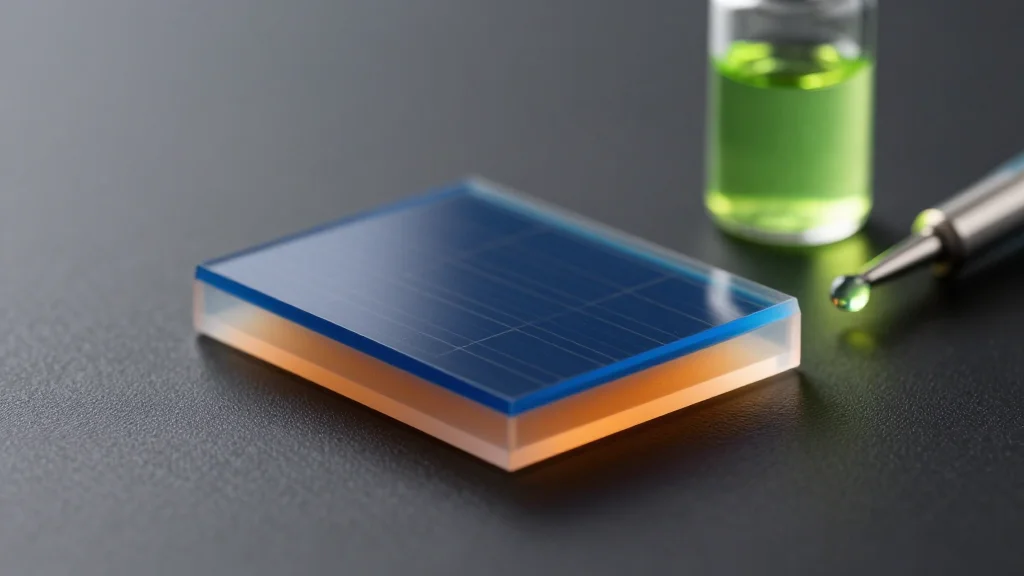
Unlocking 29.76% Efficiency for Perovskite Tandems
Why It Matters
The breakthrough narrows the gap between laboratory efficiencies and commercial viability, positioning all‑perovskite tandems as a competitive alternative to silicon photovoltaics. It also offers a universal crystallisation control framework that could accelerate market adoption of high‑efficiency solar technologies.
Key Takeaways
- •Colloidal chemistry yields 29.76% PCE in all-perovskite tandems
- •Tartrate and citrate modulators control WBG/NBG nucleation
- •Choline cations passivate metal ions, improving interface stability
- •Certified 29.22% efficiency, 90.2% retention after 700 h operation
- •1 cm² cell reaches 28.87% efficiency, demonstrating scalability
Pulse Analysis
The new colloidal chemistry platform tackles a long‑standing bottleneck in perovskite tandem fabrication: mismatched crystal growth rates between the wide‑bandgap and narrow‑bandgap subcells. By introducing a dual‑anion system—tartrate to stabilise lead coordination in the WBG layer and citrate to optimise tin‑iodide bonding in the NBG layer—the researchers achieve uniform nucleation and suppress phase segregation. This precise chemical tuning not only lifts the power conversion efficiency to a near‑30% threshold but also curtails defect formation, a critical factor for long‑term device reliability.
Beyond the laboratory, the approach demonstrates practical scalability. The team produced a 1 cm² tandem module that maintained a 28.87% efficiency, a notable achievement given the typical performance drop when moving from small‑area cells to larger formats. The integration of choline cations further reinforces the crystal‑colloid interface, creating a robust matrix that endures prolonged maximum‑power‑point tracking, as evidenced by over 90% efficiency retention after 700 hours. Such operational stability addresses a key concern for investors and utilities considering perovskite technologies for grid‑scale deployment.
The broader implications extend to the global renewable energy landscape. With theoretical efficiencies for all‑perovskite tandems exceeding 40%, the demonstrated 29.76% PCE narrows the path toward commercially viable, high‑performance solar panels that could outpace conventional silicon in both cost and energy yield. The universal nature of the carboxylate‑based modulation strategy suggests it can be adapted across various perovskite compositions, potentially accelerating the transition to next‑generation photovoltaic architectures and supporting ambitious climate targets worldwide.
Unlocking 29.76% efficiency for perovskite tandems
Comments
Want to join the conversation?
Loading comments...