Unlocking the Potential of Organic Cathode in Aqueous Zinc‐Ion Batteries Through Composite Engineering
Why It Matters
The breakthrough addresses the long‑standing dissolution problem of organic cathodes, unlocking a path toward low‑cost, environmentally friendly grid‑scale storage that can compete with lithium‑ion systems.
Key Takeaways
- •PTO@CMK-3 delivers >90 mAh g⁻¹ after 2,000 cycles.
- •Retains 62% capacity after 33,000 cycles at 2 A g⁻¹.
- •CMK-3 carbon improves electronic and ionic conductivity.
- •Adsorption by CMK-3 suppresses PTO dissolution in water.
- •Scalable composite method enables greener aqueous zinc‑ion batteries.
Pulse Analysis
Aqueous zinc‑ion batteries have attracted attention as a safer, cheaper alternative to lithium‑ion technology, especially for stationary applications. Their inherent safety stems from non‑flammable electrolytes, while zinc’s abundance lowers material costs. However, organic cathodes—promising for high energy density and sustainability—have struggled with rapid dissolution in water, limiting cycle life and commercial viability. Overcoming this barrier is essential for the broader adoption of AZIBs in grid‑scale storage and renewable integration.
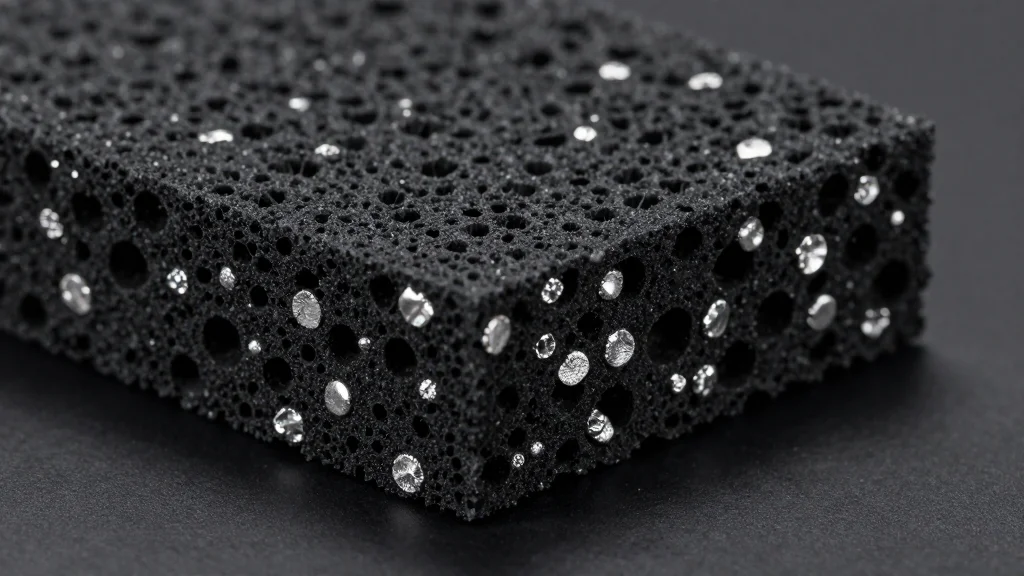
The PTO@CMK-3 composite tackles the dissolution issue through a clever marriage of chemistry and nanostructure. CMK‑3, a mesoporous carbon with ordered pores, provides a conductive scaffold that accelerates electron transport and offers abundant adsorption sites to trap PTO discharge products. This dual function not only stabilizes the organic active material but also creates a uniform template for zinc ion deposition, reducing dendrite formation. Laboratory tests show the composite sustaining over 90 mAh g⁻¹ after 2,000 cycles at low current and maintaining 62% capacity after an unprecedented 33,000 cycles at high current, signaling a major leap in durability.
If the synthesis method can be scaled, the impact on the energy storage market could be profound. A cost‑effective, long‑lasting organic cathode would enable fully aqueous batteries that combine safety, low environmental impact, and competitive performance. Utilities and micro‑grid operators could deploy these systems to smooth renewable intermittency without the fire risk associated with lithium chemistries. Moreover, the composite approach is adaptable to other organic molecules, opening a pathway for a new class of sustainable battery materials that could reshape the competitive landscape of stationary storage.
Unlocking the Potential of Organic Cathode in Aqueous Zinc‐Ion Batteries Through Composite Engineering
Comments
Want to join the conversation?
Loading comments...