UNSW Researchers Shed New Light on UV-Induced Degradation in PERC, TOPCon Solar Cells
Why It Matters
Understanding UV‑induced degradation enables manufacturers to redesign passivation schemes, protecting module efficiency and extending service life in high‑UV markets.
Key Takeaways
- •UV exposure creates interface defects, increasing recombination in PERC and TOPCon
- •PERC front surface degrades most severely under UV‑B irradiation
- •TOPCon rear remains stable thanks to UV‑absorbing poly‑Si layer
- •Thicker AlOx layers reduce UV‑induced degradation by limiting hydrogen migration
- •Interface engineering and hydrogen management crucial for UV‑stable high‑efficiency modules
Pulse Analysis
The phenomenon of ultraviolet‑induced degradation (UVID) has emerged as a hidden reliability risk for modern silicon photovoltaics. While traditional PERC modules have long been praised for their cost‑effectiveness, the UNSW team revealed that UV‑B radiation accelerates defect formation at silicon‑dielectric interfaces, turning otherwise benign traps into powerful recombination centers. This insight reframes earlier chemical‑hydrogen models, showing that electronic activity, not just hydrogen migration, drives performance loss under realistic sunlight exposure.
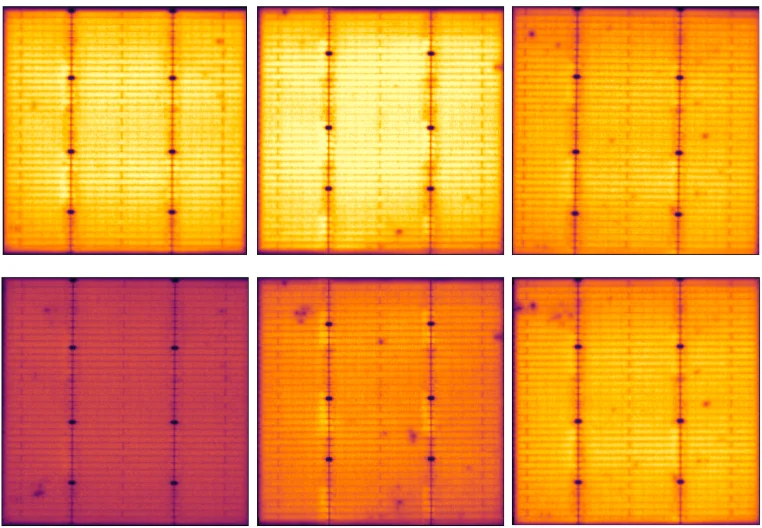
In controlled experiments, 182 mm‑square PERC and TOPCon cells were subjected to 114 W/m² UV‑B at 60 °C, with photoluminescence imaging and quasi‑steady‑state lifetime measurements tracking degradation. The front side of PERC cells, protected only by SiNx, suffered the greatest efficiency drop, whereas the TOPCon rear—shielded by a poly‑Si layer—remained largely unaffected. Crucially, the study highlighted the aluminum oxide (AlOx) passivation layer as a lever for UV stability; thicker AlOx or AlOx/SiNx stacks improve charge density and suppress defect activation.
For the solar industry, these findings translate into actionable design guidance. Module producers can mitigate UVID by engineering deeper AlOx layers, integrating UV‑absorbing rear stacks, and managing hydrogen to prevent defect proliferation. As global solar capacity expands into high‑irradiance regions, ensuring UV‑stable modules will be pivotal for maintaining warranty‑grade performance and protecting investor confidence. Ongoing research will likely focus on scalable deposition techniques and real‑world field validation, cementing UV resilience as a standard metric for next‑generation high‑efficiency PV products.
UNSW researchers shed new light on UV-induced degradation in PERC, TOPCon solar cells
Comments
Want to join the conversation?
Loading comments...