Why It Matters
Tracking C/2025 R3 provides rare real‑time data on a comet leaving the Solar System, informing models of cometary dynamics and composition while offering a brief viewing window for astronomers and the public.
Key Takeaways
- •Comet C/2025 R3 (PanSTARRS) now visible in Southern Hemisphere.
- •It is moving toward Orion, shifting upper‑right nightly.
- •The comet will exit the Solar System within weeks.
- •Visibility limited to about one week for ground‑based cameras.
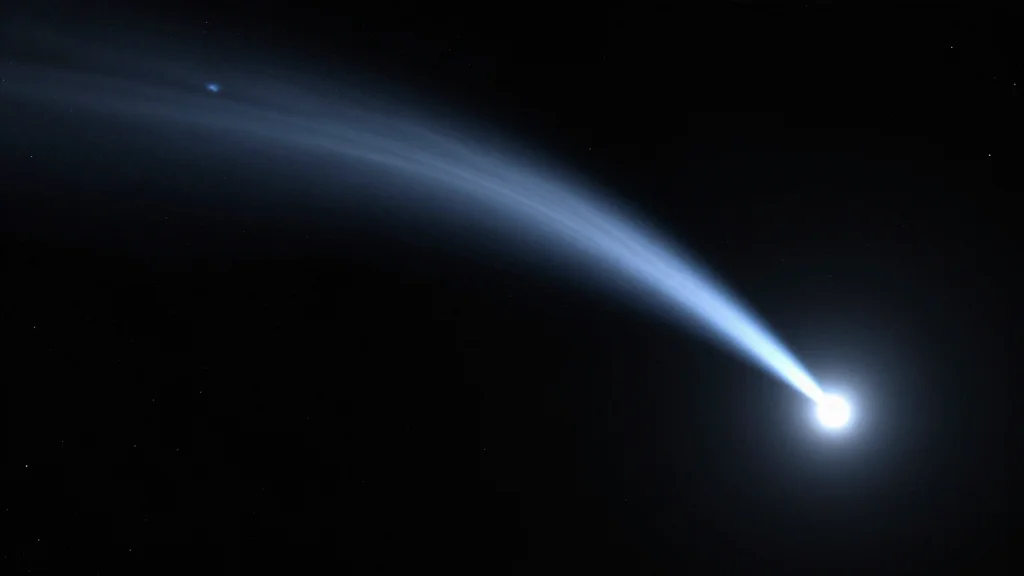
- •Image captured from Cerro Paranal, Chile, shows comet against background stars.
Pulse Analysis
Comet C/2025 R3 (PanSTARRS) was discovered in 2025 by the Pan-STARRS survey, a wide‑field telescope system designed to spot near‑Earth objects. Its highly eccentric orbit carries it on a trajectory that will ultimately fling it out of the Solar System, making it one of the few comets observed during the outbound phase. Astronomers monitor such objects to refine orbital mechanics models and to study how volatile materials behave under solar heating, which can reveal clues about the early Solar System’s building blocks.
The latest APOD image, captured from the world‑class Cerro Paranal Observatory in Chile, shows the comet streaking across a star‑filled sky with the distant Rigel and the Witch Head Nebula as backdrop. Because the comet has moved south of the celestial equator, observers in the Southern Hemisphere now have the optimal window—approximately a week after sunset—to photograph it before it fades. Its gradual motion toward the upper right places it on a path that will intersect Orion’s western edge, offering a striking visual for both professional telescopes and amateur skywatchers equipped with modest cameras.
Beyond its visual appeal, C/2025 R3 serves as a natural laboratory for studying cometary composition. Spectroscopic measurements taken during its brief visibility can detect water, carbon dioxide, and organic compounds released as the nucleus sublimates. These data feed into broader research on how comets may have delivered essential volatiles to early Earth. The APOD platform amplifies public engagement, turning a fleeting astronomical event into an educational moment that underscores the dynamic nature of our cosmic neighborhood.
Untitled
Comments
Want to join the conversation?
Loading comments...