Why It Matters
Understanding the interaction between ultraviolet radiation and dense interstellar dust refines models of star formation, a cornerstone of galactic evolution research.
Key Takeaways
- •Thackeray's Globules reside in IC 2944, ~7,600 light‑years distant.
- •Each globule exceeds one light‑year in size, potential star‑forming sites.
- •UV radiation from nearby hot stars is eroding the dark clouds.
- •Hubble palette image from El Sauce Observatory reveals fracturing structures.
- •Study aids models of massive stars shaping surrounding nebulae.
Pulse Analysis
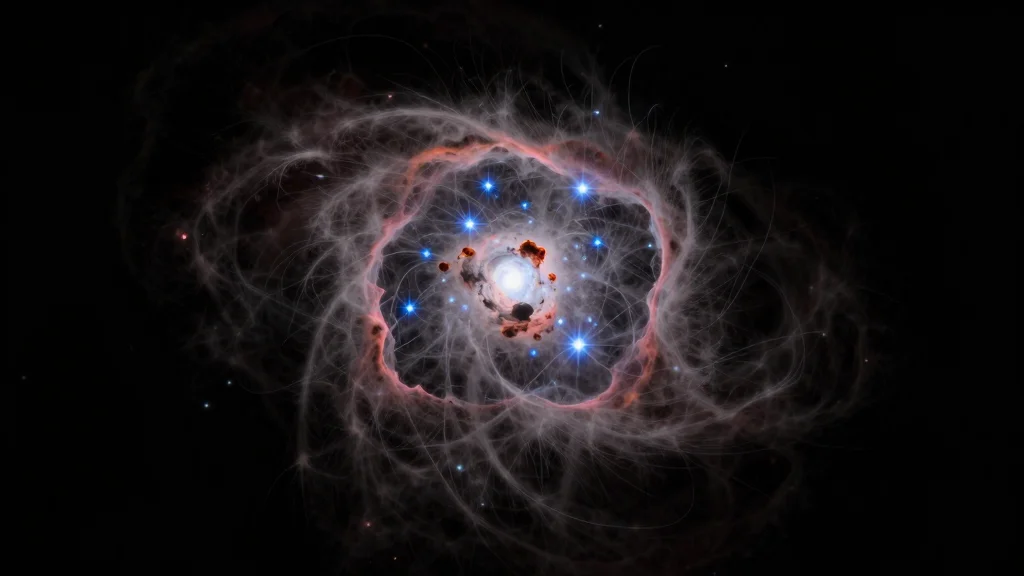
The latest Astronomy Picture of the Day spotlights Thackeray’s Globules, a collection of opaque dust clouds embedded in the bright emission nebula IC 2944. Located roughly 7,600 light‑years from Earth in the constellation Centaurus, the globules span more than a light‑year each, making them sizable candidates for nascent star formation. The featured Hubble‑style palette image, captured by Chile’s El Sauce Observatory, reveals intricate, overlapping structures that appear as dark silhouettes against a backdrop of glowing hydrogen gas. This visual evidence underscores the complexity of the interstellar medium in active stellar nurseries.
Astrophysicists interpret the fragmented appearance of the globules as a direct response to intense ultraviolet radiation emitted by nearby O‑type and B‑type stars. The high‑energy photons heat and ionize the surrounding gas, carving away at the dense dust and triggering turbulence that can both compress material—potentially igniting new stars—and ultimately disperse the clouds like butter melting in a hot pan. Such dual‑role feedback mechanisms are central to modern models of star formation, helping researchers reconcile why some regions produce clusters of massive stars while others remain quiescent.
The detailed observation of Thackeray’s Globules offers a valuable benchmark for upcoming missions such as the James Webb Space Telescope and the European Extremely Large Telescope, which will probe similar dark globules at higher resolution and across broader infrared wavelengths. By refining estimates of mass, temperature, and radiation pressure, these facilities can improve simulations of galactic evolution and inform the design of instrumentation sensitive to faint, dust‑enshrouded objects. For the broader scientific community, the image reinforces the importance of coordinated ground‑based and space‑based campaigns in unraveling the life cycle of stars.
Untitled
Comments
Want to join the conversation?
Loading comments...