Companies Mentioned

NASA
Why It Matters
APOD’s vivid visual storytelling deepens public understanding of sky navigation and promotes interest in astronomy across both hemispheres, supporting STEM outreach and cultural appreciation of the night sky.
Key Takeaways
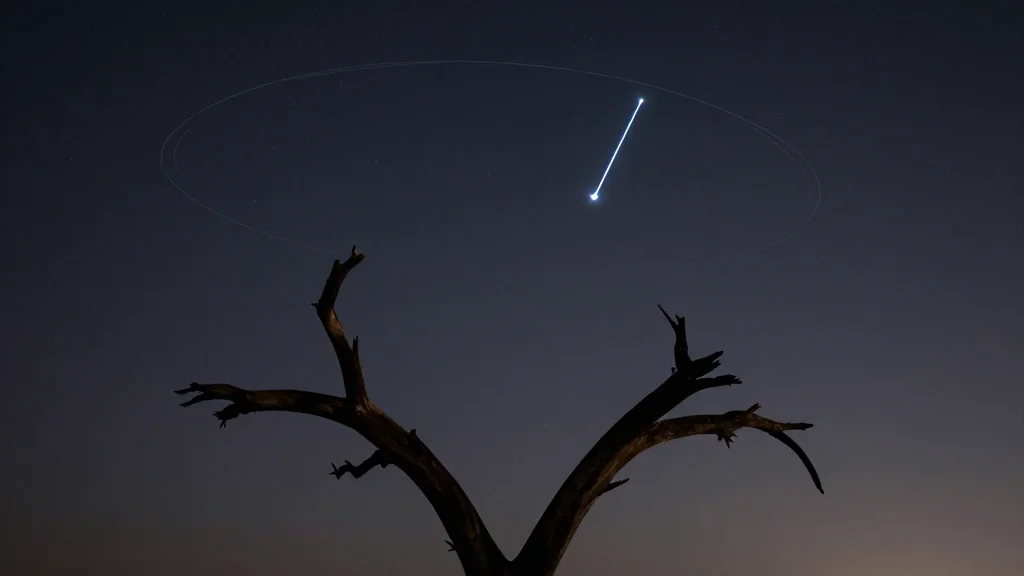
- •APOD features "South Celestial Tree" captured in Brazil's Cerrado
- •Image shows stars rotating around the empty southern celestial pole
- •Each star completes a full circle in roughly 24 hours
- •Southern Cross helps navigate south, unlike a bright southern pole star
- •Dry-season branch highlights Brazil's tropical savanna biodiversity
Pulse Analysis
The Astronomy Picture of the Day (APOD) continues to be a cornerstone of public science communication, and the April 16, 2026 entry is no exception. By presenting a clear visual of the "South Celestial Tree," the feature demystifies how stars appear to rotate around the southern celestial pole, a point without a bright anchor like Polaris. This illustration not only educates casual observers about the mechanics of Earth's rotation but also underscores the role of the Southern Cross as a reliable guide for southern‑hemisphere navigation.
Beyond its astronomical relevance, the image offers a glimpse into Brazil's Cerrado ecosystem, one of the world’s most biodiverse tropical savannas. The barren branch captured in the foreground is a seasonal hallmark of the dry winter, reminding viewers that celestial phenomena are observed against a dynamic terrestrial backdrop. Highlighting this intersection of sky and land reinforces the interconnectedness of environmental stewardship and scientific curiosity, encouraging audiences to consider how regional landscapes shape observational astronomy.
For educators and industry professionals, the APOD entry provides a ready‑made teaching tool that bridges astronomy, geography, and ecology. Incorporating the South Celestial Tree into curricula can spark discussions about global navigation, the historical significance of star patterns, and the importance of preserving habitats like the Cerrado. As NASA and partner institutions continue to leverage APOD’s reach, such content fuels a pipeline of future scientists and reinforces the market for space‑related educational resources.
Untitled
Comments
Want to join the conversation?
Loading comments...