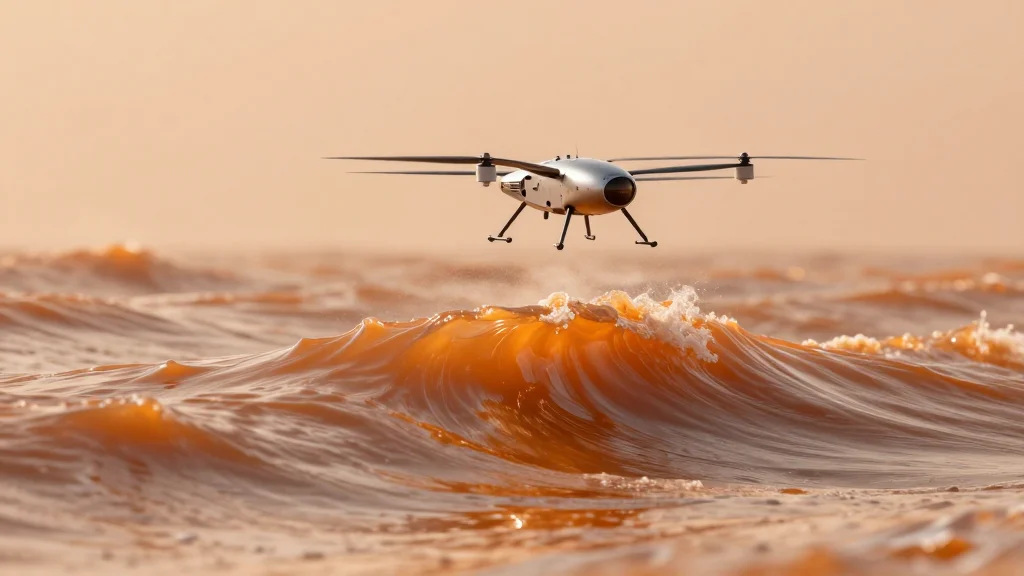
Why It Matters
Understanding wave behavior on Titan refines planetary oceanography and guides mission design, directly supporting NASA’s Dragonfly effort to assess the moon’s potential for life.
Key Takeaways
- •Titan's low gravity and dense atmosphere produce taller, slower waves.
- •Hydrocarbon lakes on Titan behave differently than Earth's water bodies.
- •New simulation compares Earth and Titan wave dynamics side‑by‑side.
- •Dragonfly mission will study Titan's habitability after 2028 launch.
Pulse Analysis
The newly released simulation highlights how Titan’s unique environment reshapes familiar oceanic processes. With a surface gravity roughly one‑seventh of Earth’s and an atmospheric pressure about 1.5 times higher, wind energy translates into longer wavelength, slower‑propagating waves across its methane‑ethane seas. By keeping wind speed constant, the model reveals that Titan’s waves can reach heights several meters larger than comparable Earth waves, offering a vivid illustration of how planetary parameters dictate fluid behavior.
These insights carry weight for planetary scientists and mission planners alike. Comparative wave dynamics inform the design of instruments that must survive or measure surface conditions on alien seas, a critical consideration for NASA’s Dragonfly rotorcraft slated for a 2028 launch. Dragonfly’s suite of sensors will probe the chemistry, meteorology, and potential microbial habitats of Titan’s lakes, building on the physical framework established by the wave model. Understanding surface wave energy also helps predict erosion patterns and sediment transport, which could affect landing site safety and scientific sampling strategies.
Beyond Titan, the research feeds into broader exoplanetary studies where liquid reservoirs may exist under exotic conditions. By extrapolating the Titan model, scientists can better estimate wave signatures on distant worlds, aiding remote sensing efforts that search for biosignatures or climate indicators. The work underscores the value of cross‑disciplinary modeling—combining atmospheric physics, fluid dynamics, and planetary geology—to deepen our grasp of solar‑system bodies and guide the next generation of exploratory missions.
Untitled
Comments
Want to join the conversation?
Loading comments...