Why It Matters
Studying Wolf‑Rayet bubbles like Thor’s Helmet sharpens models of massive‑star evolution and supernova precursors, key to understanding galactic chemical enrichment. The APOD feature also brings cutting‑edge astrophysics to a broad public audience, boosting science literacy.
Key Takeaways
- •NGC 2359 spans ~30 light‑years, 15,000 ly from Earth
- •Formed by fast wind from central Wolf‑Rayet star
- •Star is in brief pre‑supernova phase, explosion expected soon
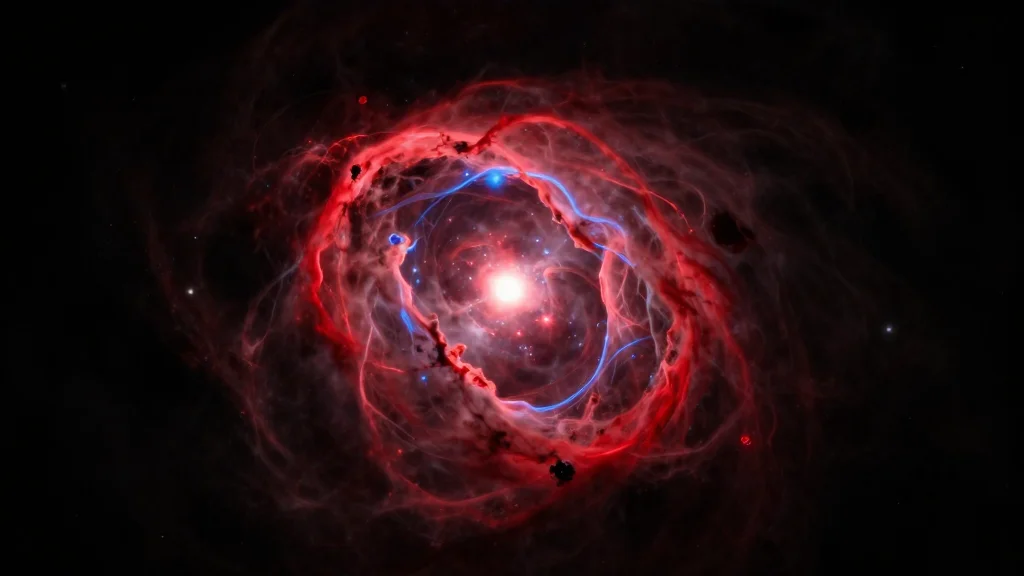
- •APOD highlights nebula using hydrogen (red) and oxygen (blue) filters
- •Thor’s Helmet nickname links mythology with astronomical imagery
Pulse Analysis
The Astronomy Picture of the Day (APOD) continues its tradition of turning complex astrophysical phenomena into visual stories that capture public imagination. By showcasing Thor’s Helmet—a striking nebular bubble illuminated in red hydrogen and blue oxygen emissions—APOD not only highlights the aesthetic beauty of NGC 2359 but also underscores the power of multi‑wavelength imaging in revealing the structure of interstellar gas. This outreach platform bridges the gap between professional research and casual observers, fostering a wider appreciation for the dynamic processes shaping our galaxy.
At the heart of Thor’s Helmet lies a Wolf‑Rayet star, an extremely hot, massive star shedding its outer layers through powerful stellar winds. These winds carve out cavities in surrounding material, creating the iconic hat‑shaped bubble. Wolf‑Rayet stars represent a fleeting evolutionary phase, typically lasting only a few hundred thousand years before culminating in a core‑collapse supernova. Studying such objects provides astronomers with rare, real‑time laboratories to test theories of mass loss, nucleosynthesis, and the mechanisms that trigger supernova explosions.
The impending supernova of the central star carries significant scientific weight. A nearby supernova would offer an unprecedented opportunity to observe shock‑wave propagation, neutrino emission, and the synthesis of heavy elements that seed future star and planet formation. Ongoing monitoring of NGC 2359 with space‑based observatories and ground‑based spectrographs aims to capture subtle changes in wind velocity and composition, refining predictive models. As the astronomical community prepares for the next galactic supernova, objects like Thor’s Helmet serve as critical benchmarks for calibrating both theoretical frameworks and observational strategies.
Untitled
Comments
Want to join the conversation?
Loading comments...