Why It Matters
The comet’s visibility offers a rare, low‑cost opportunity for scientific study of ion and dust tails, informing models of cometary behavior that affect satellite safety and space‑weather forecasting. Its public appeal also fuels interest in astronomy, supporting funding for related research and commercial imaging ventures.
Key Takeaways
- •Comet C/2025 R3 (PanSTARRS) brightened, visible before dawn in northern skies.
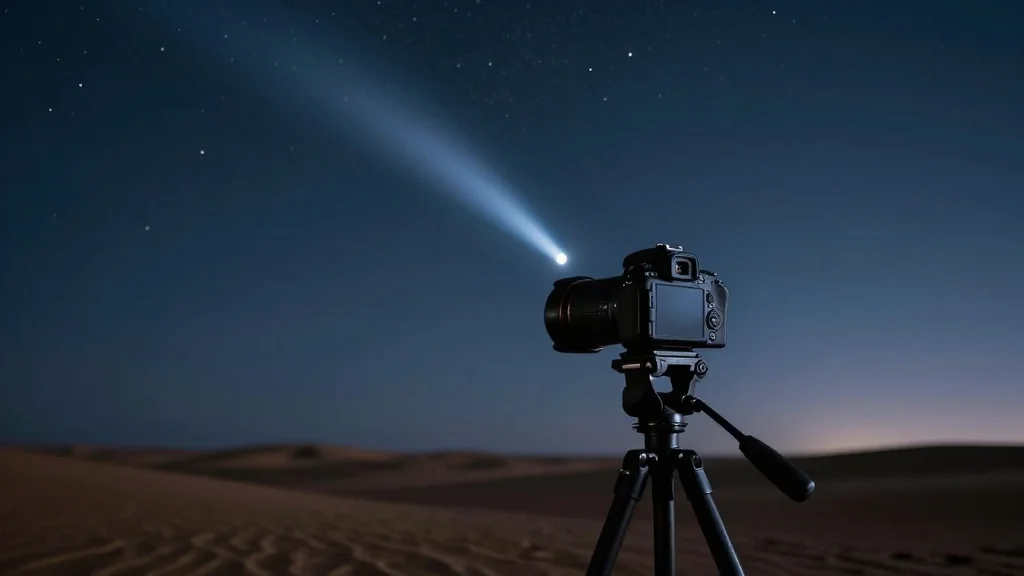
- •Long ion tail captured over Himalayan valley, showcasing Earth’s sideways viewing angle.
- •Closest solar approach occurred April 19, enhancing tail length and brightness.
- •Expected dust tail may appear as comet nears Earth next week.
- •Visibility will shift to southern skies by month’s end as it fades.
Pulse Analysis
Astronomers are capitalizing on C/2025 R3’s recent perihelion to probe the chemistry of ion tails, which are formed when solar ultraviolet radiation ionizes cometary gases. High‑resolution imaging from ground‑based observatories and amateur cameras provides data on particle velocities and magnetic field interactions, refining predictive models that are essential for understanding how comet debris might intersect Earth‑orbiting assets.
For the aerospace sector, the comet’s approach underscores the need for robust space‑weather monitoring. While the ion tail poses minimal direct collision risk, its charged particles can perturb the ionosphere, potentially affecting satellite communications and GPS accuracy. Companies developing low‑Earth‑orbit constellations are watching such events closely, integrating real‑time comet tracking into their risk‑assessment pipelines to safeguard service continuity.
Beyond the technical realm, the spectacular visual of a comet threading a Himalayan valley captures public imagination, driving traffic to scientific outlets and boosting engagement with STEM education initiatives. This heightened interest often translates into increased philanthropic donations and government grants for planetary science programs, creating a virtuous cycle that supports future missions aimed at direct comet sampling and in‑situ resource utilization.
Untitled
Comments
Want to join the conversation?
Loading comments...