Why It Matters
The nebula’s unusual shape provides direct evidence of binary interactions that shape planetary nebulae, sharpening models of stellar death and boosting public engagement with astrophysics.
Key Takeaways
- •Headphone Nebula spans ~1/5 Moon’s apparent diameter
- •Red hydrogen and blue‑green oxygen create headphone silhouette
- •Shape hints at binary or planetary companion influencing outflow
- •Hubble and JWST images enable detailed spectral analysis
- •Sonifications let listeners experience nebular vibrations via headphones
Pulse Analysis
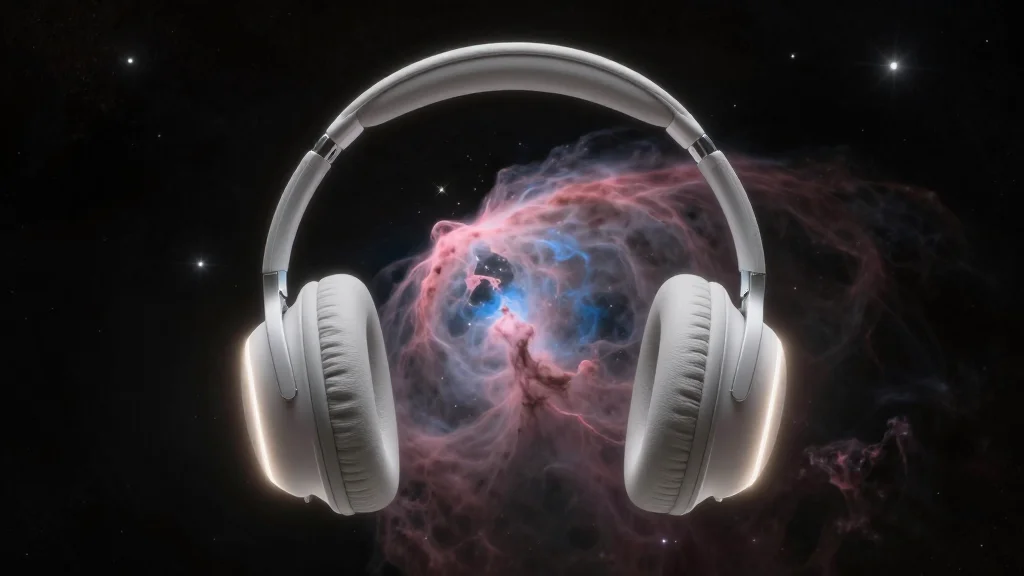
The Headphone Nebula, officially cataloged as PK 164 +31.1, captured worldwide attention when NASA’s APOD featured it on May 27, 2026. Situated in the Lynx constellation, this planetary nebula is the glowing remnant of a Sun‑like star that shed its outer layers billions of years ago. Its angular size—about one‑fifth that of the full Moon—makes it a striking visual target for both amateur astronomers and professional observatories. The vivid red and blue‑green hues trace ionized hydrogen and oxygen, respectively, creating a shape that resembles a pair of headphones, a visual cue that astronomers associate with complex outflow dynamics.
From a scientific perspective, the nebula’s morphology is a textbook case of how binary or planetary companions can sculpt ejecta from dying stars. The twin lobes of hydrogen puncturing an oxygen‑rich core suggest gravitational torques that channel material into bipolar flows. High‑resolution imaging from Hubble and the James Webb Space Telescope provides unprecedented spectral maps, allowing researchers to quantify elemental abundances and velocity structures. These data refine theoretical models of mass loss, wind interaction, and the eventual formation of white dwarfs, contributing to a broader understanding of stellar life cycles across the Milky Way.
Beyond the lab, the Headphone Nebula serves as a bridge between cutting‑edge research and public curiosity. NASA’s release of sonifications—audio translations of the nebula’s spectral data—lets listeners experience the vibrations of ionized gas through actual headphones, turning abstract astrophysics into an immersive sensory experience. Such outreach tools amplify science communication, inspire educational programs, and underscore the value of space telescopes in delivering both visual and auditory insights. As future missions target similar objects, the Headphone Nebula will remain a benchmark for studying how companions influence the final breaths of Sun‑like stars.
Untitled
Comments
Want to join the conversation?
Loading comments...