Why It Matters
Studying Vela provides direct insight into supernova dynamics, element dispersal, and pulsar behavior, informing models that predict cosmic evolution and the lifecycle of matter in the galaxy.
Key Takeaways
- •Vela supernova exploded ~12,000 years ago, visible to early humans
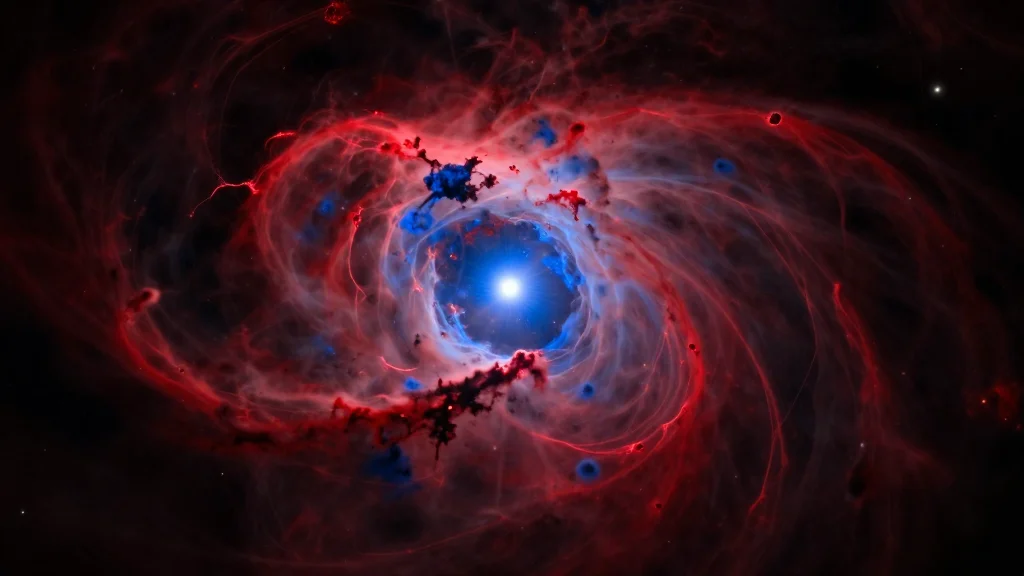
- •Shock wave still expands, observable in hydrogen and oxygen emissions
- •Central pulsar spins >10 times per second, dense as nuclear matter
- •Image captured over 60 hours from Namibia's Khomas region
- •Study informs models of stellar death and interstellar medium enrichment
Pulse Analysis
Supernovae are among the most energetic events in the universe, seeding space with heavy elements that later form planets and life. The Vela supernova, dated to about 12,000 years ago, is one of the few remnants whose explosion may have been witnessed by early civilizations, linking astronomical phenomena with human history. Modern observations combine optical, X‑ray, and radio data to reconstruct the blast’s timeline, while the recent APOD image highlights the intricate filamentary structures that have persisted for millennia.
The scientific value of Vela lies in its clear shock front and central pulsar. As the expelled gas slams into surrounding interstellar material, it creates bright emission lines—hydrogen in red, oxygen in blue—that serve as natural laboratories for plasma physics. The pulsar’s rapid spin, exceeding ten rotations per second, offers a rare glimpse into the extreme states of matter found in neutron stars, helping researchers test theories of nuclear density and magnetic field evolution. By mapping element distribution across the remnant, astronomers refine models of how supernovae enrich the galactic medium with carbon, iron, and other building blocks.
Looking ahead, next‑generation observatories such as the James Webb Space Telescope and the upcoming Athena X‑ray mission will probe Vela’s interior with unprecedented resolution, potentially uncovering hidden compact objects or subtle asymmetries in the explosion. These insights will improve predictive simulations of supernova outcomes, crucial for understanding cosmic chemical cycles and the origins of cosmic rays. Public engagement initiatives, leveraging striking imagery like the APOD photo, also inspire broader interest in space science, reinforcing the cultural and educational impact of astronomical discoveries.
Untitled
Comments
Want to join the conversation?
Loading comments...