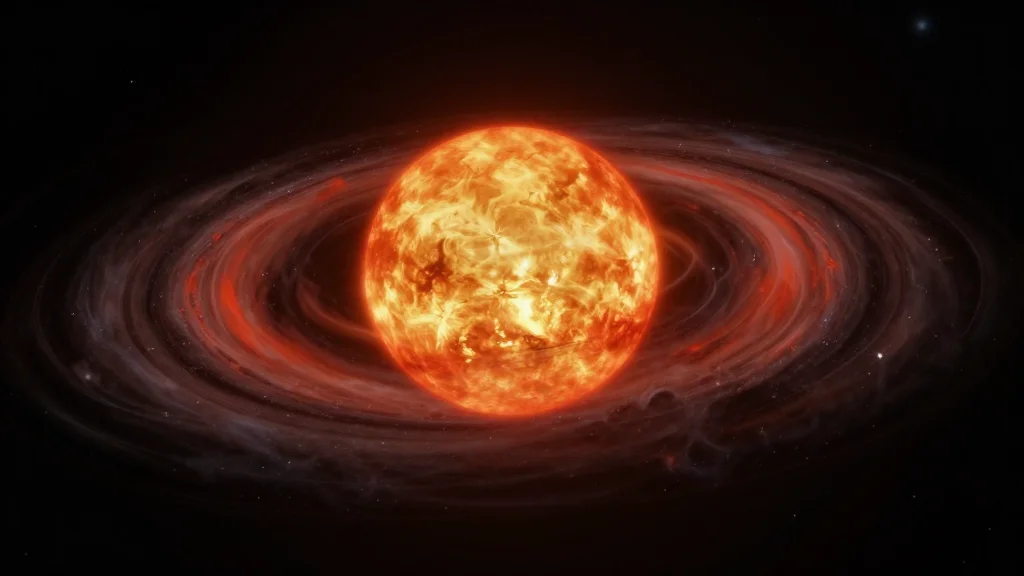
Unveiling the Mystery of Protoplanetary Disk Formation Around Young Stars
Why It Matters
Understanding disk formation accelerates predictions of planet‑building timelines, influencing models of exoplanet diversity and guiding future telescope missions.
Key Takeaways
- •ALMA images reveal disks forming within 100,000 years of star birth
- •Magnetic braking mitigated by turbulence‑driven infall streams
- •Simulations match observed dust rings and spiral patterns
- •Rapid disk assembly reshapes timelines for planet formation
- •Study informs design of next‑generation infrared observatories
Pulse Analysis
The recent breakthrough from Taiwan’s astronomical community bridges a long‑standing gap between theory and observation in star‑formation science. For decades, astronomers wrestled with the "magnetic braking catastrophe," where strong magnetic fields were thought to prevent the accumulation of rotating material around young stars. By coupling ultra‑sharp ALMA data with state‑of‑the‑art magnetohydrodynamic simulations, researchers demonstrated that turbulent inflows can twist field lines, allowing angular momentum to persist and a disk to emerge far sooner than previously modeled.
This refined picture carries weight beyond academic curiosity. Protoplanetary disks are the cradles of planets; their size, mass, and lifespan dictate the types of worlds that can coalesce. A faster formation window implies that planetesimals may begin aggregating while the star is still accreting material, potentially explaining the observed abundance of super‑Earths and hot Jupiters in mature systems. Moreover, the identified turbulence signatures align with recent detections of sub‑structures—gaps and rings—in disks around nearby young stars, suggesting a universal process at work across the galaxy.
Looking ahead, the study sets a clear agenda for upcoming facilities such as the James Webb Space Telescope and the Extremely Large Telescope. By targeting the early‑stage disks highlighted in this work, astronomers can test predictions about chemical composition, dust grain growth, and the emergence of planetary embryos. The synergy between high‑resolution imaging and sophisticated modeling promises to unlock deeper insights into how our own solar system’s origins fit within the broader tapestry of planetary formation.
Unveiling the Mystery of Protoplanetary Disk Formation Around Young Stars
Comments
Want to join the conversation?
Loading comments...