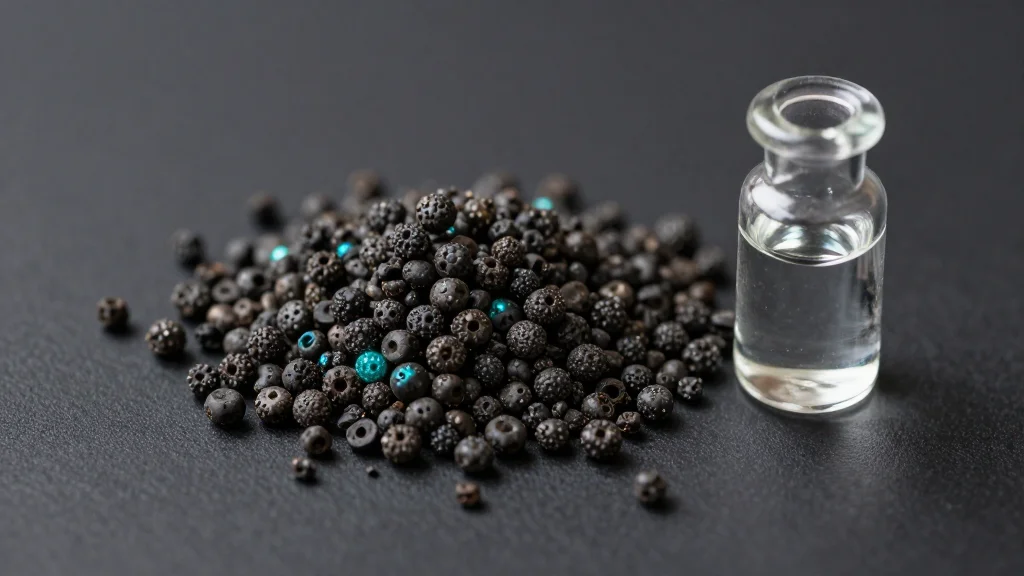
Upcycled Manganese Slag Enables Self‐Regenerating Pyrrole‐N Catalysis for Precision, Singlet Oxygen‐Driven Antibiotic Detoxification by Peroxydisulfate Activation
Why It Matters
The technology provides a scalable, low‑energy pathway to turn industrial waste into a catalyst that precisely detoxifies antibiotic‑laden effluents, cutting oxidant demand and secondary pollution.
Key Takeaways
- •Upcycled EMSR becomes metal‑free, pyrrolic‑N carbon catalyst
- •Generates singlet oxygen, avoiding non‑selective radicals
- •Degrades tetracycline 10 mg L⁻¹ in 25 minutes
- •Retains >80 % activity after eight cycles, regenerable at 200 °C
- •Life‑cycle analysis shows low energy use and cost
Pulse Analysis
Antibiotic residues in municipal and industrial wastewater pose a growing threat to ecosystems and public health, yet conventional persulfate oxidation relies on aggressive radical pathways that generate toxic by‑products and rapidly deactivate catalysts. By converting electrolytic manganese slag—a 130‑million‑ton stockpile of hazardous waste—into a nitrogen‑rich carbon material, researchers have introduced a circular‑economy solution that sidesteps these drawbacks. The low‑temperature anaerobic pyrolysis preserves pyrrolic nitrogen sites, enabling the formation of metastable pyrrolic‑N–peroxydisulfate complexes that channel electron transfer toward singlet‑oxygen (^1O2) production, a highly selective oxidant for antibiotic molecules.
The L‑EMSR catalyst demonstrates impressive kinetics: it eliminates 10 mg L⁻¹ tetracycline within 25 minutes, corresponding to a pseudo‑first‑order rate constant of 0.103 min⁻¹, and achieves 57.5 % COD removal in real pharmaceutical wastewater. Crucially, the process targets specific structural motifs in tetracycline, such as C2 deamination and C6 dehydroxylation, rendering the compound non‑antibiotic while preserving its biodegradability. The catalyst’s performance remains above 80 % after eight reuse cycles, and a simple 200 °C re‑pyrolysis restores activity, highlighting its self‑regenerating capability and minimal metal leaching.
Beyond laboratory metrics, the approach delivers compelling sustainability credentials. Life‑cycle assessment indicates lower specific energy consumption and cost compared with traditional persulfate systems, thanks to the waste‑to‑resource conversion and reduced oxidant demand. This positions L‑EMSR as a viable candidate for large‑scale deployment in water‑treatment plants, offering regulators and industry a pathway to meet tightening discharge standards while mitigating the environmental footprint of both slag stockpiles and antibiotic pollution. The convergence of waste valorization, selective oxidation chemistry, and economic feasibility underscores a transformative step toward greener wastewater management.
Upcycled Manganese Slag Enables Self‐Regenerating Pyrrole‐N Catalysis for Precision, Singlet Oxygen‐Driven Antibiotic Detoxification by Peroxydisulfate Activation
Comments
Want to join the conversation?
Loading comments...