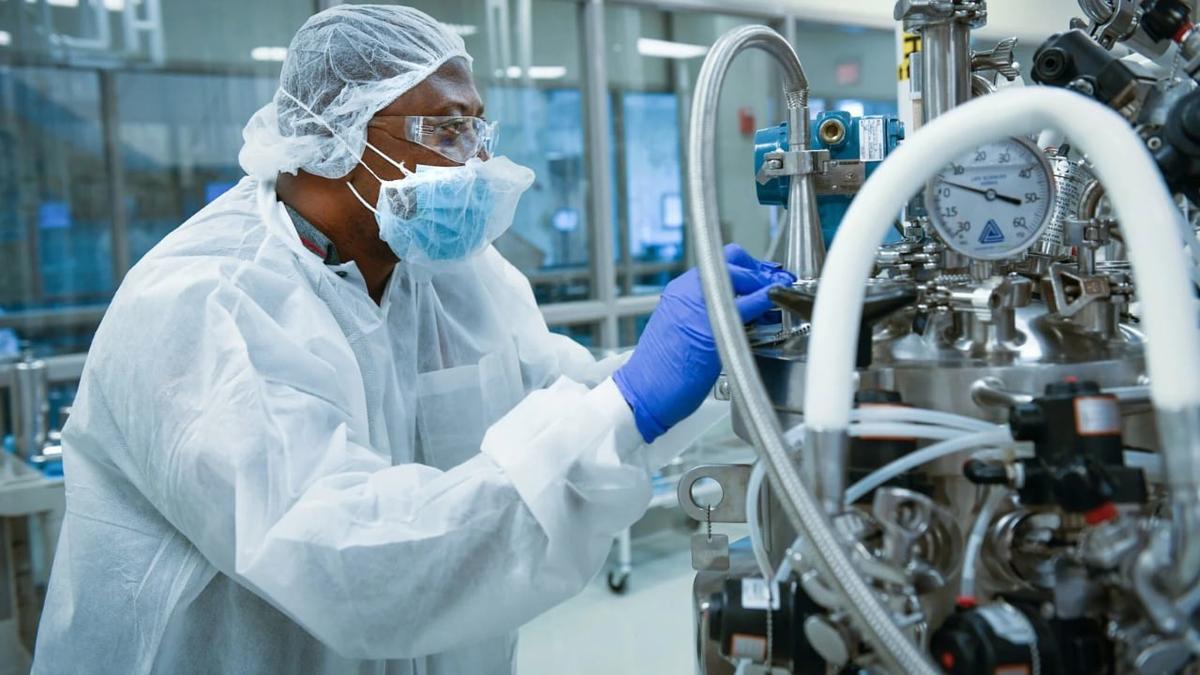
US Government Spends Hundreds of Millions on Biotech Pilot Plants as National Security Priority
Companies Mentioned
Why It Matters
Scaling bio‑manufacturing infrastructure is a national‑security priority, ensuring U.S. companies can commercialize innovations domestically rather than outsourcing to foreign facilities. The pilot plants will accelerate product development, reduce costs, and safeguard critical IP for defense and food supply chains.
Key Takeaways
- •DoD funneled $450 M to BioMADE in 2023
- •Three pilot plants slated for CA, IA, MN by 2028
- •Members must match federal funding dollar‑for‑dollar
- •Projects span chocolate, AI‑driven strain design, domestic feedstocks
- •BioMADE aims to keep U.S. bio‑industrial IP at home
Pulse Analysis
BioMADE’s rapid funding surge reflects a strategic shift in U.S. policy, treating biomanufacturing as a cornerstone of national security. By channeling defense dollars into precision fermentation, the government is hedging against supply‑chain vulnerabilities that surfaced during recent geopolitical tensions. The $450 million DoD infusion, combined with NSF support, signals confidence that engineered microbes can produce everything from high‑protein foods to defense‑grade materials, reducing reliance on overseas production.
The consortium’s pilot‑plant rollout tackles a critical bottleneck: the lack of domestic scale‑up facilities. Existing U.S. companies often ship prototypes abroad, risking intellectual‑property loss and inflating costs. The upcoming 25,000‑sq‑ft California plant, a 4,000‑liter food‑grade fermenter, will serve as a testbed for novel products like cocoa‑free chocolate, while the larger Iowa and Minneapolis sites will handle 10,000‑liter tanks for feedstock and bulk food production. These facilities create a pipeline from lab to market, enabling faster commercialization and workforce training.
Beyond infrastructure, BioMADE’s public‑private model leverages matched funding to multiply impact. Member firms—from Cargill to Upside Foods—must match every federal dollar, ensuring private stakes align with national objectives. The recent $21.4 million allocation to 14 projects, including AI‑driven genomic language models, underscores a focus on next‑generation tools that accelerate strain optimization and reduce production costs. As global competitors pour similar resources into bio‑industrial ecosystems, the U.S. strategy aims to preserve domestic IP, support American farmers through feedstock demand, and maintain a competitive edge in the emerging bio‑economy.
US government spends hundreds of millions on biotech pilot plants as national security priority
Comments
Want to join the conversation?
Loading comments...