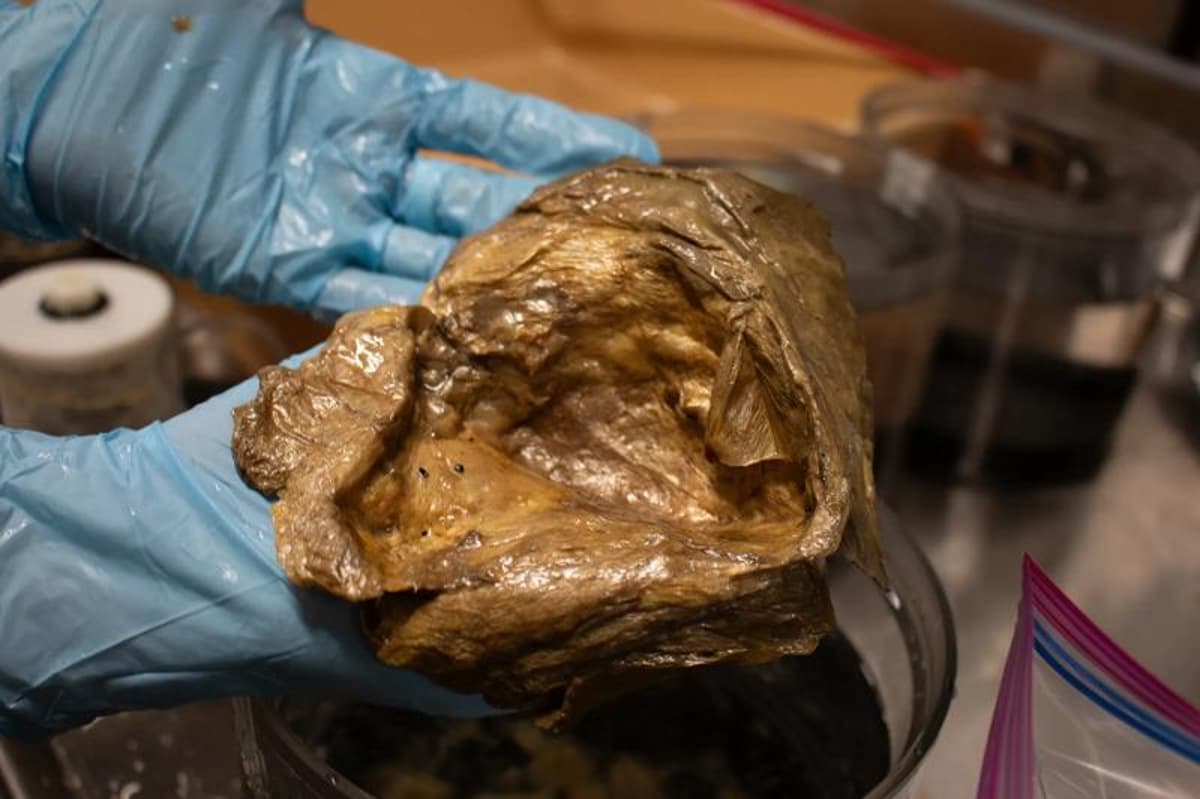
U.S. Scientists Solve the Mystery of a Golden Orb Discovered in the Deep Sea. Here’s What It Really Is
Why It Matters
Identifying the orb demonstrates that modern genomics can rapidly resolve deep‑sea mysteries, unlocking hidden biodiversity with potential economic and security relevance. It also validates continued investment in ocean exploration as a driver of scientific and commercial insight.
Key Takeaways
- •Golden orb was a deep‑sea anemone’s adhesive structure.
- •Discovered by NOAA’s Okeanos Explorer at 2 miles depth.
- •DNA sequencing linked it to *Relicanthus daphneae* species.
- •Findings showcase power of genomics in marine taxonomy.
- •Highlights untapped biodiversity that could impact biotech and security.
Pulse Analysis
The golden orb captured by NOAA’s Okeanos Explorer illustrates the allure and challenge of deep‑sea exploration. Operating at more than three kilometers below the surface, the vessel’s submersibles routinely scan seamounts for unknown life forms. While many findings remain routine, the orb’s striking appearance sparked public fascination, reminding policymakers that the ocean’s abyss still holds visual spectacles that can capture headlines and justify funding for further expeditions.
Resolving the orb’s identity hinged on cutting‑edge molecular techniques. Researchers extracted DNA from the fibrous material and performed whole‑genome and mitochondrial sequencing, revealing a near‑perfect match to *Relicanthus daphneae*, a cnidarian first classified in the early 2000s. Microscopic analysis identified spirocysts—stinging cells unique to cnidarians—confirming the specimen’s biological nature. This multidisciplinary approach, blending deep‑sea robotics, bioinformatics, and taxonomy, showcases how genomics now accelerates the classification of cryptic marine organisms that once required decades of morphological study.
Beyond scientific curiosity, the find signals broader economic and security implications. Uncharacterized deep‑sea species may harbor novel compounds useful in pharmaceuticals, biomaterials, or bio‑energy, presenting untapped commercial opportunities. Moreover, a comprehensive inventory of abyssal life supports national security by informing maritime domain awareness and resource stewardship. As NOAA and the Smithsonian plan to sequence thousands of archived specimens, the golden orb serves as a proof‑of‑concept that systematic genetic cataloguing can reveal hidden biodiversity, driving innovation and reinforcing the strategic value of sustained ocean research.
U.S. scientists solve the mystery of a golden orb discovered in the deep sea. Here’s what it really is
Comments
Want to join the conversation?
Loading comments...