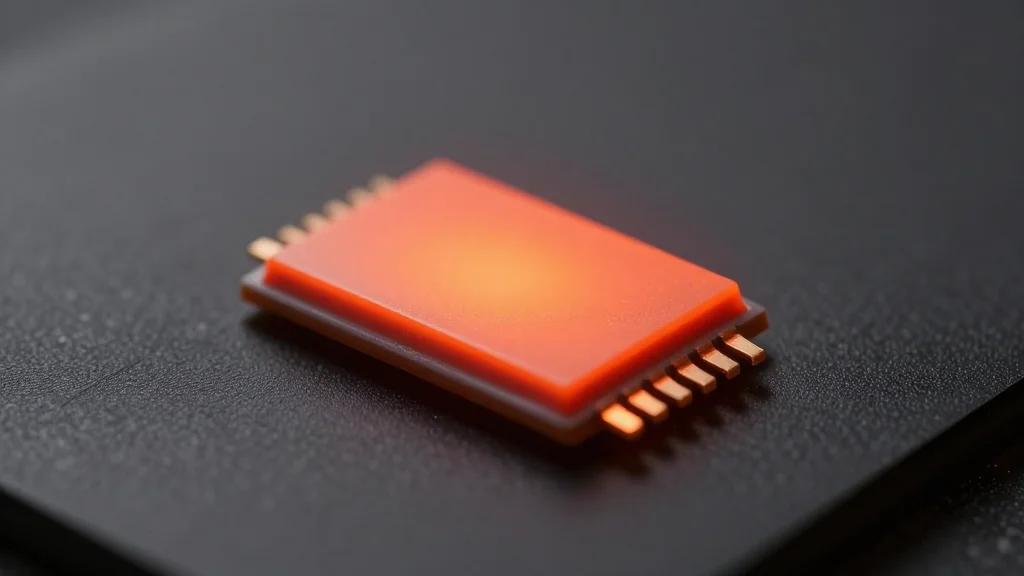
USC Memristor Crossbar Operates Above 700 °C, Setting New Record

Why It Matters
The ability to store and retrieve data at temperatures above 700 °C removes a major barrier for electronics deployed in hostile environments. For space missions, this could mean lighter, more reliable onboard computers that no longer depend on extensive thermal shielding. In geothermal drilling and nuclear power, the technology promises to cut down on energy‑intensive cooling, lowering operational costs and improving system resilience. Moreover, the low‑voltage, high‑speed characteristics of the memristor align with the growing demand for edge AI hardware that can function in situ, without the need for external cooling infrastructure. Beyond immediate applications, the breakthrough signals a shift toward materials‑centric design in computing. By moving away from silicon’s temperature ceiling, researchers can explore new architectures that combine memory and processing, potentially reshaping the future of neuromorphic and in‑memory computing platforms.
Key Takeaways
- •Memristor crossbar operates at >700 °C, a new record for electronic memory
- •Stores data for >50 hours with a 1.5 V operating voltage
- •Endures >10⁹ switching cycles and switches in tens of nanoseconds
- •Built from graphene, tungsten, and hafnium‑oxide ceramic layers
- •Potential uses include space, geothermal, nuclear, and AI hardware
Pulse Analysis
The USC breakthrough arrives at a moment when the semiconductor industry is searching for alternatives to silicon’s thermal limits. While silicon‑carbide and gallium‑nitride have made inroads in power electronics, they have not yet offered a viable path for non‑volatile memory at extreme temperatures. The memristor’s combination of high endurance, low voltage, and rapid switching fills that gap, positioning it as a strategic component for next‑generation rugged systems.
Historically, memristor research has been hampered by reproducibility and integration challenges. The CONCRETE team’s focus on materials with intrinsic high‑temperature stability—tungsten’s 3422 °C melting point and graphene’s resilience—addresses the core reliability issue. If the crossbar can be fabricated at scale using existing deposition techniques, it could accelerate the adoption of memristor‑based in‑memory computing, especially for AI workloads that benefit from parallel data processing.
Looking forward, the key question is how quickly the technology can move from prototype to production. Successful demonstration in real‑world extreme environments will be a litmus test for commercial viability. Should the team achieve seamless interfacing with conventional digital logic, the memristor could become a cornerstone of future aerospace, energy, and AI hardware ecosystems, redefining what is possible when electronics are no longer constrained by cooling requirements.
USC Memristor Crossbar Operates Above 700 °C, Setting New Record
Comments
Want to join the conversation?
Loading comments...