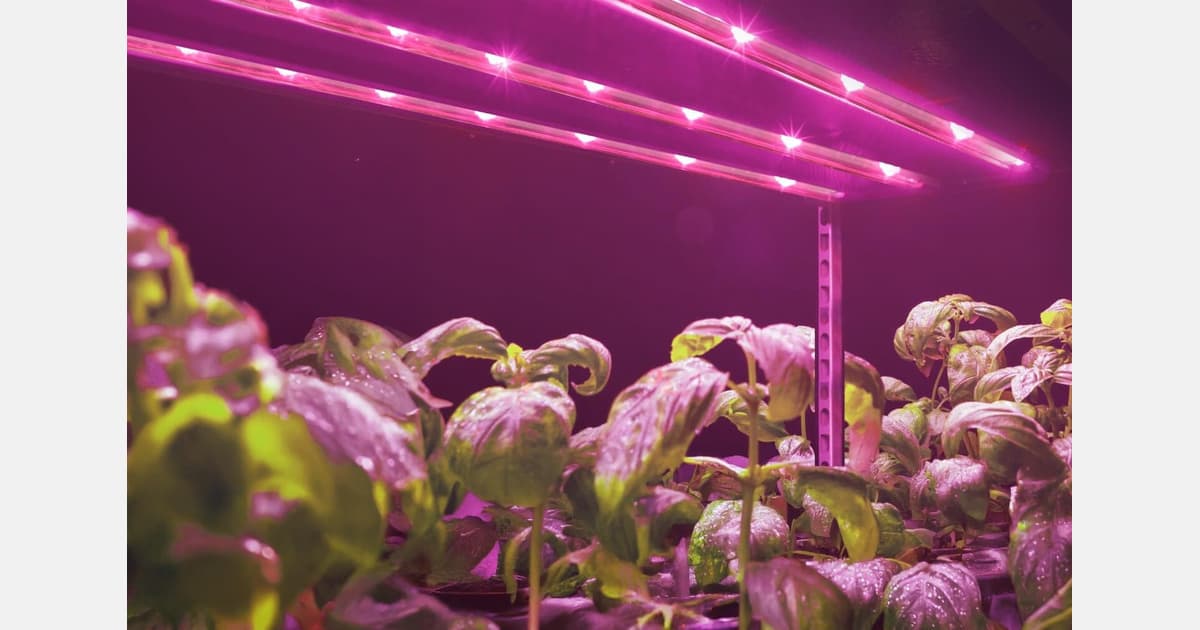
"UVB Treatment Is a Promising Approach for Improving the Nutritional Quality of the Plant"
Why It Matters
UVB lighting offers growers a scalable way to enhance nutritional and medicinal value of crops, meeting consumer demand for healthier produce, while UVC provides a pesticide‑free disease‑control alternative, supporting sustainability goals in indoor farming.
Key Takeaways
- •UVB LEDs boost flavonoids, carotenoids, and anthocyanins in leafy crops
- •Two-hour UVB exposure can double artemisinin in Artemisia annua
- •UVB increases strawberry Brix and accelerates flowering and fruiting
- •Low-dose UVC controls powdery mildew without harming strawberry plants
- •Dosing guidance: 5‑6 h UVB daily for flavonoids; ~200 J m⁻² for disease
Pulse Analysis
Controlled‑environment agriculture (CEA) is rapidly adopting ultraviolet lighting as a precision tool for crop quality. Unlike photosynthetically active radiation, UVB operates outside the PAR spectrum but activates the UVR8 photoreceptor, launching a cascade of MYB transcription factors that up‑regulate flavonoid, carotenoid and anthocyanin pathways. This biochemical shift not only fortifies plant tissue against UV stress but also delivers measurable health benefits to consumers, aligning with the growing market for functional foods and nutraceuticals.
The impact is especially pronounced in high‑value medicinal and specialty crops. Research cited by Valoya shows that a brief two‑hour UVB pulse can trigger a surge in artemisinin production in Artemisia annua, a compound critical for malaria treatment. In fruit production, UVB exposure raised Brix levels in the Sunsave strawberry variety and accelerated both flowering and fruit set, delivering sweeter, firmer berries with extended shelf life. When combined with UVA, growers observed earlier yields and more berries per plant, suggesting synergistic benefits that can boost overall farm profitability.
UVC, while harmful to plant DNA at high intensities, becomes a powerful, pesticide‑free disease‑management option when applied in short, low‑dose intervals. Trials demonstrate effective control of powdery mildew, spider mites and Botrytis on strawberries and vineyards without visible crop damage. Valoya’s dosing framework—5‑6 hours of daily UVB for metabolite induction and roughly 200 J m⁻² of UVC for pathogen suppression—provides growers with actionable guidelines to integrate UV technologies into existing lighting rigs, supporting both quality enhancement and sustainable pest control. This dual‑band strategy positions UV lighting as a versatile lever for next‑generation indoor farming.
"UVB treatment is a promising approach for improving the nutritional quality of the plant"
Comments
Want to join the conversation?
Loading comments...