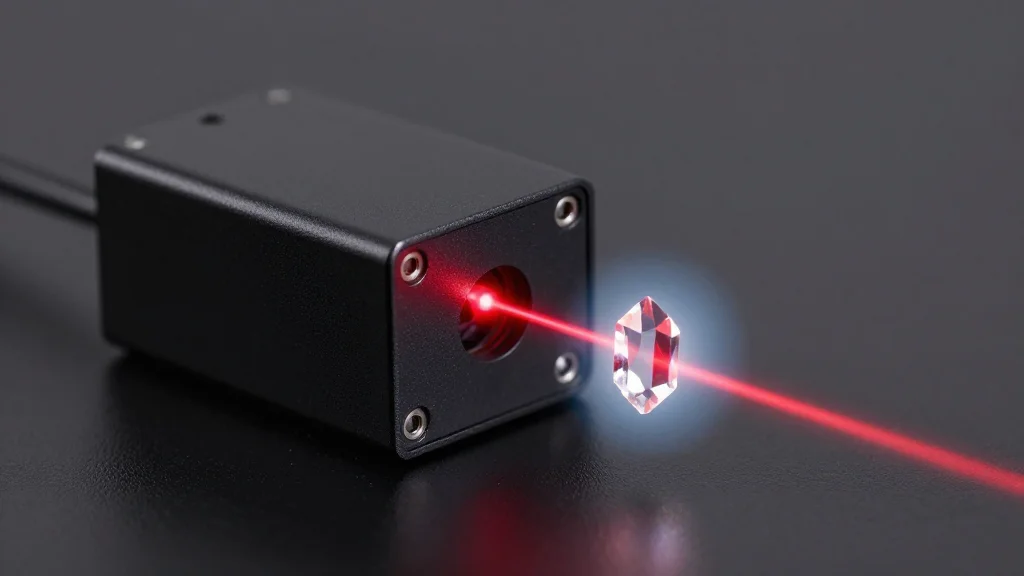
Vexlum and Menlo Collaborate to Streamline Optical Clock Development
Companies Mentioned
Why It Matters
Standardizing the laser platform removes a major barrier to scaling optical clocks, opening high‑precision timing to commercial markets and critical infrastructure. This accelerates Europe’s quantum‑technology leadership and creates new revenue streams for photonics firms.
Key Takeaways
- •Vexlum and Menlo develop modular optical‑clock laser source
- •VEQTOR project funded by EUROSTARS to accelerate quantum timing
- •Turn‑key system aims to cut cost and complexity of optical clocks
- •Enables GPS‑independent navigation and continental‑scale data synchronization
- •Supports EU AQuRA initiative for transportable quantum clock components
Pulse Analysis
Optical atomic clocks represent the frontier of time‑keeping, exploiting visible‑light frequencies that oscillate roughly 100,000 times faster than microwave‑based cesium standards. This dramatic increase in tick rate translates into timing accuracy better than one part in 10^‑18, a capability that can redefine global positioning, high‑frequency trading, and geophysical monitoring. Yet the technology has remained confined to specialized labs because it requires multiple, finely tuned laser wavelengths, complex stabilization loops, and expert hands‑on operation. The high capital outlay and technical expertise needed have stalled broader adoption, despite clear commercial incentives.
The Vexlum‑Menlo partnership tackles these hurdles by delivering a single, integrated photonics module that bundles all necessary laser colors for strontium‑87 optical clocks. Vexlum’s vertical‑external‑cavity surface‑emitting laser (VECSEL) technology provides compact, high‑power sources, while Menlo’s frequency‑control and metrology suite ensures the ultra‑stable output demanded by next‑generation clocks. Funded through the EUROSTARS‑backed VEQTOR project, the collaboration promises a plug‑and‑play solution that reduces setup time from months to weeks and cuts system cost by an estimated 30‑40 percent. This modular approach also eases supply‑chain risks by consolidating components from two proven European vendors.
Beyond the laboratory, the impact of a commercial‑ready optical clock is profound. Financial exchanges could synchronize trading platforms with sub‑nanosecond precision, eliminating latency arbitrage and enhancing market fairness. Transportation networks and autonomous vehicles would gain GPS‑independent timing, improving resilience against signal jamming. Moreover, the clocks’ sensitivity to gravitational potential enables real‑time monitoring of infrastructure subsidence and seismic activity. With EU initiatives like AQuRA reinforcing the supply chain, the Vexlum‑Menlo system positions Europe at the vanguard of quantum timing, paving the way for a new class of timing‑critical services and products.
Vexlum and Menlo collaborate to streamline optical clock development
Comments
Want to join the conversation?
Loading comments...