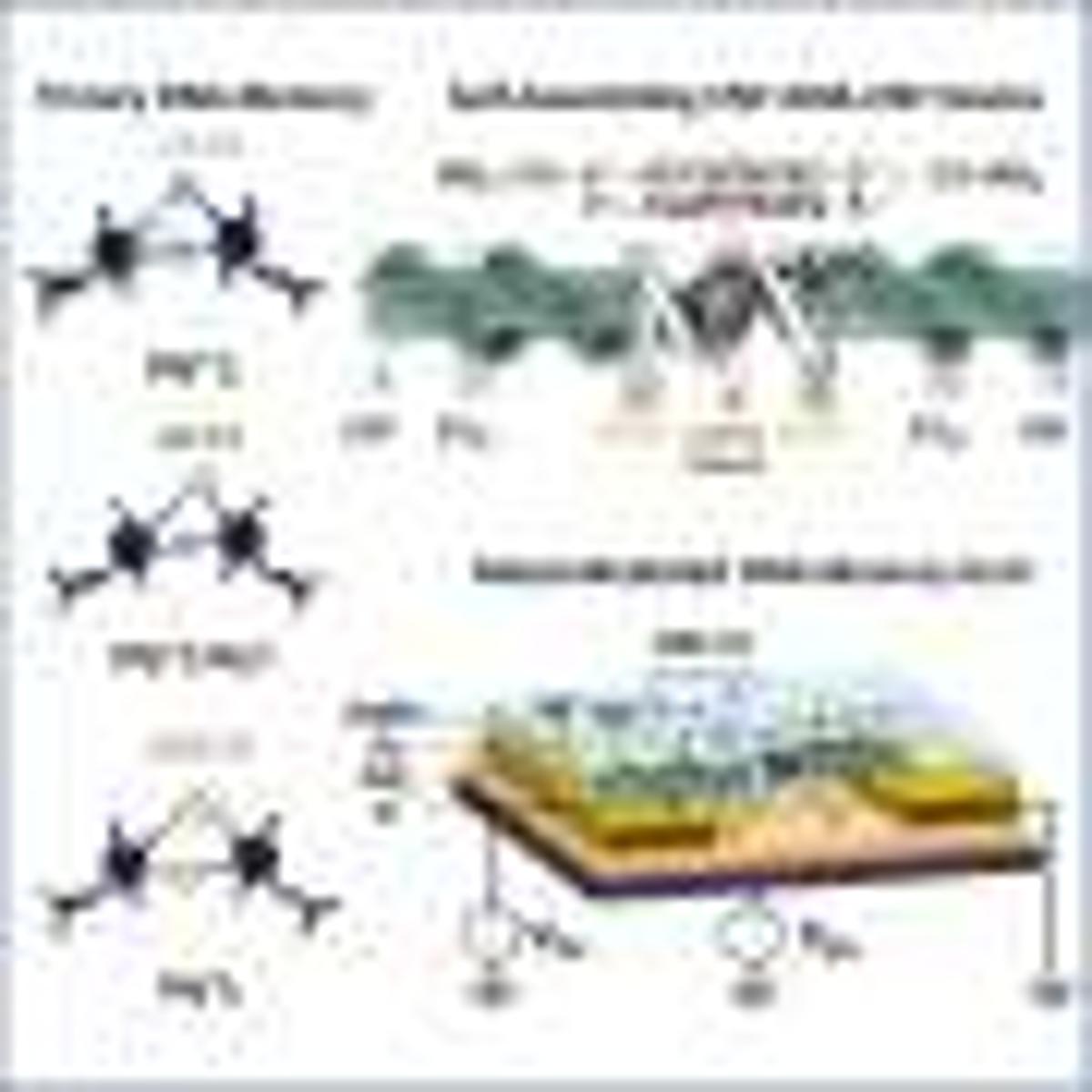
Video: Electrical Control of a Metal-Mediated DNA Memory
Why It Matters
The breakthrough merges molecular biology with semiconductor technology, opening a path to ultra‑dense, biocompatible data storage and novel nanoelectronic devices.
Key Takeaways
- •DNA transistor created by pH‑controlled mercury‑to‑silver ion swap
- •Electrical current varies with metal ion state, enabling read/write/erase
- •First demonstration of DNA acting as an active electronic switch
- •Potential for bio‑compatible, ultra‑dense memory beyond silicon limits
Pulse Analysis
DNA has long been explored as a medium for archival data storage because of its extraordinary density and longevity, yet practical retrieval has remained a bottleneck. Conventional approaches rely on sequencing, a time‑consuming and costly process that limits real‑time applications. By embedding a conductive metal ion within the double helix and using a simple pH change to toggle between mercury and silver, the NYU‑ASU team creates a reversible, electrically addressable state, effectively turning a biological polymer into a functional circuit element.
The study leverages molecular leads to connect the engineered DNA strand to a silicon microchip, allowing the ion‑exchange reaction to modulate current flow. Silver’s superior conductivity compared with mercury translates the chemical transformation into a measurable electrical signal, which can be interpreted as binary data. This architecture supports the three core operations of memory—write, read, and erase—within a single molecular component, a feat previously unattainable with purely biochemical storage methods. The approach also demonstrates compatibility with existing semiconductor fabrication techniques, suggesting a feasible integration pathway.
If scalable, DNA‑based transistors could revolutionize the data‑center landscape by offering storage densities orders of magnitude higher than current flash or DRAM technologies while consuming minimal power. Moreover, the biocompatibility of DNA opens doors to implantable computing devices and stretchable bioelectronics that blend seamlessly with living tissue. Challenges remain, including precise ion‑placement control, error‑correction mechanisms, and mass‑production of reliable molecular leads. Nonetheless, the research signals a paradigm shift, positioning molecular nanotechnology as a credible contender in the next generation of computing hardware.
Video: Electrical control of a metal-mediated DNA memory
Comments
Want to join the conversation?
Loading comments...